EN
EN  DE
DE  FR
FR  RU
RU  AR
AR  ES
ES  JA
JA 
Selecting the correct film structure for a beverage injection bag is a technical decision that directly affects product safety, shelf life, filling performance, and total cost of ownership.
In this guide, GQ PACK, a custom flexible food packaging manufacturer, walks procurement, packaging engineers, and R&D teams through the decision logic: functional requirements, common laminate options, beverage-specific recommendations, processing constraints, testing needs, and commercial trade-offs.
Why Film Structure Matters for a Beverage Injection Bag
A beverage injection bag is not a passive container. The film laminate must simultaneously:
- provide the right barrier against oxygen, moisture, and light;
- resist puncture, flex cracking, and abrasion during handling;
- form robust heat seals and spout welds;
- remain chemically compatible with acids, fats, sugar, and flavor compounds;
- perform on your filling and dispensing equipment.
Choosing the wrong structure leads to oxidation, flavor scalping, delamination, leakage, and elevated waste — problems that are often invisible until after market launch.
Core Functional Requirements (Spec Metrics You Should Define)
Before selecting the beverage injection bag materials, define measurable targets aligned to product and distribution:
- Oxygen Transmission Rate (OTR): critical for aroma and vitamin retention. Specify, e.g., <1–5 cc/m²·day for oxygen-sensitive concentrates.
- Water Vapor Transmission Rate (MVTR): important for products where moisture loss/gain affects Brix/viscosity. Typical targets vary by product; specify in g/m²·day.
- Light transmission (%): for light-sensitive pigments or UV-labile actives. Opaque/foil if low transmission required.
- Puncture resistance and Elmendorf tear: for rough logistics or particulate content.
- Seal strength and hot-seal window: N/15mm or equivalent standard at intended seal temperature.
- Chemical compatibility: swelling, tack, or extraction tests versus product simulants.
Document these metrics in the material spec sheet and use them to evaluate proposals.
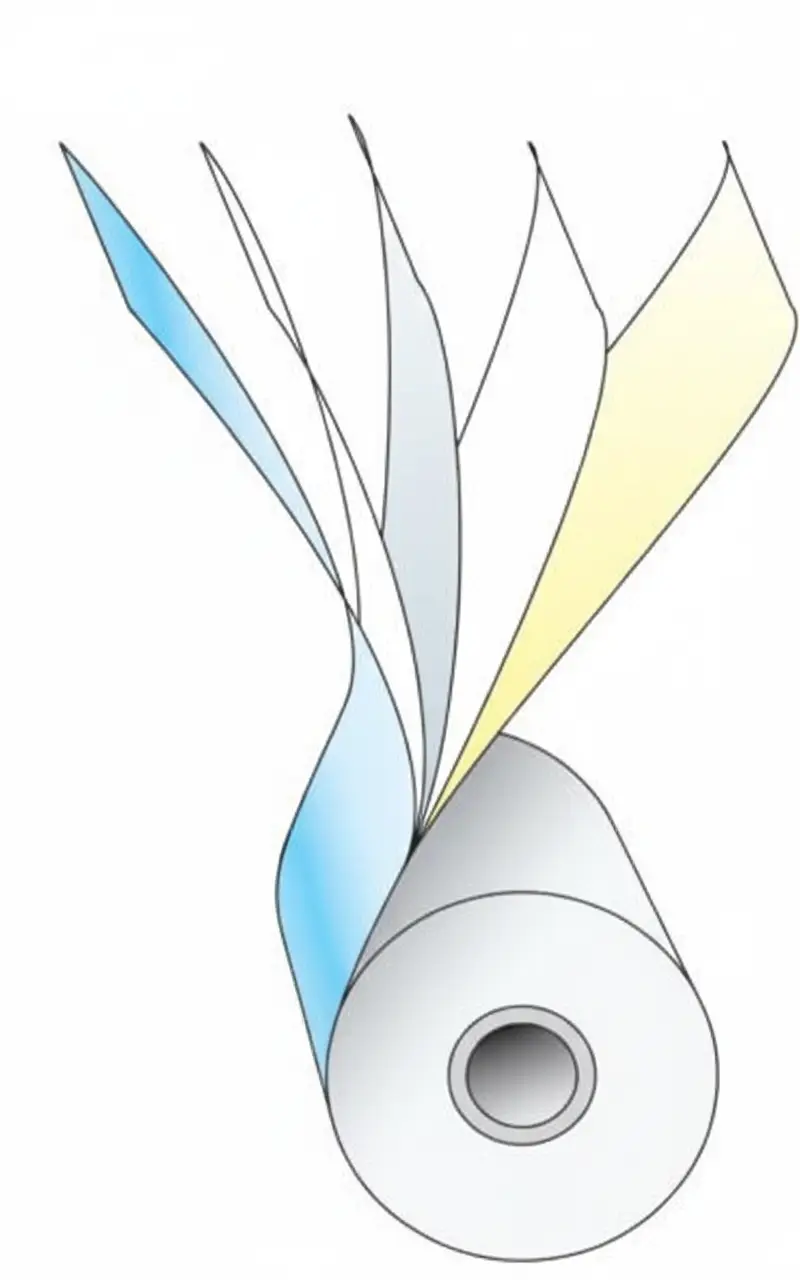
Common Film Layer Technologies and Roles
Understand each layer’s function rather than brand names.
- PET (printability/stiffness): The standard outer layer for high-quality printing and mechanical rigidity; provides excellent dimensional stability during the lamination process.
- PA / Nylon (puncture resistance): (Commonly referred to as PA in technical specs). It significantly improves toughness and flex-crack resistance, making it essential for bags containing particulates or those subjected to rough handling.
- EVOH (oxygen barrier): Offers excellent OTR performance but is moisture-sensitive; it must be sandwiched between polyolefin layers (like PE) to maintain its barrier properties in liquid packaging.
- Aluminum foil (ultimate barrier): Provides near-zero oxygen and light transmission at thickness >7–9μm. Note: Foil is susceptible to flex-cracking, so it is often paired with PA for liquid injection bags.
- Sealant layer (PE, CPP, or specialized copolymers): Ensures reliable heat seals and spout welding. Critical: Use CPP (Cast Polypropylene) for hot-fill or retort applications ($>90^\circ$C), as standard PE may soften or fail at high temperatures.
- Coatings (SiOx/AlOx): Provide high oxygen barriers with the advantage of transparency and microwaveability; however, they require specialized handling to avoid coating fracture during conversion.
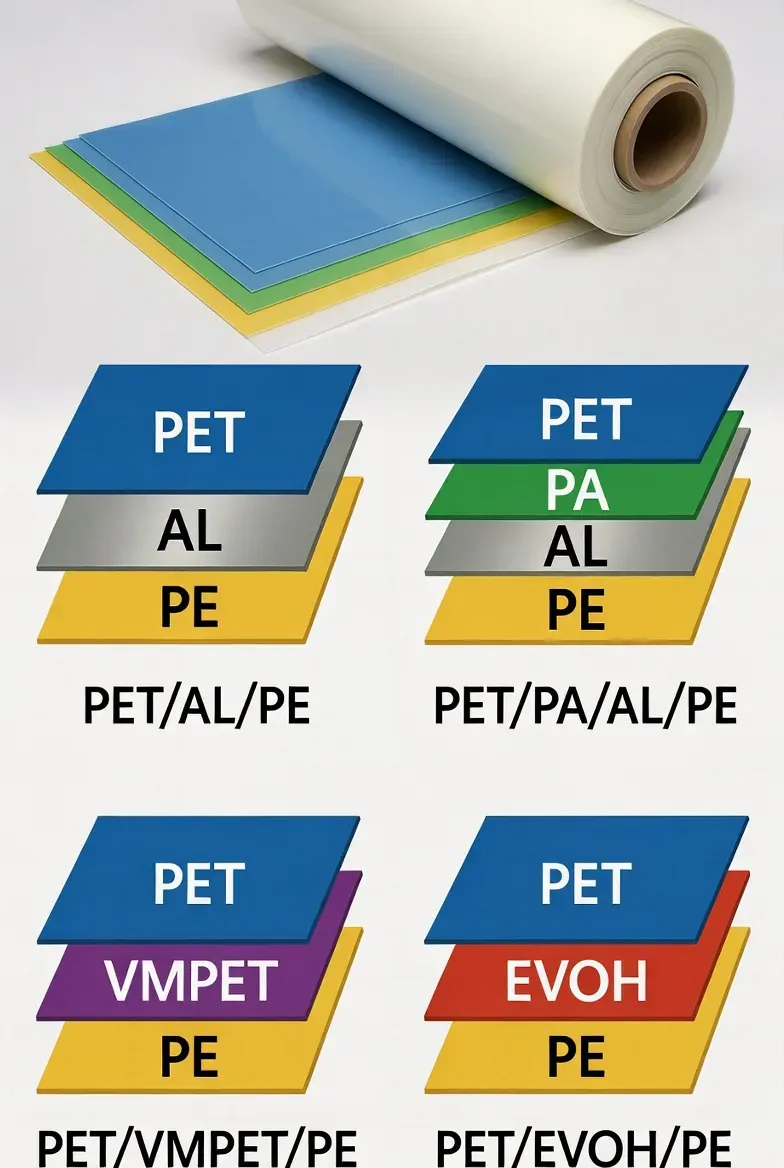
Typical multi-layer examples for a beverage injection bag, you will see quoted:
- PET/AL/PE (Standard high barrier)
- PET/PA/AL/PE (Enhanced puncture resistance for large injection bags)
- PET/VMPET/PE (Cost-effective barrier using metallized PET)
- PET/EVOH/PE (High barrier with transparency)
Matching Film Structures to Beverage Categories
Fruit juices and acidic beverages
- Typical risks: oxidation (vitamin loss), color change, microbial stability.
- Recommended structures: PET/AL/PE (or CPP for hot-fill) for the longest ambient shelf life; PET/EVOH/PE when transparency is desired.
- Filling: Hot-fill or aseptic preferred. Note: For hot-fill (> 85 °C), the sealant layer must be upgraded to RCPP (Retort CPP) or specialized heat-resistant PE to avoid seal failure.
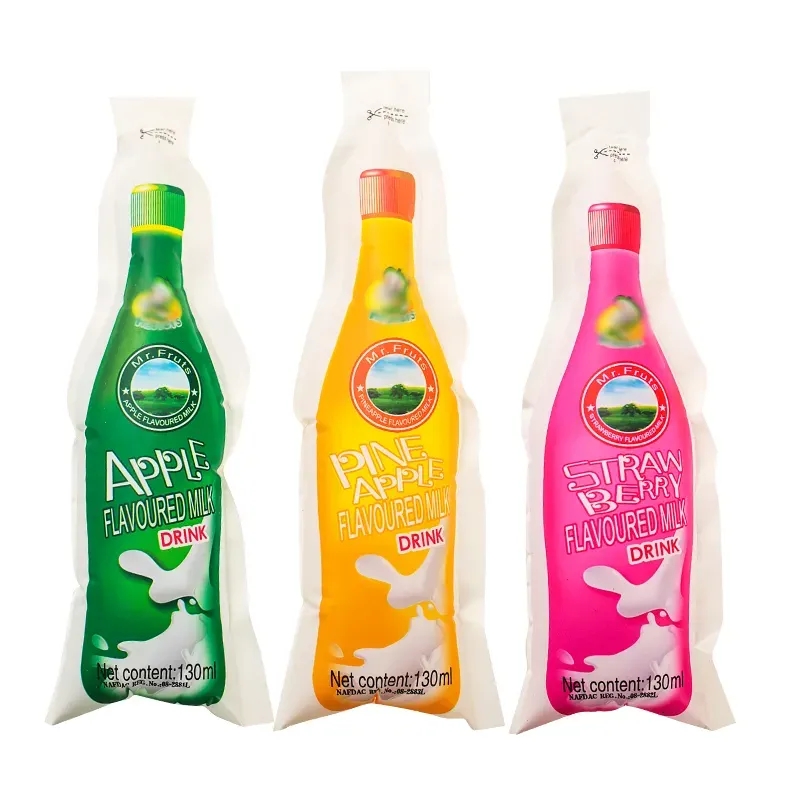
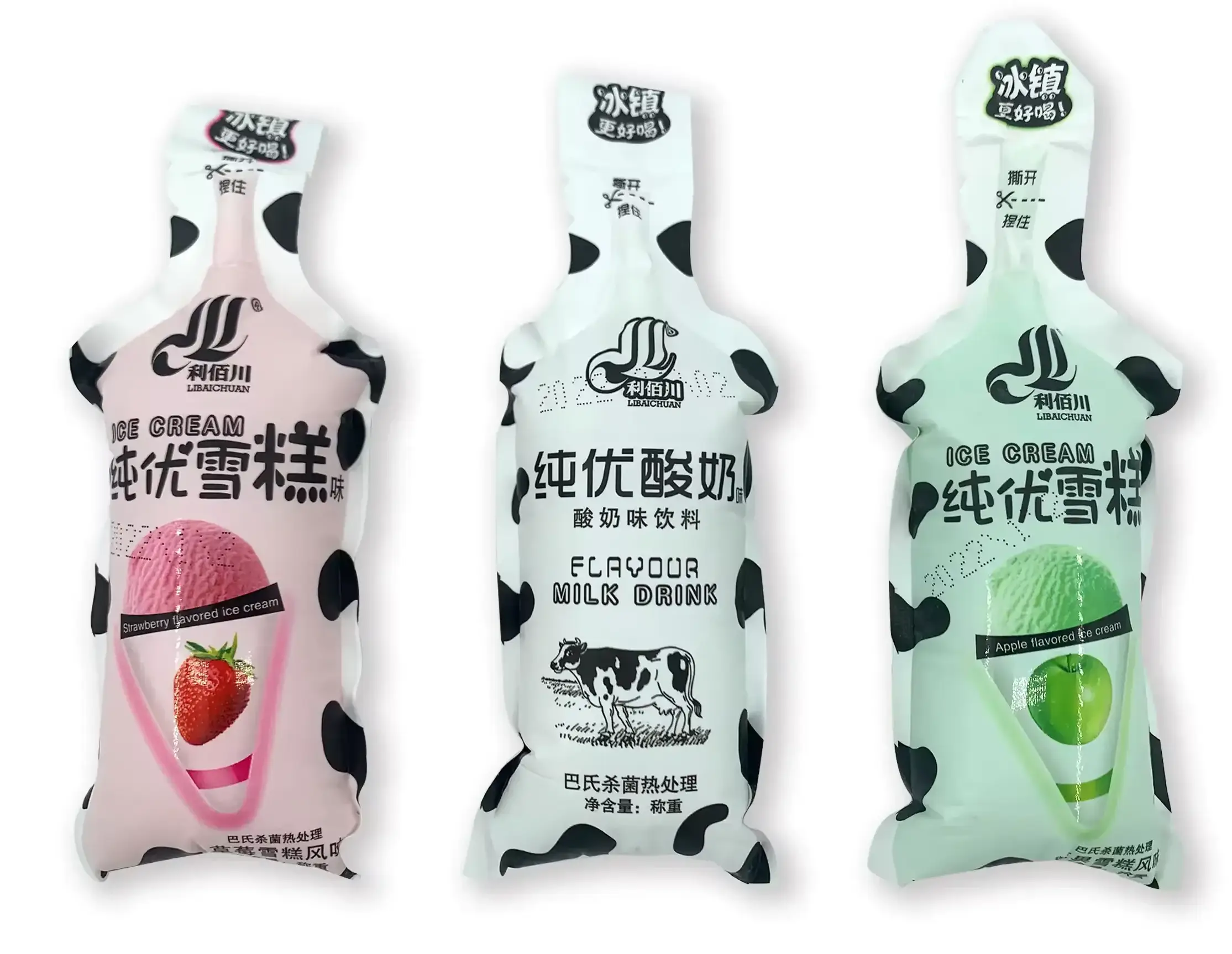
Milk-tea bases and dairy-containing liquids
- Typical risks: lipid migration, protein interactions, heat stability.
- Recommended structures: PET/NY/AL/PE or PET/EVOH/PE with PP/PE spout options rated for pasteurization.
- Filling: pasteurization or aseptic; watch for fat-driven migration and test seal integrity after thermal cycles.
Smoothie and puree concentrates (high solids, particulates)
- Typical risks: puncture, clogging, oxygen entrapment.
- Recommended structures: PA/PE (or PA/CPP) or PET/PA/AL/PE for maximum puncture resistance. The inclusion of PA (Nylon) is non-negotiable here to handle the mechanical stress of particulates.
- Processing: cold fill with N₂ blanketing or aseptic fill to reduce oxygen.
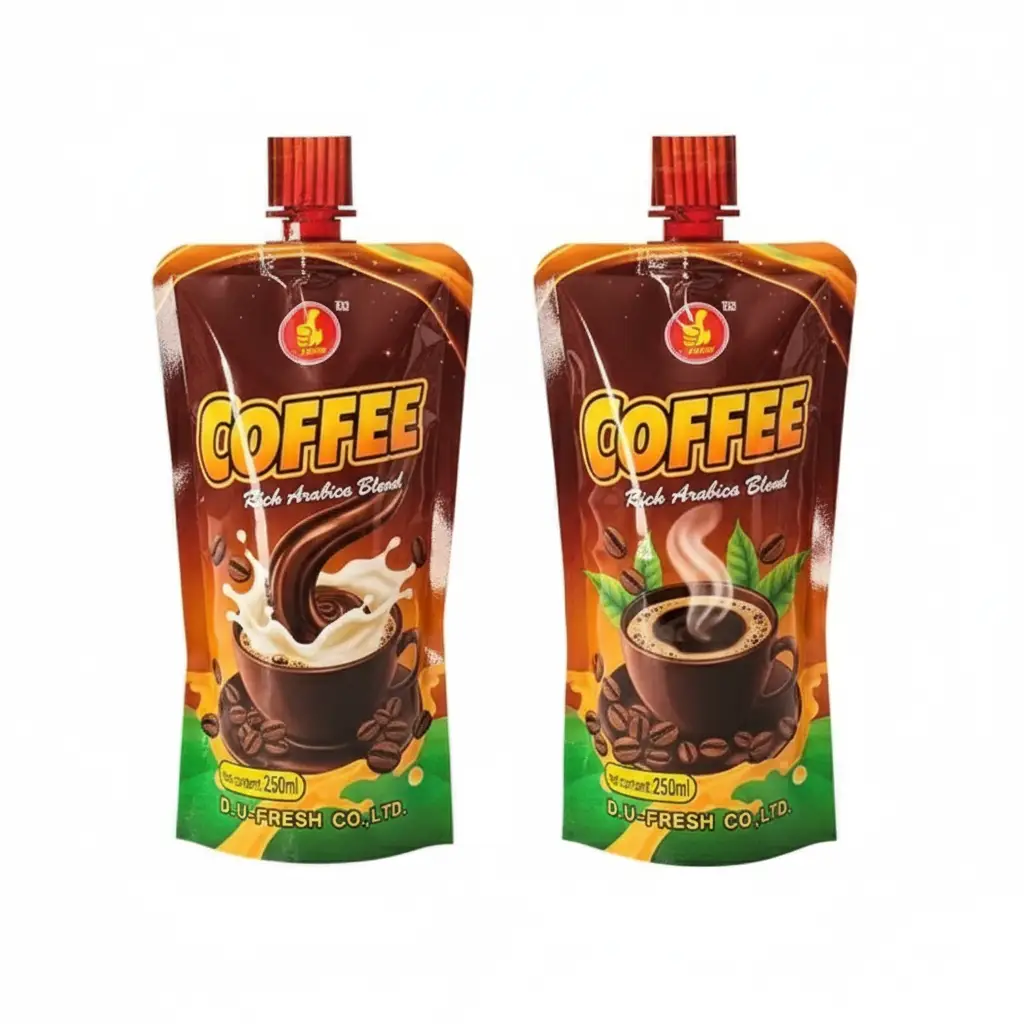
Coffee extracts and cold brews
- Typical risks: aroma loss, oxidation, and light exposure.
- Recommended structures: PET/AL/PE (Foil is superior for aroma retention) or PET/EVOH/PE (if transparent).
- Processing: Aseptic is preferred for maximum aroma retention.
Flavor syrups and seasoning liquids (high sugar / high Brix)
- Typical risks: hygroscopic behavior, plasticizer migration.
- Recommended structures: PET/AL/PE or thick-gauge PE/PE where chemical compatibility is critical.
- Additional: evaluate ESCR (Environmental Stress Crack Resistance) of the sealant layer, as high-Brix liquids can accelerate stress cracking in standard PE.
Filling and Handling Constraints That Influence Film Choice
- Hot-fill vs aseptic vs cold fill: higher fill temperatures need sealant and spout materials that tolerate thermal cycles without delamination. Aseptic reduces thermal impact but requires certified sterile film and a validated process.
- Pump and dispensing pressures: soft films that collapse unevenly can cause air ingestion; match film stiffness to the dispensing system.
- Spout welding and integration: spout body material (PP vs PE) must be compatible with film sealant and intended post-fill processes (hot-fill, retort). Define torque and leak criteria.
- Logistics exposures: long sea transport and high ambient temperatures argue for foil or EVOH structures.
Always run a pilot on your actual filler and dispenser to validate behavior under production speeds.
Regulatory and Compliance Considerations
- Require layer-specific Declarations of Compliance (DoC) for food contact per your markets (FDA, EU, GB standards).
- Ask for full migration testing (overall and specific) against appropriate food simulants and storage conditions.
- Verify certificates for adhesives, inks, and spout materials.
- Maintain lot traceability for films and spouts to support recalls.
Regulatory acceptance should be documented contractually before mass production.
Validation, Testing, and Acceptance Protocol
Before approving the film structure of the beverage injection bag, check:
- Material qualification: OTR / MVTR reports, tensile, puncture, and tear data.
- Pilot fill: run representative production speeds; verify fill accuracy, seal quality, spout weld strength, and headspace O₂.
- Accelerated aging & shelf life: 40°C/75%RH and real-time testing; track aroma, color, peroxide/volatile markers, and microbiology.
- Mechanical tests: drop, stack, and vibration tests to simulate distribution.
- Dispenser compatibility: measure dispense flow, drip, and collapse pattern on target equipment.
Establish go/no-go criteria and document acceptance thresholds.
Conclusion
A durable beverage injection bag solution aligns beverage chemistry, filling method, and distribution profile to a clearly specified film structure. Define measurable barriers and mechanical targets, require layer-level compliance documentation, validate on your actual production and dispensing systems, and use pilot data to set contractual acceptance criteria. When these technical steps are followed, film choice becomes an engineering decision — not an uncertain guess — and reduces product risk while enabling reliable commercial scale-up.
About GQ PACK

GQ PACK is a custom flexible food packaging manufacturer specializing in liquid and beverage applications. We provide wholesale beverage injection bags and develop custom beverage injection bag solutions engineered for filling compatibility, sealing reliability, and product safety.
As a factory-based beverage injection bag supplier, our manufacturing operates under internationally recognized safety standards with controlled production and consistent quality output. From structure design to material validation, each bag is built for dependable performance across commercial beverage systems—making GQ PACK a trusted partner for brands requiring precision and compliance.