EN
EN  DE
DE  FR
FR  RU
RU  AR
AR  ES
ES  JA
JA 
Requesting a quotation for custom coffee packaging may seem straightforward, but the quality of the quote depends largely on the information you provide. Many delays in communication are not caused by slow supplier responses but by missing packaging specifications that require multiple rounds of clarification.
Whether you’re launching a new coffee brand or sourcing a new coffee packaging supplier, preparing the right information in advance helps manufacturers provide faster, more accurate quotations while reducing project lead times. We outline the key details every coffee packaging manufacturer needs before preparing a quotation and explain how complete communication benefits both buyers and suppliers.
Why Coffee Packaging Buyers are Required to Complete Information
Faster and More Accurate Quotations
When an inquiry contains only a brief description, such as “I need coffee bags,” manufacturers can only provide a rough estimate. They still need to ask follow-up questions about bag size, materials, printing, quantity, and other specifications before calculating an accurate price.
Providing complete packaging information from the beginning minimizes repeated emails and enables suppliers to prepare quotations much more efficiently. This is especially valuable for importers, distributors, and brand owners working with multiple suppliers simultaneously.
Better Packaging Recommendations
A quotation is more than just pricing—it is also an opportunity for manufacturers to recommend the most suitable packaging solution.
For example, an experienced coffee packaging manufacturer can suggest:
- Appropriate barrier materials for whole bean or ground coffee
- The best bag structure for retail or wholesale markets
- Whether a one-way degassing valve is necessary
- Cost-saving alternatives without compromising product quality
The more information you provide, the more practical and tailored these recommendations become.
Shorter Production Lead Time
Accurate specifications also allow engineering and production teams to evaluate your project earlier.
Instead of spending days confirming technical details after the quotation is accepted, manufacturers can move directly into artwork review, sample production, and manufacturing planning, shortening the overall project timeline.
Essential Information Every Coffee Packaging Manufacturer Needs
Coffee Product Type
The first piece of information is the type of coffee you are packaging.
Examples include:
- Whole bean coffee
- Ground coffee
- Instant coffee
- Drip coffee
- Coffee capsules (outer packaging)
Different coffee products require different barrier properties and packaging features. Whole bean coffee, for example, typically requires a one-way degassing valve because freshly roasted beans continue releasing carbon dioxide after packaging.
Bag Type
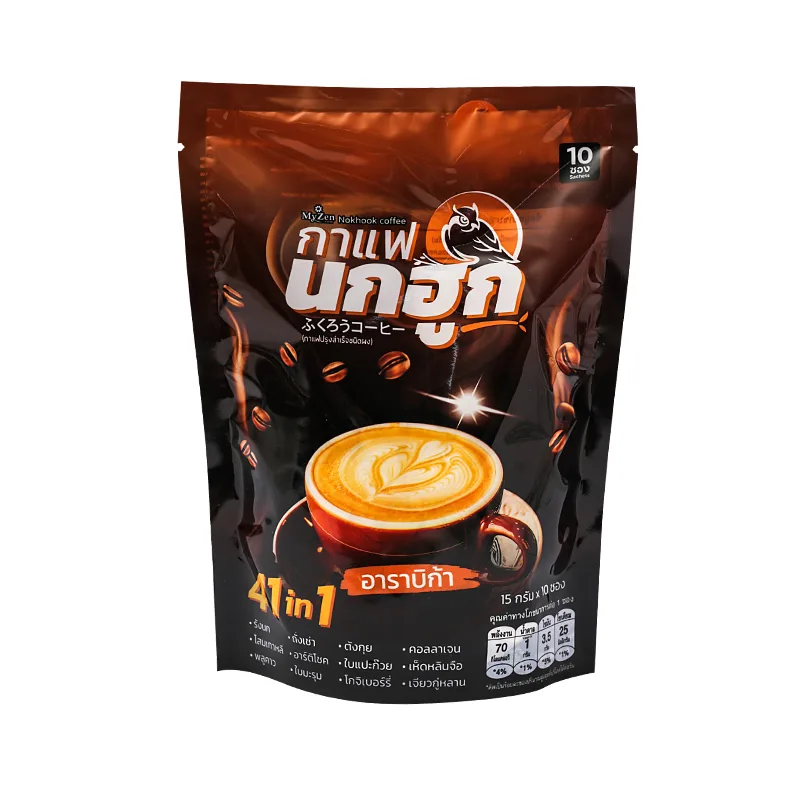
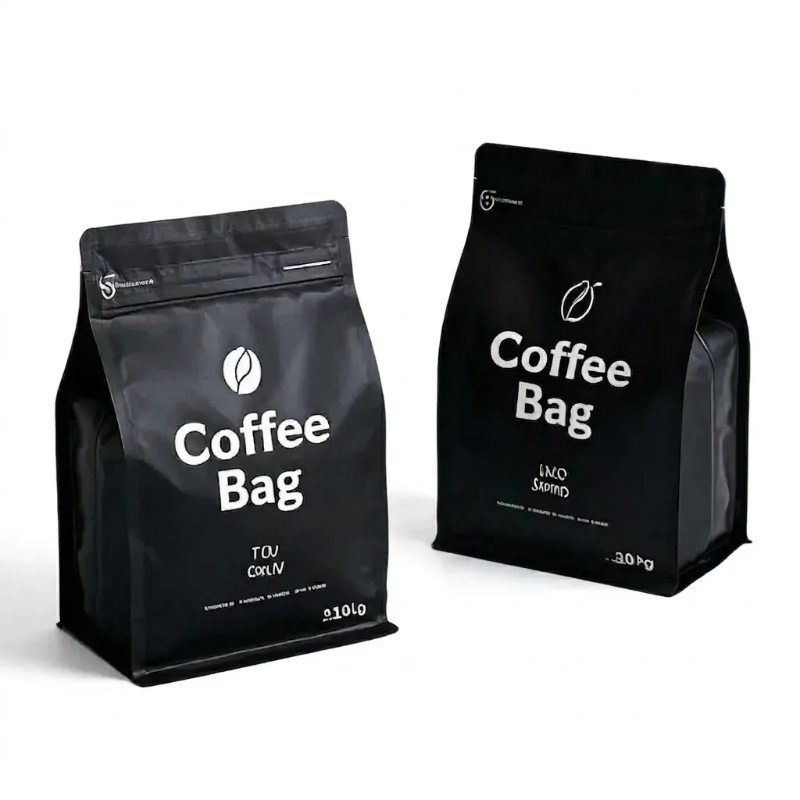
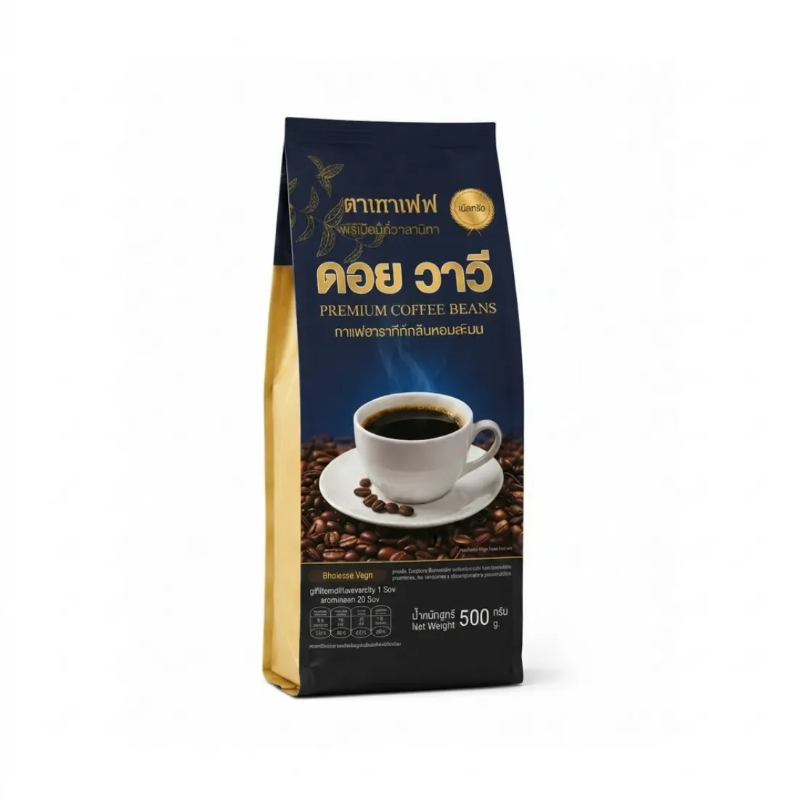
Specify your preferred bag style whenever possible.
Common options include:
- Flat bottom coffee bags
- Stand up pouches
- Side gusset bags
- Quad seal bags
If you’re unsure which style is best, simply explain your product application and sales channel. A professional coffee packaging supplier can recommend the most suitable structure.
Bag Dimensions and Capacity
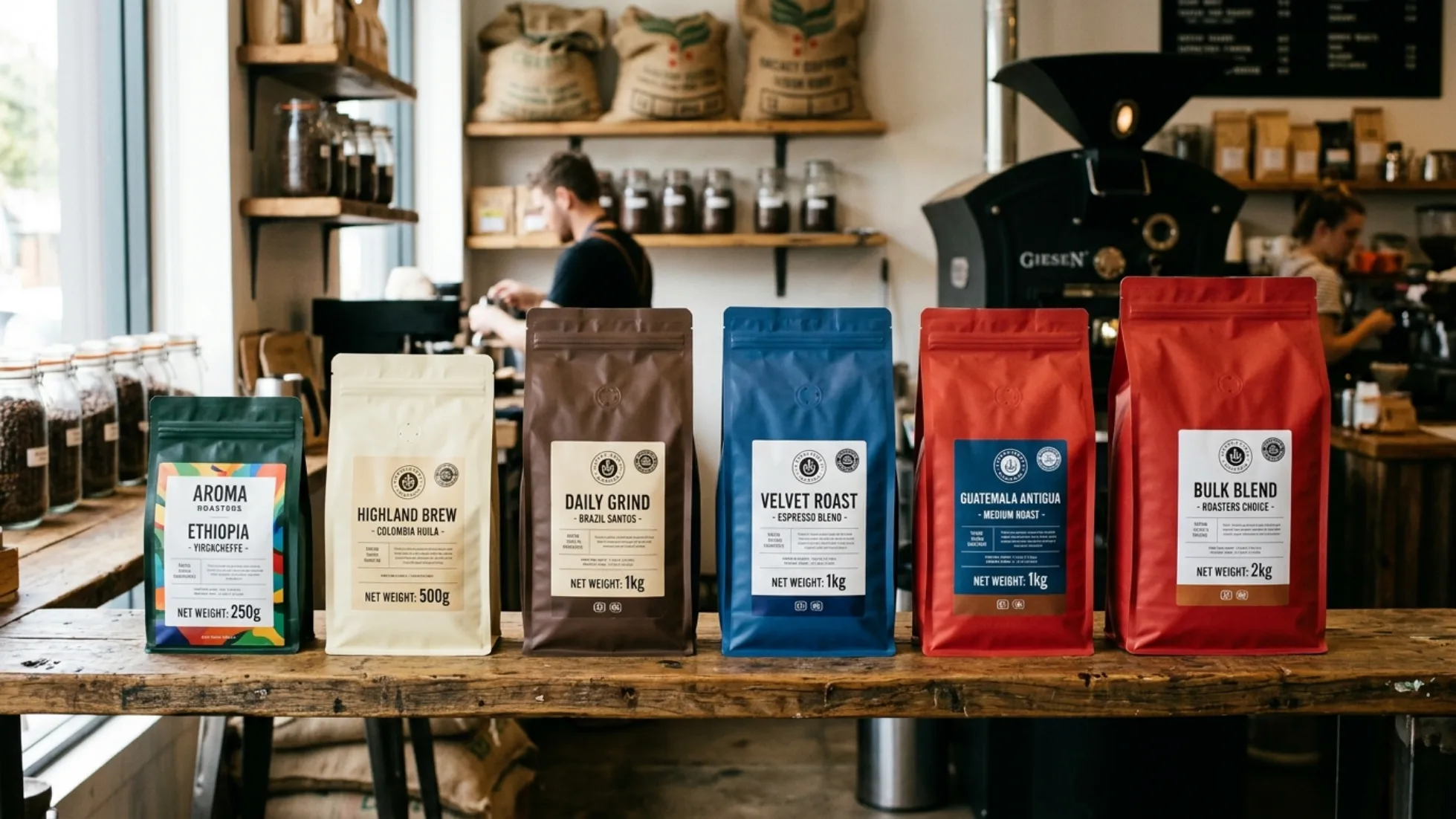
One of the most common mistakes buyers make is providing only the filling weight, such as “250g coffee bag.”
However, coffee density varies depending on roast level and bean size, so weight alone is not enough.
Ideally, provide:
- Bag width
- Bag height
- Bottom gusset width
- Target filling weight (250g, 500g, 1kg, etc.)
If you already have an existing package, sharing its dimensions or sending a photo can greatly improve quotation accuracy.
Material Structure
Material selection directly affects barrier performance, shelf life, and cost.
Common coffee packaging structures include:
- PET/AL/PE
- PET/VMPET/PE
- Kraft Paper + Barrier Film
- Recyclable Mono-Material Structures
If you do not know the material structure, don’t worry. Simply describe your product, storage conditions, and shelf-life expectations, and your manufacturer can recommend the most appropriate solution.
Valve and Additional Features
Coffee packaging often includes optional functional features that influence pricing.
Examples include:
- One-way degassing valve
- Resealable zipper
- Tin tie closure
- Tear notch
- Hang hole
- Transparent window
Including these requirements in your inquiry helps manufacturers prepare a more accurate quotation without additional clarification.
Printing Information to Prepare For the Coffee Packaging Bag Supplier
Artwork Status
Manufacturers usually ask about the status of your packaging design.
Typical situations include:
- Finished artwork ready for production
- Logo and branding completed, packaging layout pending
- Design assistance required
Knowing your artwork status allows suppliers to estimate prepress work and production schedules more accurately.
Number of Printing Colors
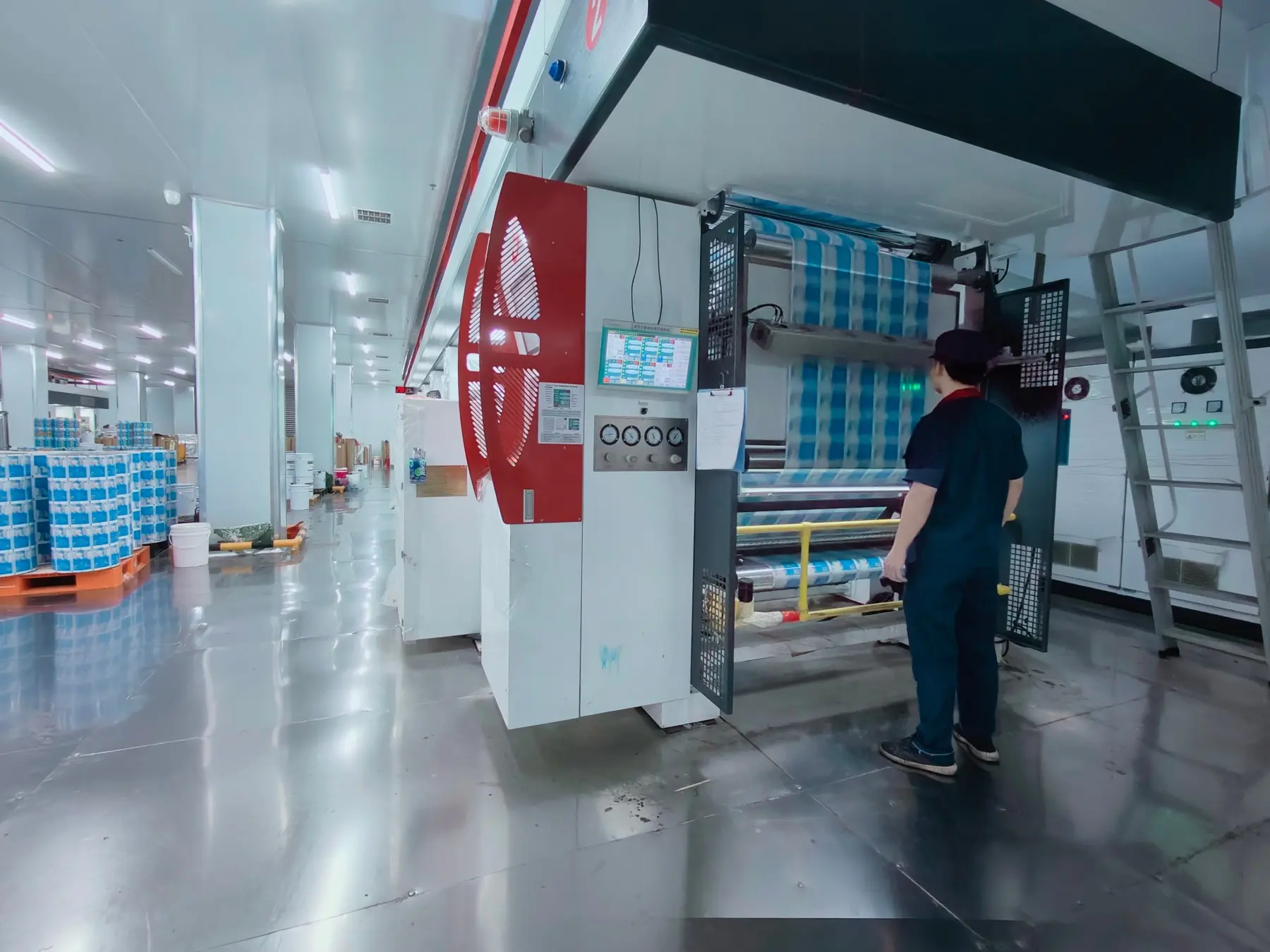
For gravure printing, the number of colors affects cylinder production costs.
Although you don’t need to know the exact technical details, informing your supplier whether your design is simple or highly colorful helps improve quotation accuracy.
If artwork is available, sending an AI or PDF file is even better.
Surface Finish
Surface finishing enhances the visual appeal of coffee packaging.
Common options include:
- Matte finish
- Gloss finish
- Soft-touch lamination
- Spot UV
- Metallic effects
Including your preferred finish ensures the quotation reflects your desired packaging appearance.
Commercial Information That Affects Pricing
Order Quantity (MOQ)
Quantity is one of the biggest factors affecting unit price.
Larger production runs generally reduce manufacturing costs because setup expenses are spread across more units.
Instead of asking for “the price,” specify your estimated order quantity, such as:
- 5,000 bags
- 10,000 bags
- 50,000 bags
If you’re still evaluating the market, providing an estimated annual demand can also help manufacturers recommend the most economical production plan.
Target Market
Where will your coffee products be sold?
For example:
- North America
- Europe
- Middle East
- Southeast Asia
Different markets may require different material structures, labeling information, or regulatory compliance. Sharing your destination market enables suppliers to recommend packaging that meets local requirements.
Delivery Timeline
Indicate when you expect to receive the packaging.
Whether your order is needed in four weeks or three months can affect production scheduling and shipping arrangements.
Providing realistic timelines helps manufacturers allocate production capacity more effectively.
Shipping Destination
Your delivery country or destination port is another important piece of information.
This enables suppliers to estimate shipping methods, calculate logistics costs if required, and recommend the most efficient export solution.
Information You Don’t Need to Worry About
Many buyers hesitate to request quotations because they believe every specification must already be finalized. In reality, experienced manufacturers can assist throughout the packaging development process.
Material Recommendation
If you don’t know which laminate structure is suitable, simply explain your coffee product and packaging goals. Manufacturers can recommend materials based on barrier requirements, shelf-life expectations, and budget.
Structural Optimization
Even if you’ve chosen a bag style, manufacturers may suggest adjustments to dimensions or structural details that improve filling efficiency, shelf presentation, or transportation performance while reducing costs.
Artwork File Checking
Professional suppliers typically review artwork before production to identify issues such as incorrect bleed areas, low-resolution graphics, missing fonts, or improper color settings.
Early artwork review reduces the risk of printing errors and production delays.
Packaging Testing Suggestions
Depending on your product, manufacturers may recommend additional testing before mass production, including:
- Seal strength testing
- Barrier performance testing
- Drop testing
- Compatibility testing with coffee products
These recommendations help ensure packaging performs reliably throughout storage, transportation, and retail distribution.
Sample RFQ Checklist
Before contacting a coffee packaging manufacturer, prepare the following information to boost the efficiency of the workflow:
Product Information
- Coffee type
- Whole bean or ground coffee
- Filling weight
Packaging Specifications
- Bag style
- Bag dimensions
- Material (if known)
- One-way valve requirement
- Zipper requirement
- Other functional features
Printing Requirements
- Artwork availability
- Number of colors
- Surface finish
Commercial Information
- Order quantity
- Destination country
- Expected delivery date
Helpful Attachments
- Existing packaging photos
- AI or PDF artwork files
- Physical samples (if available)
- Reference packaging images
Providing this checklist significantly improves communication efficiency and enables suppliers to prepare accurate quotations with fewer revisions.
Conclusion
A fast and accurate coffee packaging quotation starts with clear communication. By providing complete information about your product, packaging specifications, printing requirements, and commercial expectations, you can reduce unnecessary back-and-forth discussions and help suppliers deliver precise pricing more quickly.
Even if some technical details have not yet been finalized, sharing as much information as possible allows your coffee packaging supplier to recommend suitable materials, optimize packaging structures, and identify cost-saving opportunities early in the project. Better communication not only speeds up the quotation process but also lays the foundation for a smoother and more successful manufacturing partnership.
Frequently Asked Questions
Can I request a quote if I don’t know the packaging material?
Yes. Most manufacturers can recommend suitable material structures based on your coffee product, shelf-life requirements, and budget.
Do I need finished artwork before asking for a quote?
No. You can request a quotation even if your artwork is still being designed. Providing a logo, reference design, or general printing requirements is usually sufficient for an initial estimate.
Does order quantity affect coffee packaging prices?
Yes. Larger order quantities generally result in lower unit costs because production setup expenses are distributed across more bags.
Can a coffee packaging manufacturer recommend the right bag structure?
Absolutely. GQ PACK can recommend the most suitable bag type based on your coffee product, target market, filling equipment, and branding objectives.
How long does it usually take to receive a coffee packaging quotation?
If all essential information is provided, most manufacturers can prepare an initial quotation within one to three business days.