DE
DE  EN
EN  FR
FR  RU
RU  AR
AR  ES
ES  JA
JA 
A practical B2B guide to choosing the right spout pouch size before quotation and sample testing.
Choosing a Ausgießerbeutel is not only about pouch size, printing, or material structure. The spout diameter is one of the most important functional decisions in a project.
A spout that is too small can slow dispensing or become blocked by pulp and particles. A spout that is too large may add unnecessary cost and reduce portion-control precision for thin liquids.
For juice, sauces, yogurt, and thick purees, there is no single best spout size. The suitable option depends on viscosity, particle content, fill volume, use scenario, filling process, and pouch structure.
The final spout diameter should be treated as a starting specification for testing, not a fixed value determined by product category alone.
Quick Spout Pouch Quote Checklist
Prepare the details below before requesting a quote. If a specification is not confirmed, write “Need recommendation” and provide a reference pouch photo or product description.
| Information Needed | What to Provide |
|---|---|
| Product to be packed | Juice, yogurt, sauce, puree, dairy product, supplement, personal care product, pet food, or other |
| Pouch size | Width × height × bottom gusset, or intended fill volume in ml |
| Filling temperature | Room temperature, hot fill, retort, or not confirmed |
| Preferred material | PET/PE, PET/AL/PE, PET/AL/PA/PE, PET/VMPET/PE, or need recommendation |
| Dicke der Folie | Required thickness in μm, or need recommendation |
| Preferred spout size | 8.6 mm, 10 mm, 12 mm, 15 mm, 22 mm, or need recommendation |
| Oberflächenbeschaffenheit | Glossy, matte, soft-touch matte, matte + glossy spot effect, or no preference |
| Estimated quantity | Expected order quantity in pieces |
| Optional reference | Existing pouch photo, sample, drawing, artwork, or product photo |
Practical note: Do not guess the spout size if your product contains pulp, fibers, jelly pieces, seeds, or grains. Confirm the recommendation through filled-sample testing before mass production.
Why Does Spout Diameter Matter?
The spout is the product outlet, but it affects the entire pouch system. Its diameter can influence:
- Dispensing speed and consumer squeezing force
- Consumer experience: sipping, pouring, controlled dosing, or spooning
- Risk of blockage from pulp, fibers, seeds, grains, or jelly pieces
- Filling efficiency and compatibility with filling equipment
- Leak resistance at the spout fitment and pouch welding area
- Pouch dimensions, cap selection, fitment cost, and material use
Choose the spout based on how the product flows, not only on how the pouch looks.
For a practical spout diameter guide, start with the product’s viscosity at the actual filling or consumption temperature, the largest expected particle or fiber, the required dispensing rate, and the filling method. These factors can change the suitable spout even when two products belong to the same category.
Spout Diameter Guide: Common Reference Sizes
The sizes below are common reference options for initial discussion. Actual fitment availability, internal bore geometry, cap design, product formulation, and filling process must be confirmed with the packaging supplier.
These are reference sizes rather than universal industry standards. The quoted diameter should also be confirmed with the supplier, particularly whether it refers to the fitment’s nominal size or effective internal opening.
| Reference Diameter | Often Considered For | Key Considerations |
|---|---|---|
| 8.6 mm | Thin beverages, yogurt, sauces, controlled dispensing | Suitable for easy-flow products without particles; verify filling speed and pouring experience. |
| 10 mm | Juice, drinkable yogurt, thin sauces, dairy beverages | A versatile starting point for low- to medium-viscosity products; confirm product flow and cap compatibility. |
| 11 mm | Fruit puree, smoothie-style drinks, thicker yogurt, medium sauces | Helps improve dispensing for more viscous products when a smaller opening feels restrictive. |
| 16 mm | Thick puree, ketchup-style sauces, concentrated nutrition products | Better suited to thicker products and faster dispensing; requires a well-designed pouch and fitment welding area. |
| 22 mm | Very thick products, products with larger particles, wide-outlet applications | Select only when product flow and user needs justify it; validate pouch structure and filling process. |
How to Choose a Spout Diameter for Juice
Clear Juice and Low-Viscosity Beverages
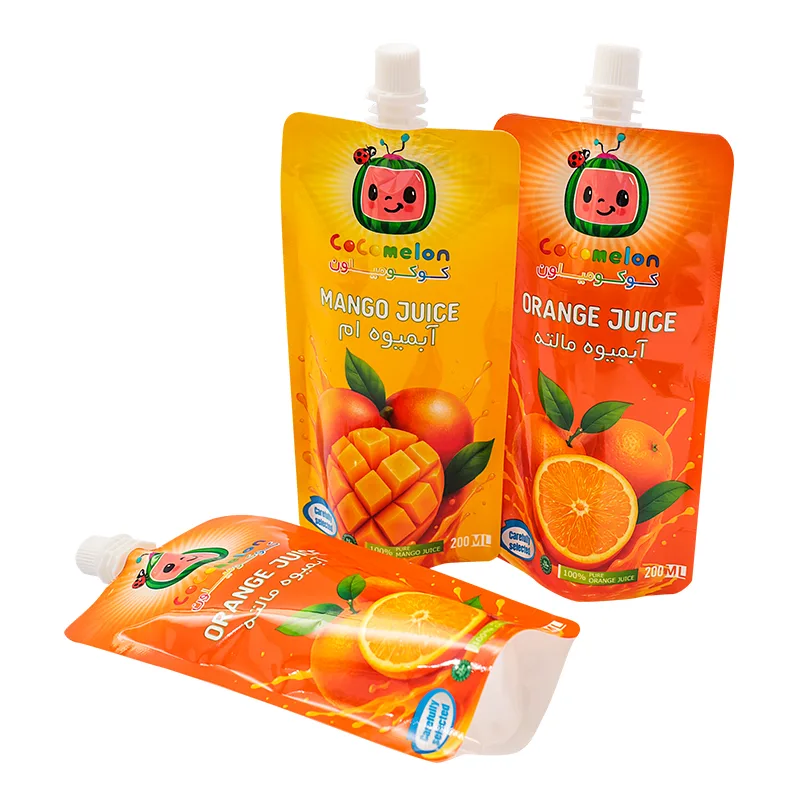
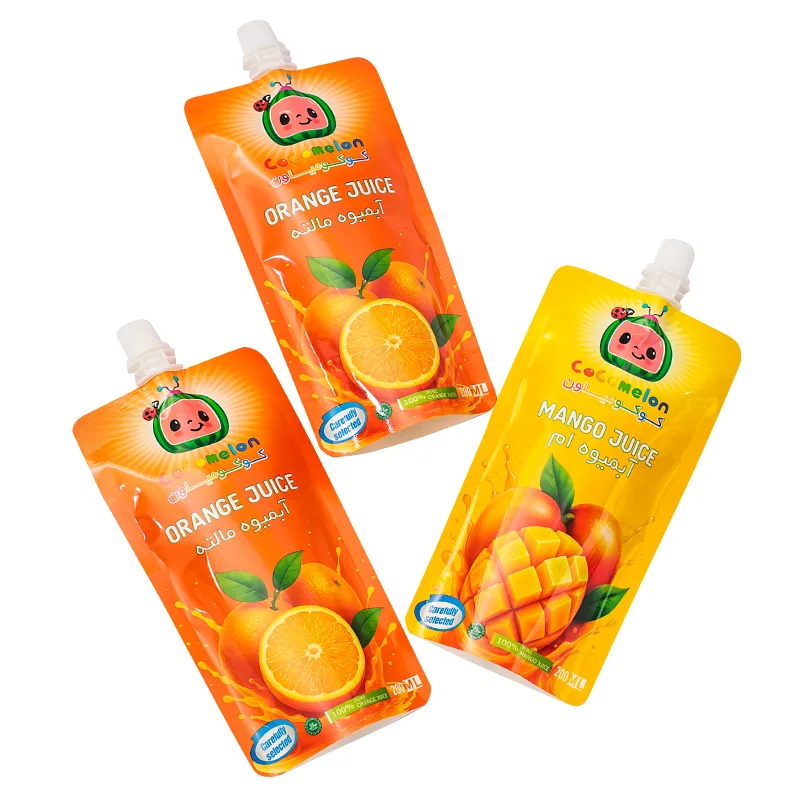
For clear juice, flavored water, tea drinks, and low-viscosity beverages, a smaller or medium spout is often a practical starting point. The objective is smooth drinking or pouring without making the opening unnecessarily large.
Consider:
- Will the pouch be used for direct drinking, pouring into a cup, or children’s consumption?
- Is the product consumed cold, at room temperature, or after warming?
- Does the cap require tamper evidence?
- Will the product be filled on an automatic line?
- Is the pouch a single-serve format or a larger family-size pack?
Juice With Pulp or Fruit Pieces
Products containing pulp, fruit fibers, aloe pieces, jelly pieces, or other inclusions need extra clearance.
Review:
- Maximum particle size
- Product settling behavior
- Product flow at filling and consumption temperature
- Consumer dispensing method
A smooth juice and a pulp-containing juice may need different spout pouch sizes even when pouch volume is similar.
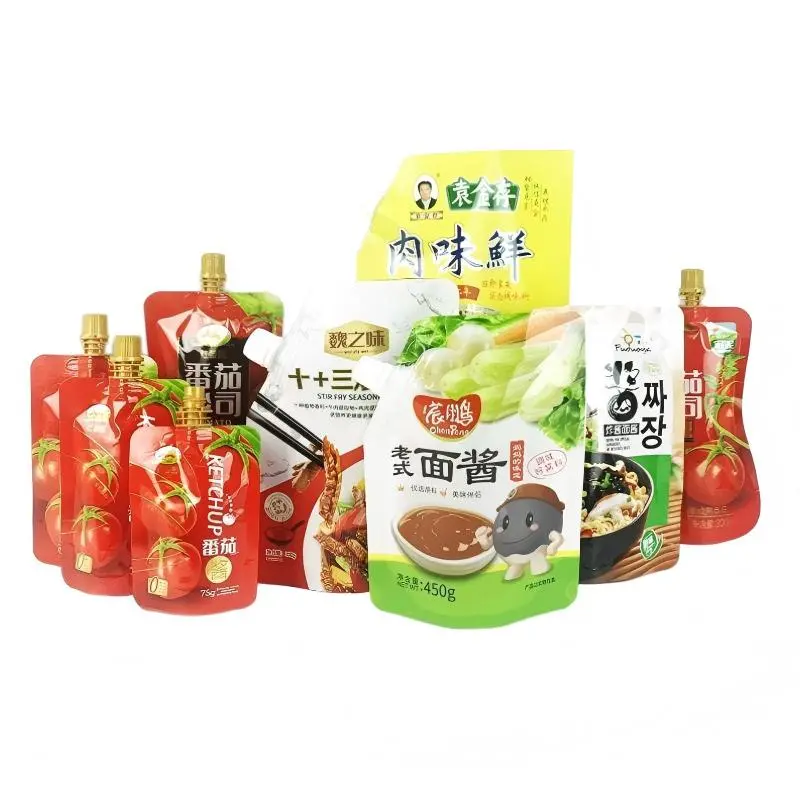
How to Choose a Spout Size for Sauces
Thin Sauces and Dressings
For thin sauces, salad dressings, and soy-based sauces, controlled pouring is often more important than maximum flow.
An overly large opening may cause splashing or poor portion control.
Thick Sauces
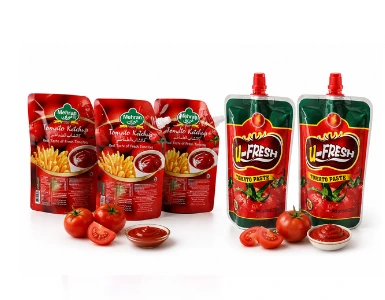
Ketchup-style sauces, concentrated sauces, chili sauces, nut-based sauces, and high-solids condiments may need a wider outlet.
Review:
- Product viscosity at use temperature
- Particle size
- Cap opening design
- Pouch panel stiffness
- Filling pressure
- Drop or transport requirements
A larger spout alone does not solve a dispensing problem if the pouch body is too stiff or the product settles.
How to Choose a Spout Diameter for Yogurt and Dairy Products
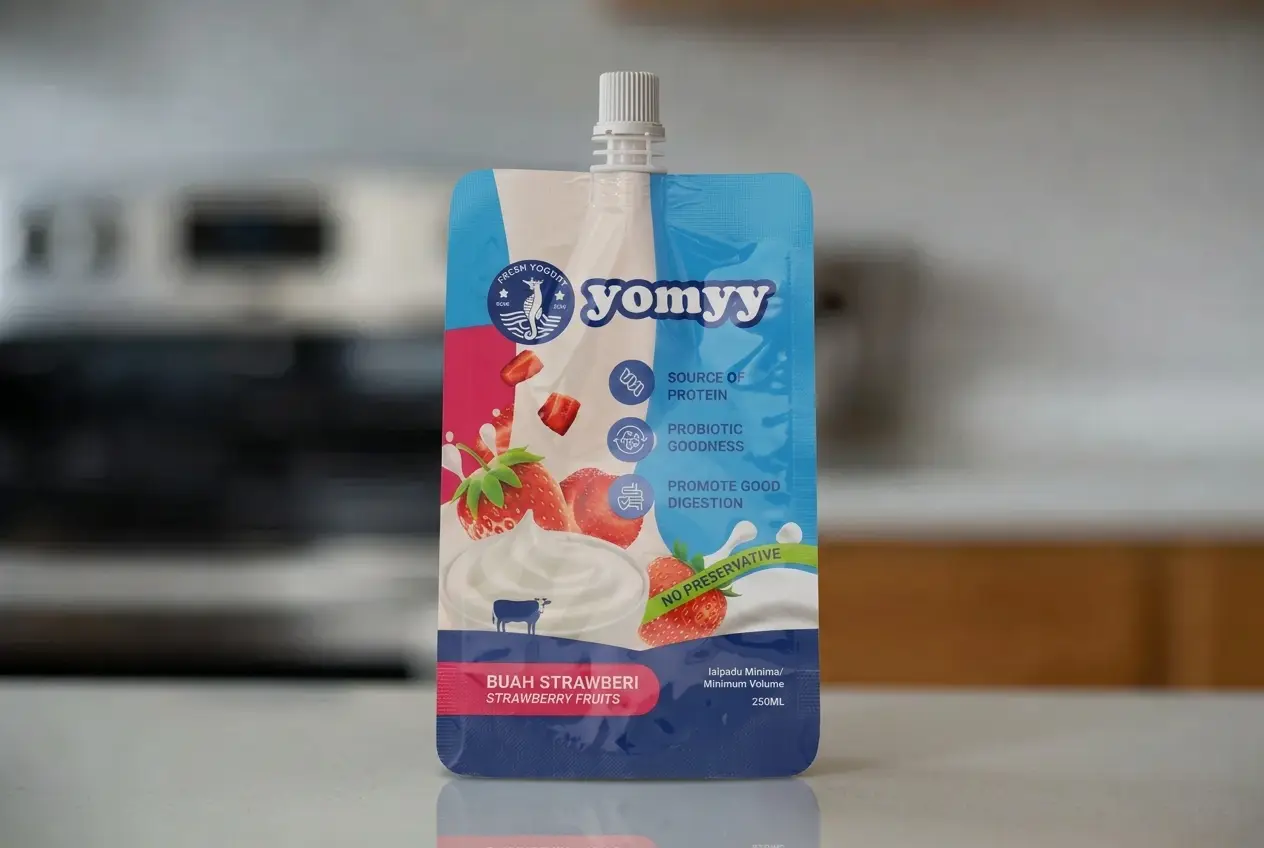
Yogurt, dairy beverages, fermented products, and protein drinks can change flow behavior with temperature, formulation, and storage time.
A product that flows well at room temperature may dispense more slowly when refrigerated.
Before selecting the spout diameter, confirm:
- Filling and storage temperature
- Direct-drinking or pouring usage
- Fruit pieces, cereal, or other inclusions
- Required barrier performance
For refrigerated yogurt and dairy products, evaluate the product at the temperature at which consumers will actually dispense it rather than relying only on room-temperature flow.
How to Choose a Spout for Thick Puree
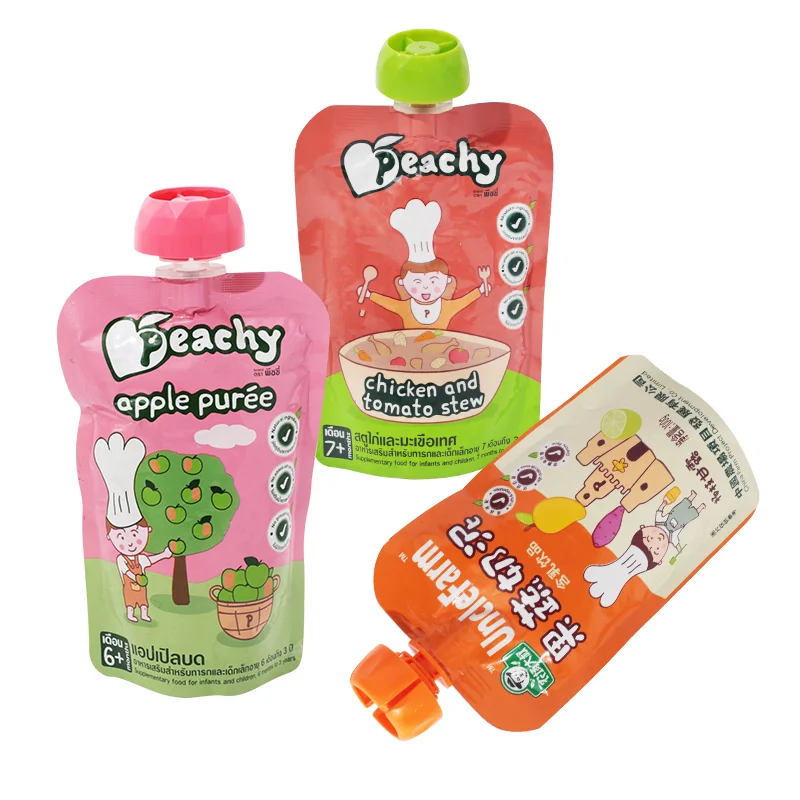
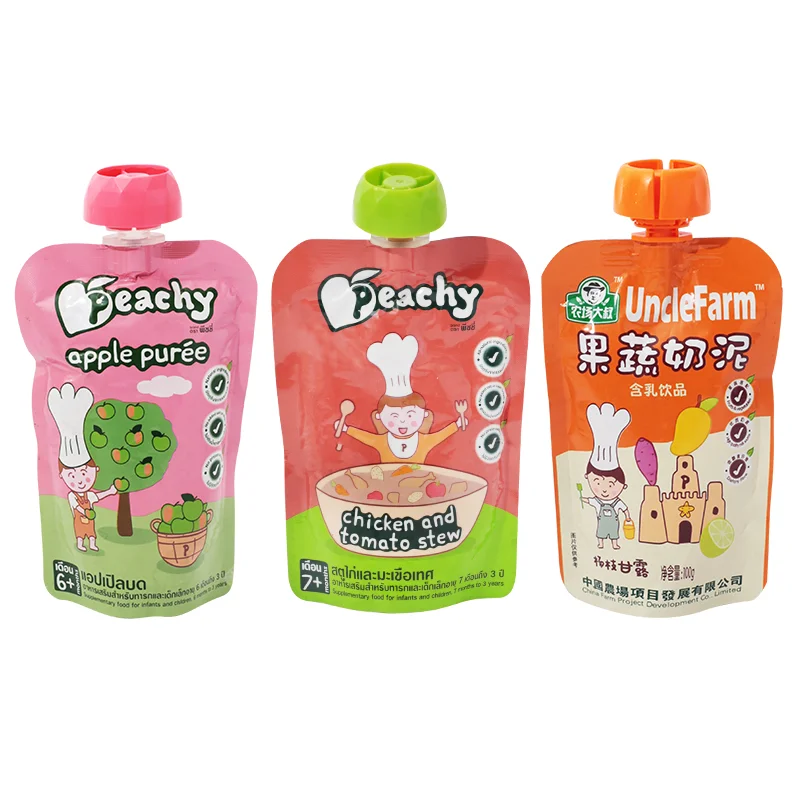
Fruit puree, baby food, vegetable puree, nutrition gel, pet puree, and meal replacement products may be thick, contain fibers or fine particles, and be consumed by squeezing or directly through the spout.
A restricted opening can cause poor flow, while an oversized opening can reduce controlled feeding.
Before choosing the spout size, check:
- Viscosity at filling and consumption temperature
- Fibers, seeds, grains, or suspended pieces
- Intended user: adult, child, infant, or pet
- Process: ambient, hot fill, pasteurization, water bath, or retort
Match the Spout Diameter With the Pouch Structure
Spout diameter should not be selected independently from material structure. The pouch must support expected filling, sealing, pressure, transport, and storage conditions.
| Product Requirement | Packaging Structure Considerations |
|---|---|
| Standard room-temperature liquid | Evaluate a standard laminate based on barrier needs, printing, and sealing requirements. |
| Light- or oxygen-sensitive product | A higher-barrier structure may be needed to protect shelf life and flavor. |
| Thick or particle-containing product | Consider puncture resistance, pouch stiffness, and fitment welding reliability in addition to flow. |
| Hot-fill product | Confirm heat resistance of the sealant layer, adhesive system, and spout fitment. |
| Retort or water-bath process | Confirm that laminate, adhesive, seals, and spout are suitable for the actual process. |
| Refrigerated or frozen product | Confirm low-temperature flexibility and resistance to cracking or seal failure. |
PET/PE, PET/AL/PE, PET/AL/PA/PE, and PET/VMPET/PE can serve different performance goals. The final structure should be confirmed through technical evaluation and representative sample testing.
Common Mistakes When Choosing Spout Diameter
- Selecting by pouch volume only. The same volume can contain products with very different flow requirements.
- Ignoring product temperature. Many products become thicker under refrigerated conditions.
- Ignoring particles and fibers. Small openings may block when products contain inclusions.
- Treating cap and spout as separate decisions. Review them as one fitment system.
- Skipping filled-sample validation. A blank pouch cannot prove actual product performance.
- Focusing only on initial cost. The cheapest fitment can cause filling, leakage, or consumer-experience problems.
Another common mistake is choosing a spout diameter from a general product category without checking the actual formulation. Two products sold as “juice” or “sauce” can have very different viscosity, particle content, and dispensing requirements.
What Should You Test Before Mass Production?
Use the actual product whenever possible. A suitable spout pouch testing plan may include:
- Filling trial at the actual filling temperature
- Dispensing test at expected consumption temperature
- Flow test for pulp, fibers, or particles
- Spout and cap opening/closing test
- Seal integrity and leakage test
- Spout welding-area inspection
- Drop test and transport simulation, when applicable
- Burst or pressure-resistance test, when applicable
- Storage trial and food-contact compliance evaluation, when required
For products with particles or significant viscosity changes, test representative worst-case conditions rather than testing only a smooth, room-temperature sample.
Get a Quick Spout Pouch Quote
Send the following information before requesting a kundenspezifischer Ausgussbeutel quote:
- Produkttyp
- Pouch size or fill volume
- Filling temperature
- Preferred material
- Dicke der Folie
- Spout size
- Oberflächenbeschaffenheit
- Estimated quantity
- Reference pouch photo or artwork, if available
If the spout diameter is not confirmed, provide the product description, viscosity or flow information, particle size if applicable, and filling conditions. The packaging supplier can then recommend a suitable starting fitment for sample testing.
Contact us: [email protected]
WhatsApp: +86 18902797080