DE
 EN
 FR
 RU
 AR
 ES
 JA

Choosing the right jelly packaging requires more than deciding on a bag shape or cup size. Brands need to consider how consumers eat the product, where they consume it, how much they use at one time, and whether the packaging needs to support storage or transportation.
A jelly product sold as an on-the-go snack has different packaging requirements from cup jelly intended for immediate consumption or multipacks designed for family sharing. These differences affect the choice of packaging format, opening method, sealing performance, and package size.
For jelly manufacturers and brand owners, matching packaging to consumer use scenarios can improve convenience, strengthen shelf presentation, and support more efficient production, from the perspective of a custom jelly packaging manufacturer.
Why Consumer Use Scenarios Matter in Jelly Packaging
Consumer behavior provides a practical starting point for packaging decisions. Before selecting a format, brands should identify the product’s target users and the situations in which it will be consumed.
Portability and Convenience
Jelly products are often sold as convenient snacks. Consumers may carry them to school, work, travel destinations, or outdoor activities.
In these situations, packaging should be compact, easy to open, and suitable for carrying. For squeezable jelly products, the spout design and closure also affect how conveniently consumers can eat the product.
A package that looks attractive on a shelf may not be practical for on-the-go consumption if it is difficult to open or has an unsuitable dispensing design.
Portion Size and Consumption Frequency
Packaging size should reflect how much consumers typically eat at one time.
Single-serve formats are suitable when portion control and individual convenience are priorities. Larger or multipack formats may be more appropriate for households, sharing occasions, or products purchased in quantity.
Brands should also distinguish between products intended to be consumed immediately after opening and those that may be stored for later use. This affects whether a resealable feature is necessary.
Product Protection and Storage
Jelly packaging must protect the product during filling, transportation, storage, and retail handling.
The required packaging structure depends on the product formulation, moisture sensitivity, expected shelf life, and distribution conditions. Seal integrity is particularly important because leakage or damaged seals can affect product quality and create handling problems.
Packaging should therefore be evaluated not only by its appearance but also by its compatibility with the product and filling process.
Choosing Jelly Packaging for Different Consumer Scenarios
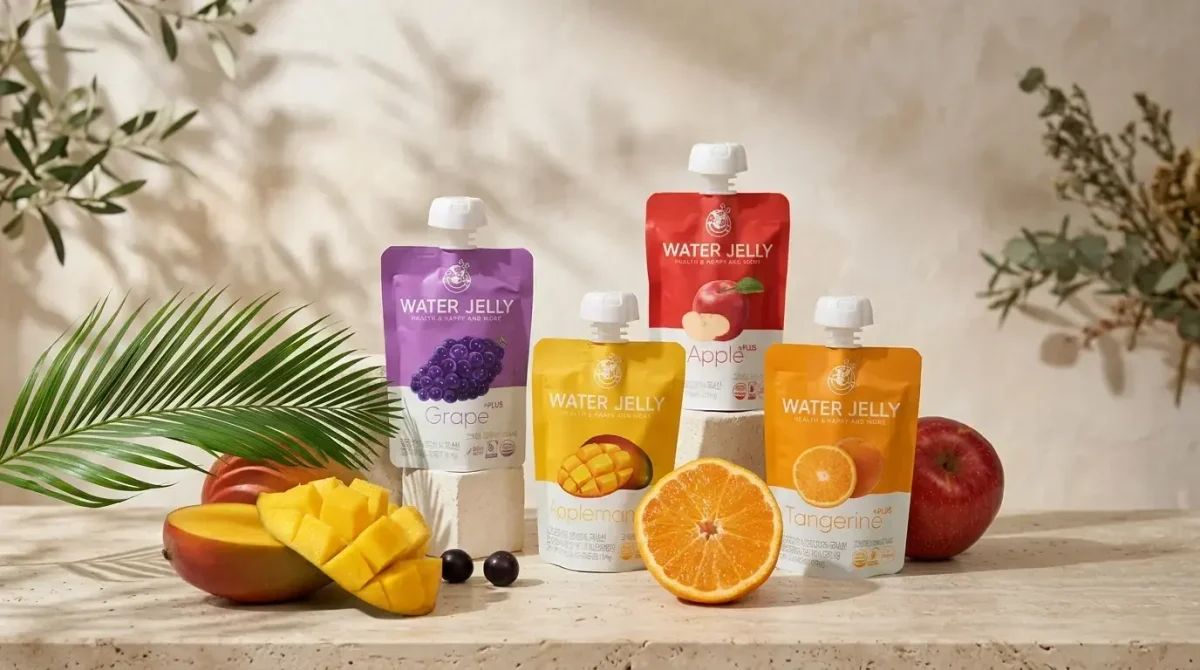
Different consumption scenarios create different packaging priorities. The following formats provide practical options for jelly brands developing products for specific markets and customer groups.
On-the-Go Snacking: Jelly Spout Pouches for Convenient Consumption
For consumers who eat jelly while commuting, traveling, or participating in outdoor activities, convenience is a major consideration.
Custom jelly spout pouches are suitable for squeezable jelly products because they allow consumers to dispense the contents through a spout rather than opening the entire package. Their flexible structure also makes them convenient to carry.
When selecting spout pouch packaging, brands should consider:
- Spout position and size: The opening should suit the product’s consistency and intended dispensing experience.
- Closure design: The cap should close securely after opening when the product is intended for repeated use.
- Leak resistance: Sealing performance is important during transportation and handling.
- Package dimensions: The pouch should provide a practical serving size without making it unnecessarily bulky.
Additional features can support different market requirements. For example, tamper-evident spouts provide a visible indication that the package has not been opened before purchase, while tethered lids help keep the cap attached to the package after opening.
These options should be selected according to the product design, target market, and applicable packaging requirements.

Everyday Single-Serve Snacks: Jelly Injection Bags
For everyday jelly snacks sold through convenience stores, supermarkets, or other retail channels, brands may prioritize individual portions, recognizable designs, and efficient production.
Custom jelly injection bags offer a flexible packaging option for jelly products. Their shapes, sizes, and printed designs can be customized to support different product concepts and brand identities.
When evaluating this format, buyers should consider:
- Portion size: Match the package dimensions to the intended serving weight.
- Bag shape: A distinctive shape can help differentiate the product on retail shelves.
- Sealing performance: The package needs reliable seals to reduce the risk of leakage.
- Production efficiency: Bag dimensions and structures should be compatible with the filling and packaging process.
- Printing design: Colors, graphics, and product information should remain clear and consistent across the product range.
For brands launching several flavors or product variations, a consistent packaging structure with differentiated printed designs can help organize the product range while maintaining a recognizable brand identity.
The final design should be tested with the actual jelly formulation and filling equipment rather than selected by appearance alone.

Ready-to-Eat Jelly Products: Cup Sealing Films
Cup jelly is commonly packaged for direct consumption. In this format, the sealing film plays an important role in protecting the product and keeping the cup securely closed before purchase.
Custom jelly cup sealing films are designed to seal the opening of jelly cups. Compared with choosing a pouch for a squeezable product, the main packaging considerations here are the compatibility between the film and cup, sealing performance, and consumer opening experience.
Brands should evaluate several factors:
- Cup compatibility: The film dimensions and sealing characteristics must match the cup design.
- Seal integrity: The seal should remain secure during filling, storage, and distribution.
- Material and thickness: These should be selected according to the product, cup material, and sealing process.
- Opening convenience: Consumers should be able to remove the film without unnecessary difficulty.
- Printed appearance: Custom graphics and product information can improve shelf presentation.
A cup and its sealing film should be evaluated as a packaging system. Even a suitable film may not perform reliably if the cup rim, sealing temperature, pressure, or production conditions are inconsistent.

Family Sharing and Retail Multipacks: Outer Packaging Pouches
Some jelly products are sold as multipacks rather than individual retail units. This is common when brands want to offer several cups or jelly sticks together in one sales unit.
In these cases, outer packaging pouches can group individual products, protect them during handling, and provide additional space for branding and product information.
When developing multipack packaging, consider:
- Pack configuration: Determine how many individual units will be included and how they should be arranged.
- Outer pouch dimensions: The pouch should accommodate the products without excessive empty space.
- Product visibility: Printed designs should communicate the flavor range, quantity, and brand identity.
- Distribution protection: The outer packaging should help keep the products together during storage and transportation.
Multipack packaging can also support promotional combinations, mixed flavors, and retail bundles. However, the outer pouch does not replace the primary packaging. Each individual jelly product still needs suitable protection from its own packaging.

Match Jelly Packaging Formats with Product Characteristics
Consumer scenarios help identify the intended packaging function, but the product itself determines whether a particular format is technically suitable.
| Packaging Format | Suitable Consumer Scenario | Key Selection Factors |
|---|---|---|
| Jelly spout pouch | On-the-go consumption | Spout design, closure options, leak resistance, dispensing convenience |
| Jelly injection bag | Everyday single-serve snacks | Bag shape, portion size, sealing performance, production efficiency |
| Jelly cup sealing film | Ready-to-eat cup jelly | Cup compatibility, seal integrity, opening convenience, printing |
| Outer packaging pouch | Family sharing and retail multipacks | Capacity, product arrangement, branding, distribution protection |
| Standbeutel | Selected retail jelly applications | Product compatibility, dimensions, closure and barrier requirements |
The table provides a starting point rather than a universal specification. For example, a spout pouch is appropriate for products that can be dispensed through its opening, while a cup sealing film is intended for a cup-based packaging system.
Brands should confirm the product’s consistency, shape, filling method, and packaging-line requirements before finalizing a format.
Key Factors to Consider Before Finalizing Jelly Packaging
Once the target consumer scenario and packaging format are clear, buyers should review the technical and commercial requirements before placing a production order.
Product Texture and Filling Requirements
Jelly products can differ in consistency, shape, and filling behavior. These characteristics influence the package structure, opening design, and filling process.
For example, a squeezable jelly product requires a suitable spout and dispensing opening. Cup jelly requires a compatible cup and sealing film. The selected packaging must work with the actual product rather than relying on assumptions based on other jelly products.
Brands should provide product samples or detailed specifications when discussing a new packaging project.
Shelf Life and Distribution Conditions
The required packaging performance depends on the product’s formulation, intended shelf life, storage environment, and distribution route.
Buyers should clarify:
- Expected shelf life and storage conditions.
- Transportation distance and handling requirements.
- Required barrier and sealing performance.
- Whether the product will be exposed to demanding temperature or humidity conditions.
Material structures should be selected according to these requirements. A more complex structure is not automatically better if it does not provide a meaningful benefit for the product.
Branding, Retail Display, and Target Market
Packaging is also part of the product’s retail presentation. Shape, color, graphics, and printed information influence how consumers recognize and compare products.
Brands targeting different markets may need different languages, nutritional information, ingredient declarations, or other label details. These requirements should be confirmed before artwork approval and mass production.
For product ranges with multiple flavors, consistent packaging layouts and coordinated colors can make the range easier to identify while allowing each flavor to stand out.
Packaging Cost and Production Efficiency
Packaging cost should be evaluated alongside production efficiency and product positioning.
A low-cost package may not be the best choice if it causes filling difficulties, inconsistent seals, or excessive material waste. Likewise, adding features that consumers do not need can increase costs without improving the product experience.
Buyers should compare the total packaging requirements, including material structure, dimensions, printing, accessories, production compatibility, and order quantity.
How Jelly Brands Can Develop the Right Custom Packaging
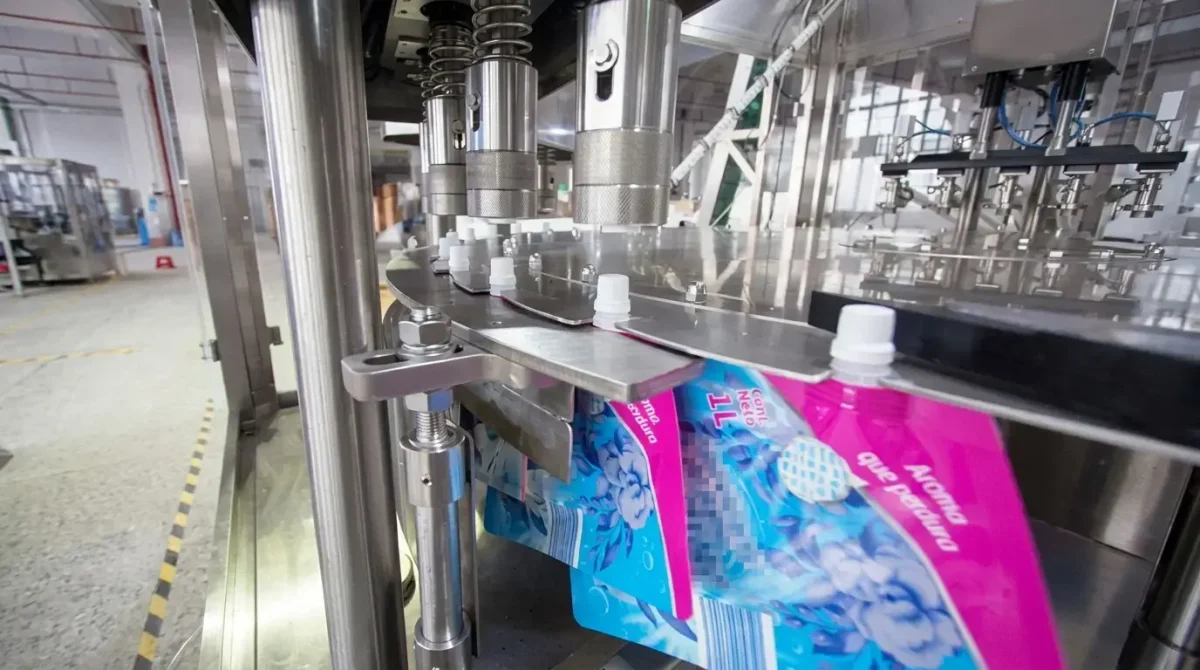
Developing custom jelly packaging is a process of matching product requirements, consumer expectations, and manufacturing conditions.
Before requesting a quotation, brands should prepare the following information:
- Product details: Jelly type, consistency, shape, formulation, and serving weight.
- Target consumer and use scenario: Individual snacking, children’s snacks, immediate consumption, or multipack sales.
- Preferred packaging format: Spout pouch, injection bag, cup sealing film, or outer packaging pouch.
- Dimensions and functional features: Package size, spout configuration, closure, opening method, and other required accessories.
- Branding requirements: Artwork, colors, logo placement, and target-market labeling.
- Production information: Filling equipment, estimated order quantity, and expected delivery schedule.
Working with an experienced packaging manufacturer can help coordinate these requirements before production begins.
GQ PACK provides custom jelly packaging solutions for jelly producers, including spout pouches, injection bags, cup sealing films, and outer packaging pouches. Its OEM and ODM services support customization of packaging size, shape, printed design, and functional features. The company also provides material selection, design consultation, and sample production to help customers assess packaging options.

GQ PACK’s manufacturing system is certified to ISO 9001, ISO 22000, and BRCGS Packaging Materials standards. Packaging dimensions, structures, and spout configurations can also be tailored to match customers’ existing filling equipment.
For brands planning a new product launch or updating an existing packaging range, explore custom jelly packaging solutions to review the available formats and customization options.
The most suitable packaging is not necessarily the one with the most features. It is the one that fits the product, supports the intended consumption scenario, works reliably with the production line, and meets the brand’s commercial requirements.
FAQs
1. What Is the Best Packaging for Jelly Snacks?
The best format depends on the product and how consumers use it. Spout pouches are suitable for squeezable jelly products, injection bags can be used for individual jelly products, and cup sealing films are designed for cup jelly. Multipack pouches can group several individually packaged products for retail sale.
2. What Is the Difference Between Jelly Spout Pouches and Injection Bags?
Jelly spout pouches allow consumers to dispense squeezable jelly through a spout, making them suitable for convenient consumption. Jelly injection bags are another flexible packaging option for jelly products, with customization available for bag shape, size, and printed design. The appropriate format depends on the product structure and filling requirements.
3. What Packaging Is Suitable for Cup Jelly Products?
Cup jelly products require a cup and a compatible sealing film. Buyers should evaluate film dimensions, material structure, sealing performance, and opening convenience. The cup and film should be tested together under actual production conditions.
4. What Should Brands Consider When Customizing Jelly Packaging?
Brands should define the product specifications, target consumer, packaging format, dimensions, material requirements, printing design, functional features, filling equipment, and order quantity. Confirming these details before production helps reduce design changes and compatibility problems.