FR
FR  EN
EN  DE
DE  RU
RU  AR
AR  ES
ES  JA
JA 
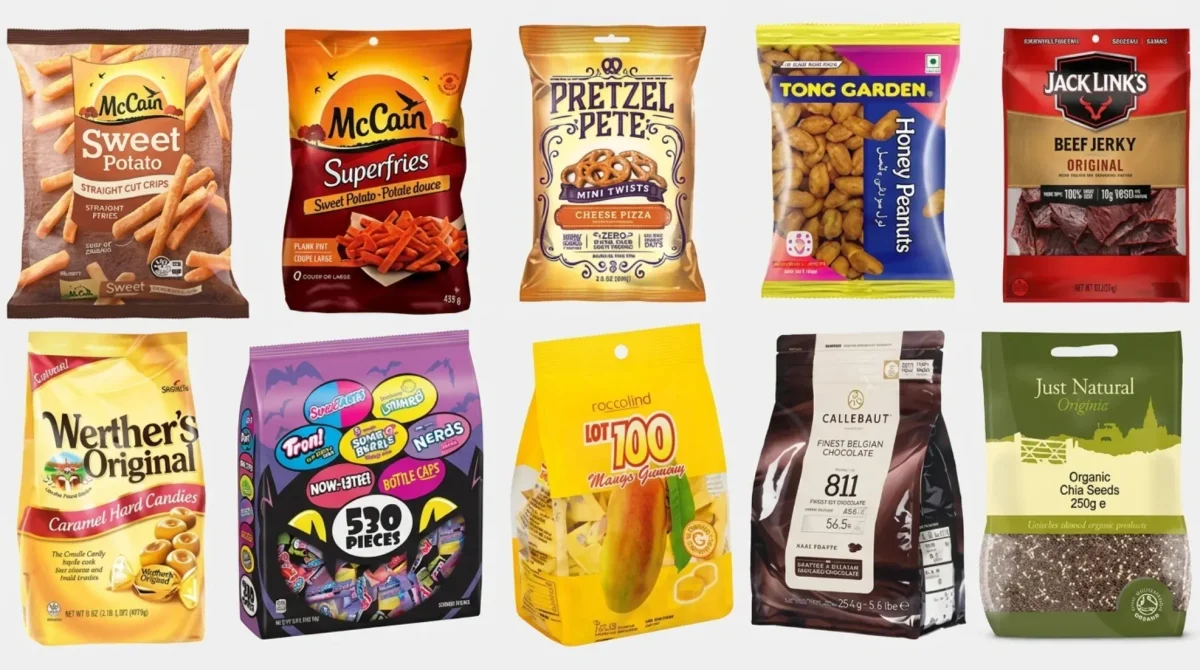
As a professional flexible packaging manufacturer, we have long provided nitrogen-flushed packaging solutions for brands in the snack, nut, bakery, and leisure food sectors. Nitrogen flushing, an important form of Modified Atmosphere Packaging (MAP), displaces oxygen inside the package to effectively slow product oxidation and inhibit microbial growth, thereby significantly extending shelf life. From a practical factory perspective, this article systematically compares the differences between nitrogen and air filling, and analyzes how structures such as BOPP/VMPET/PE and BOPP/PET/PE affect actual shelf life.
Core Differences Between Nitrogen Filling and Air Filling
Air-filled packaging retains approximately 21% oxygen and 78% nitrogen inside the package. The presence of oxygen accelerates lipid oxidation, causes off-flavors and discoloration, and promotes the growth of aerobic microorganisms, thereby shortening shelf life. For high-fat snacks such as potato chips and nuts, oxidation occurs relatively quickly under air filling, often resulting in rancid odors or loss of crispness within a shorter period.
Nitrogen filling uses specialized equipment to replace the air inside the package with high-purity nitrogen (typically controlling residual oxygen content to 1%–3% or lower). Nitrogen is an inert gas that does not participate in chemical reactions and effectively isolates the product from oxygen. Its main advantages include:
- Significantly reducing the rate of oxidation and maintaining lipid stability and flavor integrity;
- Inhibiting the growth of aerobic bacteria and molds, thereby enhancing food safety;
- Minimizing color changes and texture deterioration caused by oxygen;
- Typically extending shelf life by 1.5–3 times or more under the same material conditions.
From a production practice, nitrogen filling places higher demands on filling equipment, seal strength, and material barrier properties. If sealing is incomplete or material barrier performance is insufficient, external oxygen will gradually permeate and diminish the nitrogen-flushing effect.
Critical Impact of Packaging Material Structure on Shelf Life
The effectiveness of nitrogen-flushed packaging highly depends on the oxygen barrier capability of the composite film. The following comparison focuses on two common structures:
BOPP/VMPET/PE
- Outer BOPP layer: Provides good printability and mechanical strength.
- Middle VMPET (vacuum metallized polyester) layer: Forms an efficient oxygen and light barrier through the metallized coating; oxygen transmission rate (OTR) is significantly lower than that of ordinary PET.
- Inner PE layer: Ensures heat-seal performance and food-contact safety.
This structure offers excellent barrier properties and effectively maintains a low-oxygen environment inside the package. Under nitrogen filling, it is commonly used for potato chips, nuts, and extruded snacks, with typical shelf life reaching 6–12 months or longer (depending on product oil content, storage conditions, and residual oxygen control).
BOPP/PET/PE
- Outer BOPP layer: Similarly provides printing and protective functions.
- Middle PET layer: High strength and dimensional stability, but oxygen barrier performance is markedly weaker than VMPET.
- Inner PE layer: Serves as the heat-seal layer.
Due to the absence of a metallized or high-barrier layer, this structure has a higher oxygen transmission rate. Even with nitrogen filling, external oxygen permeates relatively quickly, causing the internal oxygen concentration to rise over time. Consequently, under the same product conditions, shelf life with BOPP/PET/PE is generally shorter than with BOPP/VMPET/PE. This structure is more suitable for products with relatively lower shelf-life requirements or faster inventory turnover.
Practical Differences in Shelf Life
Under identical nitrogen-flushing processes and storage conditions:
- BOPP/VMPET/PE + nitrogen filling: Can sustain a low-oxygen environment for a longer period, significantly delaying oxidation and delivering extended shelf life. It is suitable for products requiring longer shelf life or export logistics.
- BOPP/PET/PE + nitrogen filling: Can initially reduce oxygen content, but due to insufficient material barrier, oxygen permeation occurs more rapidly, resulting in limited shelf-life improvement. It is better suited for short-cycle sales or cost-sensitive applications.
It should be emphasized that shelf life is also influenced by product characteristics (water activity, fat content), residual oxygen control precision during filling, seal integrity, and storage temperature and humidity. Material selection must be matched to product requirements and logistics conditions to achieve optimal results.
| Packaging Structure | Nitrogen Filling | Performance des barrières | Typical Application |
|---|---|---|---|
| BOPP/VMPET/PE | Yes | High oxygen and light barrier | Nuts, potato chips, extruded snacks, longer shelf life |
| BOPP/PET/PE | Yes | Moderate oxygen barrier | Faster-turnover and cost-sensitive products |
How to Select Materials for Nitrogen-Flushed Food Packaging
When developing nitrogen-flushed packaging solutions for clients, we typically evaluate the following factors comprehensively:
- The product’s sensitivity to oxygen and target shelf life;
- Whether a light barrier is required (VMPET also provides good light-blocking performance);
- The balance between cost and performance;
- Compatibility with filling equipment and sealing processes.
For high-fat snacks, nuts, and products requiring longer shelf life, we prioritize BOPP/VMPET/PE combined with precise nitrogen-flushing processes. For categories with faster turnover and relatively lower barrier requirements, BOPP/PET/PE may be evaluated to optimize costs.
In our factory production of composite films, we strictly control metallization optical density, lamination bond strength, and heat-seal performance. We can also customize film thickness, printing effects, and special features (such as easy-tear notches or matte/glossy surfaces) according to customer needs. In addition, we provide material barrier testing and process-matching recommendations to ensure effective nitrogen flushing.
Conclusion
The core value of nitrogen-flushed packaging lies in the synergistic effect of “nitrogen displacement + high-barrier materials.” Nitrogen filling creates a low-oxygen environment for the product, while high-barrier structures such as BOPP/VMPET/PE are responsible for maintaining that environment over time. Only through the rational selection of materials and processes can shelf life be effectively extended and product quality remain stable.