FR
 EN
 DE
 RU
 AR
 ES
 JA

Pour jelly packaging for high-volume production, choosing the right format involves more than comparing package designs or material costs. Manufacturers need to consider how packaging interacts with feeding systems, filling equipment, sealing processes, and downstream inspection.
A packaging format that works well during a short production trial may create operational difficulties when used continuously at commercial scale. Feeding interruptions, inconsistent seals, frequent changeovers, and packaging waste can all affect the number of acceptable finished packs a line produces.
This guide examines four jelly packaging formats from a manufacturing perspective: cup sealing film, three-side seal bags, spout injection bags, and jelly spout pouches. It explains the production considerations associated with each format and how manufacturers can evaluate packaging performance before increasing order volumes.
For a separate discussion of consumer preferences and retail applications, see our guide to jelly packaging by consumer use scenario.
What High-Volume Production Requires from Jelly Packaging
High-volume jelly production requires packaging that can operate consistently within an established manufacturing process. The objective is not simply to achieve a high machine speed, but to maintain reliable output while controlling downtime, product waste, and packaging defects.
Several operational requirements influence this decision.
- Consistent material feeding: Packaging materials must be supplied and positioned reliably. Film tracking problems, irregular bag feeding, or incorrect package positioning can interrupt production.
- Filling compatibility: The packaging structure and filling configuration must accommodate the actual jelly formulation, including its consistency and flow characteristics.
- Reliable sealing: Sealing conditions must remain consistent throughout production. Product contamination in the sealing area, unsuitable sealing parameters, or incompatible materials can result in defective packages.
- Stable production performance: The packaging process should maintain consistent output during continuous operation, rather than relying only on short-duration speed demonstrations.
- Manageable changeovers: When manufacturers switch package sizes, designs, or product specifications, the required adjustments should be understood and controlled.
These factors are connected. For example, a packaging material may run smoothly during initial setup but create registration or sealing problems after the line reaches its normal operating speed.
Manufacturers should therefore assess the entire jelly packaging production line rather than evaluating the packaging material independently.
Comparing Jelly Packaging Formats by Production Requirements
Different jelly packaging structures create different requirements for material handling, filling, and sealing. The following comparison focuses on their production interfaces rather than consumer use scenarios.
| Format de conditionnement | Main production interface | Key considerations |
|---|---|---|
| Jelly cups with lidding film | Cup feeding and film sealing | Cup positioning, film registration, rim condition, and sealing consistency |
| Sachets à trois côtés scellés | Premade bag feeding or roll-film conversion | Bag positioning, filling access, seal alignment, and package handling |
| Spout injection bags | Spout and filling interface | Filling configuration, spout positioning, sealing, and pouch handling |
| Jelly spout pouches | Pouch feeding and spout-related filling or closure operations | Fitment positioning, filling method, seal integrity, and equipment compatibility |
Jelly Cups with Lidding Film
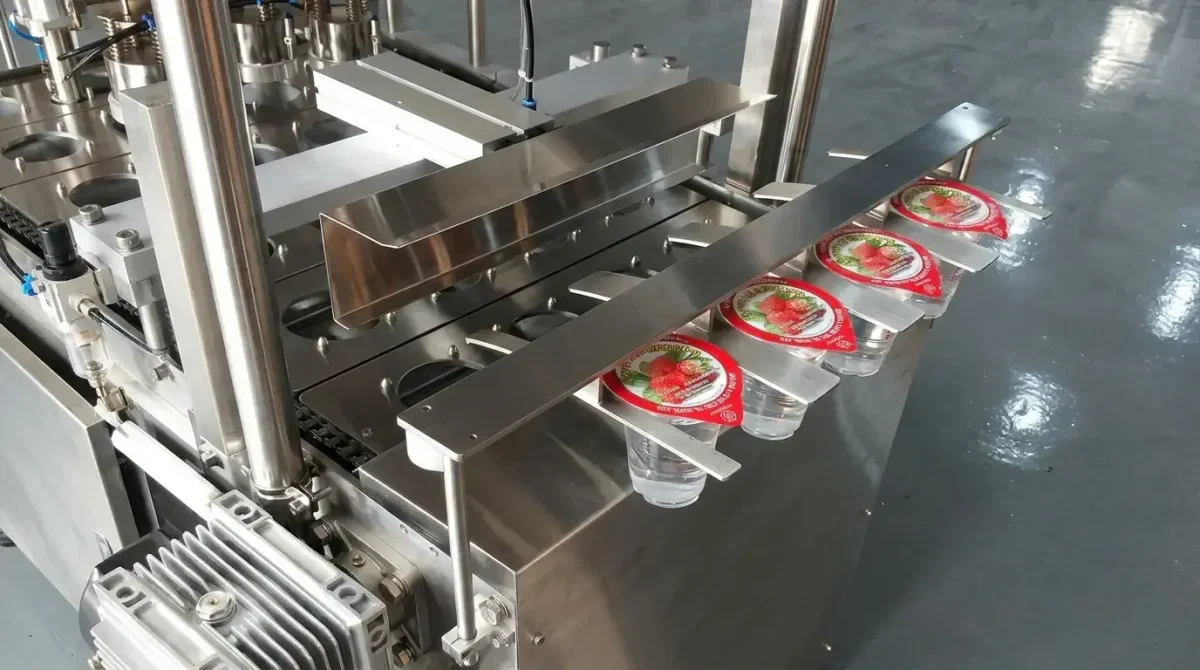
Cup packaging combines a formed container with a sealing film. The production process generally involves feeding or positioning cups, filling them with jelly, placing the sealing film, and applying the appropriate sealing process.
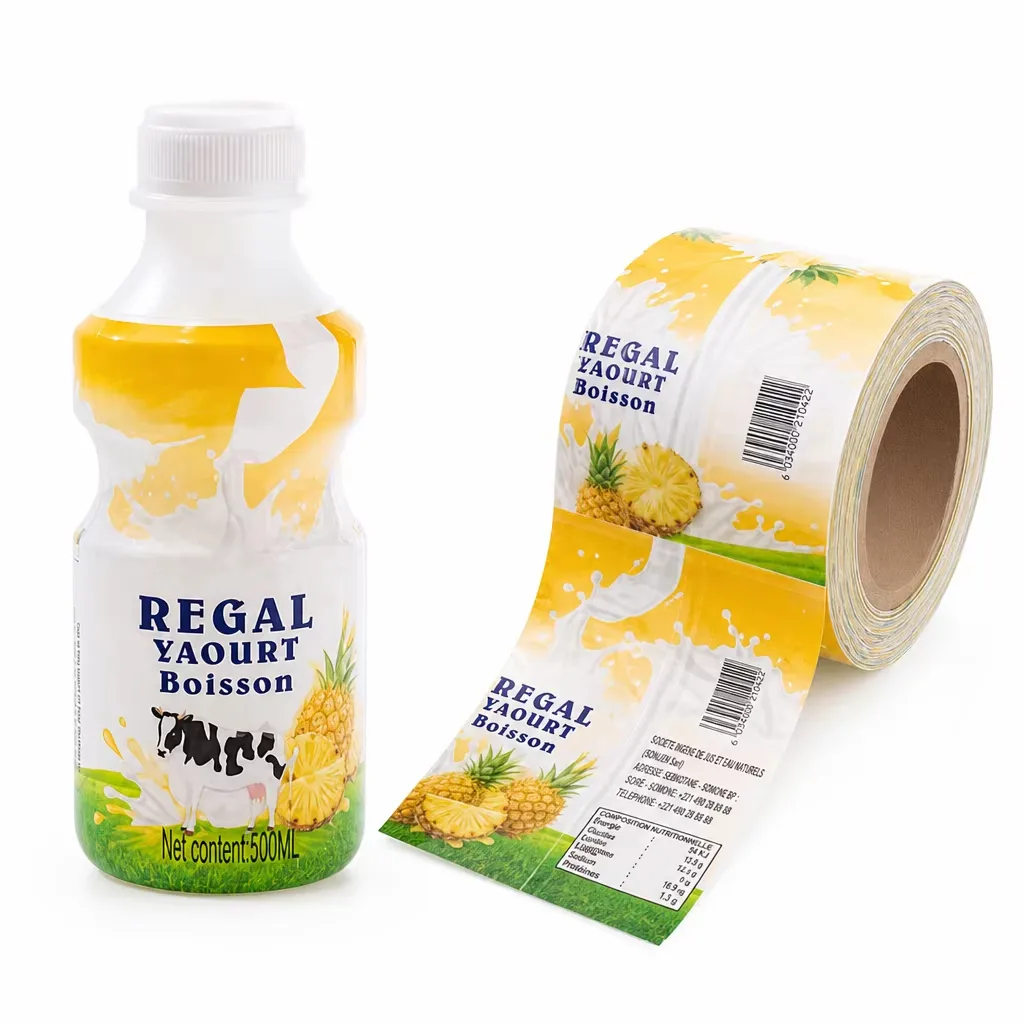
Fournitures GQ PACK film de scellement de gobelets sur mesure for applications including jelly cups. It is compatible with manual and automatic cup sealing machines and is customizable in film dimensions, thickness, and material composition.
For high-volume production, manufacturers should pay attention to four areas:
- Cup and film compatibility: The film dimensions and sealing characteristics must match the cup material and rim design.
- Film positioning: Printed film needs to remain correctly registered with the cup during continuous operation.
- Sealing conditions: Temperature, pressure, and dwell time must be suitable for the selected film and cup combination.
- Rim cleanliness: Jelly residue or contamination around the sealing area can interfere with seal formation.
The important point is that sealing film should be evaluated as part of a complete cup packaging system. Selecting a suitable film without confirming cup compatibility and machine settings is not sufficient.
Sacs à triple soudure
Three-side seal bags are flexible packages with three sealed edges and an opening through which the product can be filled before final closure.
GQ PACK offers custom 3-side seal bags for jelly, with customization options for material, dimensions, and printing. Its product page identifies jelly and other liquid or semi-liquid foods as relevant applications.
From a production perspective, the first question is how the bags will be supplied to the filling line.
If premade bags are used, manufacturers need to evaluate bag feeding, opening, filling access, positioning, and final sealing.
If the packaging is formed from roll stock on the production line, the relevant considerations include film unwinding, registration, forming, product dosing, and seal formation.
These are different production arrangements and should not be treated as interchangeable.
For high-volume applications, manufacturers should verify:
- Whether the bag dimensions match the feeding and filling equipment.
- Whether the opening remains accessible during product filling.
- Whether the sealing area stays free from jelly contamination.
- Whether the package maintains consistent dimensions and seal alignment during continuous production.
The choice between premade bags and roll-film processing should be based on the actual equipment configuration, not simply on the fact that both produce three-side seal packages.

Spout Injection Bags
Spout injection bags are flexible packaging structures designed for liquid and semi-fluid products. Their production requirements depend on the pouch construction, spout configuration, and filling arrangement.
GQ PACK provides customized spout injection bags for applications including jelly and puree. The product page identifies PET/PE and PA/PE among its listed material options.
For large-volume production, manufacturers should establish how the filling equipment interacts with the bag and its spout.
Important considerations include:
- Filling interface: Confirm the filling nozzle configuration and how it connects with the packaging structure.
- Spout positioning: The spout must be positioned consistently so that the filling process can operate without unnecessary adjustments.
- Seal integrity: The connection between the spout and pouch, as well as the remaining sealed areas, needs to be evaluated.
- Pouch handling: The bag should remain stable during feeding, filling, and subsequent handling.
The term injection bag does not, by itself, establish a particular filling-machine configuration. The actual production method must be confirmed against the package drawing and equipment specifications.
Pochettes de gelée
Jelly spout pouches are another flexible packaging option, incorporating a dispensing spout into the pouch structure.
GQ PACK offers custom jelly spout pouches with customized pouch dimensions, spout configurations, and printed designs. Its product page describes a 45-degree corner spout design.
For manufacturing applications, the key considerations are the position of the spout, the method of filling, and the sealing requirements around the fitment.
Manufacturers should confirm whether the selected pouch is filled through the spout or through another opening before closure. The answer affects the required filling arrangement and the way the package moves through the production process.
It is also important to distinguish the product names from the actual engineering configuration. Spout injection bags and jelly spout pouches may have overlapping structural features. Their names alone do not establish that they require completely different production systems.
The final decision should be based on the approved package structure, filling method, and machine interface.
How Packaging Format Affects Production-Line Performance
Selecting a packaging format is only the first step. Its suitability for high-volume production becomes clearer when manufacturers evaluate how it affects the complete operating process.
Feeding and Handling
Packaging must enter the production process in a consistent position and orientation.
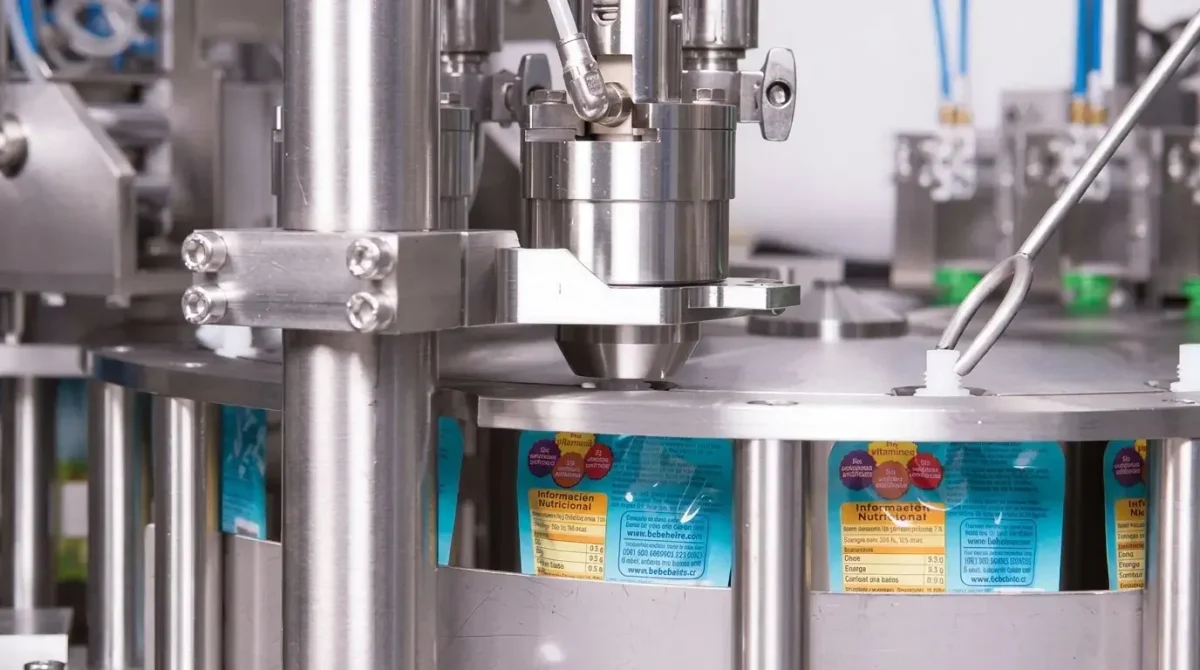
For cup packaging, this involves reliable cup feeding and film positioning. For flexible bags, the process may involve premade pouch feeding or roll-film handling, depending on the selected configuration.
Poor positioning can lead to filling errors, incorrect sealing locations, or interruptions that reduce overall production output.
Manufacturers should evaluate packaging handling under normal operating conditions rather than relying exclusively on manual sample preparation.
Filling and Sealing Integration
Filling and sealing are closely connected.
If the packaging opening, dimensions, or spout configuration do not match the filling equipment, the line may require additional adjustments or operate less consistently.
Sealing performance also depends on the relationship between the packaging material and the machine settings.
For example, a cup sealing film must match the cup rim and sealing process. A flexible pouch requires suitable sealing conditions for its structure and the relevant sealing areas.
Manufacturers should establish the appropriate process parameters through actual production trials. A setting that works for one material structure should not automatically be applied to another.
Changeover Requirements
Production lines often need to accommodate different jelly sizes, package dimensions, printed designs, or product specifications.
A format change may require adjustments to guides, feeding components, film positioning, filling equipment, or sealing components.
The impact is not limited to the time spent replacing parts. Setup verification and the approval of the first acceptable packages also affect the total changeover period.
A useful approach is to measure changeover from the last accepted package of the previous run to the first verified and stable package of the next run. This provides a more meaningful operational measure than recording only the mechanical adjustment time.
Inspection and Downstream Handling
Production performance does not end when a package leaves the sealing station.
Finished packages may need to pass through inspection, weighing, counting, collection, and secondary packing operations.
Les problèmes les plus fréquents sont les suivants :
- Incorrect fill quantities.
- Incomplete or damaged seals.
- Film registration problems.
- Deformed packages.
- Product leakage.
- Accumulation or interruptions at downstream equipment.
A packaging format that performs well at the filling station may still create problems later if the finished packages cannot move consistently through inspection and handling.
For this reason, the complete production process should be considered when assessing jelly packaging line compatibility.
How to Evaluate Production Performance Before Scaling Up
Before committing to high-volume jelly packaging, manufacturers should evaluate actual production performance using measurable indicators.
The following indicators provide a practical starting point.
| Evaluation metric | What manufacturers should measure | Why it matters |
|---|---|---|
| Accepted packs per scheduled hour | Number of accepted finished packs divided by scheduled production hours | Shows actual output, including production interruptions |
| First-pass yield | Percentage of packages accepted without rework | Indicates process consistency |
| Seal rejection rate | Number of packages rejected for sealing defects | Helps identify sealing or material compatibility problems |
| Changeover time | Time from the last accepted pack to the first verified and stable pack of the next run | Shows the operational impact of format changes |
| Material waste | Packaging material discarded during setup, running, and rejected production | Helps evaluate material utilization |
| Unplanned downtime | Production time lost through unexpected stops | Identifies interruptions affecting output |
These measurements should use consistent definitions and production conditions.
For example, comparing two packaging formats using different jelly products, filling weights, or machine settings may produce misleading conclusions. Where possible, trials should use equivalent operating conditions and clearly documented acceptance criteria.
Manufacturers should also distinguish between theoretical machine speed and actual accepted output. A line running quickly but producing frequent rejected packages may deliver less usable output than a slower but more stable process.
This distinction is central to evaluating jelly packaging efficiency.
What to Verify Before Ordering Jelly Packaging in Bulk
A packaging format should be approved for large-volume orders only after its compatibility with the intended production process has been established.
Before finalizing specifications, manufacturers should prepare the following information.
1. Actual jelly product specifications
Provide the jelly formulation, consistency, filling temperature where relevant, and any product characteristics that may affect filling or sealing. Product samples can help evaluate the actual interaction between the jelly and the packaging.
2. Packaging dimensions and structure
Confirm the required package size, material structure, thickness, spout configuration where applicable, and sealing areas. These specifications should correspond to the intended production equipment.
3. Existing filling and sealing equipment
Share the equipment manufacturer, model, feeding arrangement, filling method, sealing configuration, and relevant operating parameters.
Do not assume that a package compatible with one machine will automatically work with another machine of a similar type.
4. Production trial results
Test the packaging under representative operating conditions. Evaluate feeding stability, filling consistency, seal integrity, package appearance, and finished-product handling.
The trial should assess more than whether a single sample can be produced successfully. It should establish whether the packaging remains consistent throughout the intended production run.
5. Final specifications and quality requirements
Document the approved material structure, package dimensions, printing requirements, functional components, and applicable inspection criteria.
For food-contact applications, material suitability and supporting compliance documents should also be verified for the specific product and target market.
A structured approval process helps manufacturers identify compatibility problems before they affect larger production quantities.
Conclusion: Choose Jelly Packaging Based on Production Performance
The best jelly packaging format for high-volume production is the one that works consistently with the actual product, filling equipment, sealing process, and downstream production requirements.
Cup sealing film, three-side seal bags, spout injection bags, and jelly spout pouches each have different production interfaces that need to be evaluated before scaling up.
GQ PACK provides customized jelly packaging options for manufacturers seeking suitable packaging structures for their products and production requirements. Explore our custom jelly packaging solutions to review the available formats and discuss packaging specifications for your project.