EN
EN  DE
DE  FR
FR  RU
RU  AR
AR  ES
ES  JA
JA 
Have you ever wondered if a spout type will cause consumer dissatisfaction? Many are complaining about the problem with the spout of certain products online. Therefore, selecting the correct spout type is a small decision with big consequences. The wrong spout can cause leakage, clogging, production slowdowns, poor consumer experience, or even regulatory headaches.
This guide walks packaging managers, product developers, and procurement teams through the factors that matter — position (side vs. top), diameter, material, filling compatibility, and common pitfalls — so you can specify the right spout pouch structure for your product and line.

Why Spout Type Matters
A spout pouch is more than a pouch + cap. The spout type determines:
- How the product dispenses (flow control, splatter, dosing)
- The speed and reliability of automatic filling and sealing
- Consumer ergonomics (single-hand squeeze, pour, or sip)
- Leak risk during transport and shelf life
- Cleanability and clogging behavior for viscous or particulate products
Get the spout type right, and you minimize complaints, reduce downtime, and protect brand reputation.
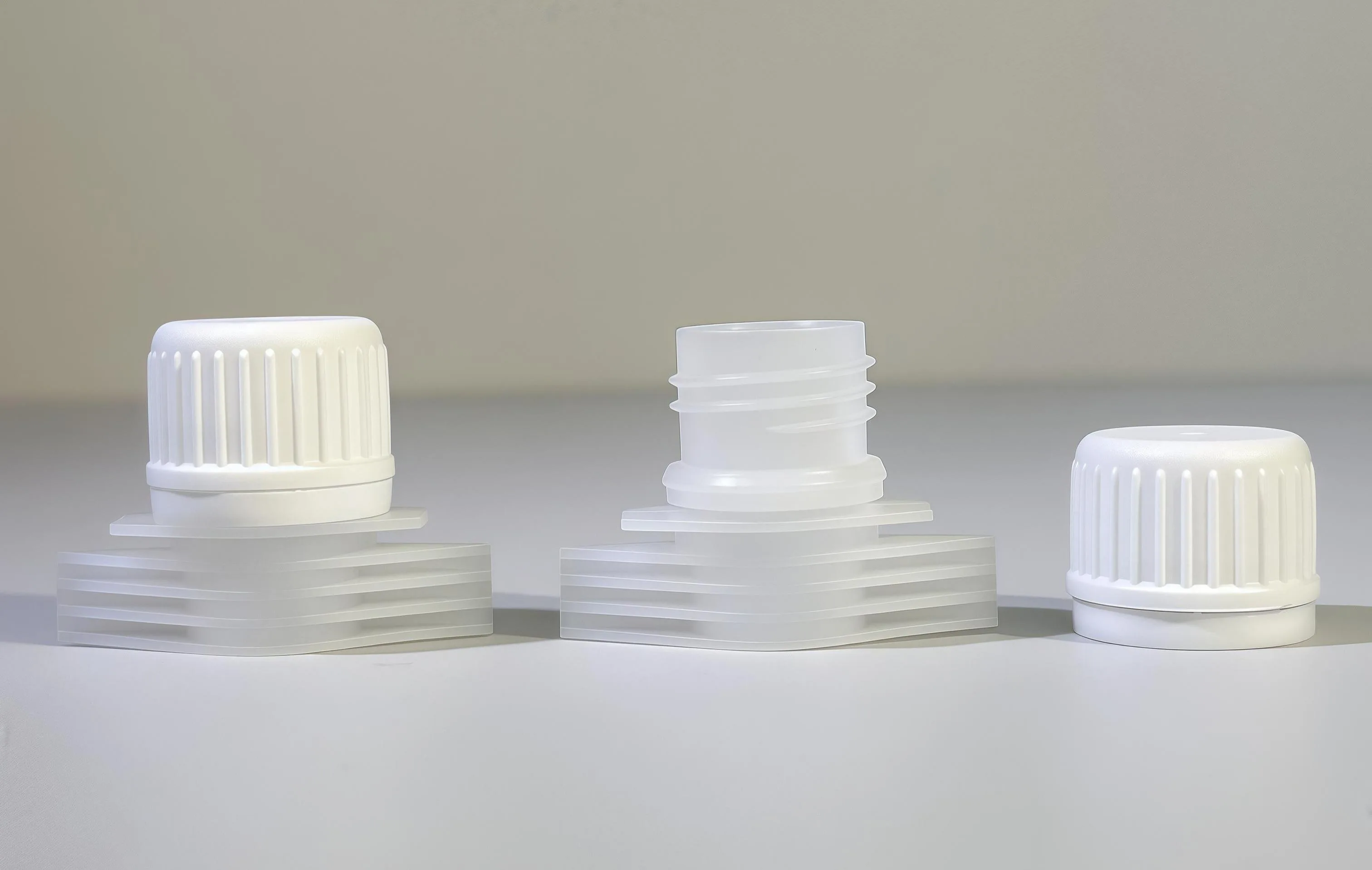
Spout Position: Side Spout vs Top Spout
Side spout (corner / side-fold)
- Design: Mounted near a bottom corner or side seam; often used with corner reinforcement.
- Best for: Purees, baby food, pastes, honey, thick sauces, nutrition gels.
- Advantages: Excellent for controlled squeezing and single-handed feeding; reduces drips when dispensing small amounts. Child-friendly ergonomics make it ideal for on-the-go and baby food use.
- Tradeoffs: Requires more precise pouch forming and spout welding; may need reinforced panels to avoid stress at the corner.
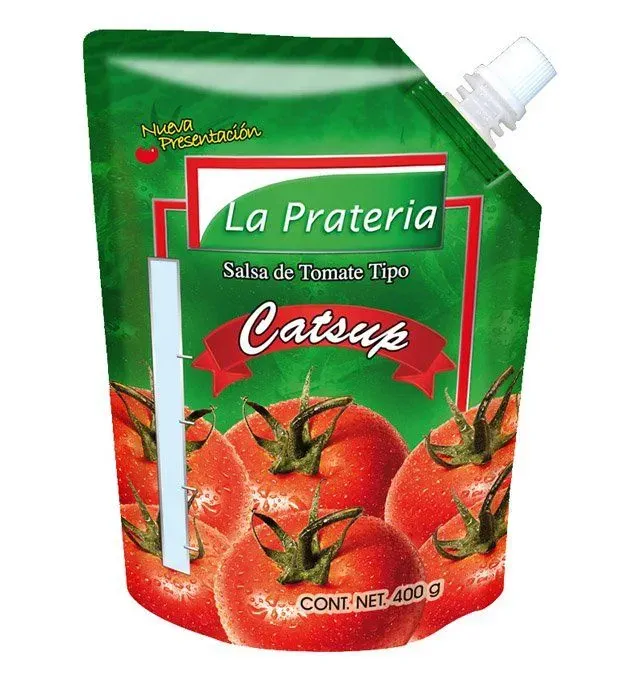
Top spout (center / top cap)
- Design: Positioned on the pouch top-center or near the top seam.
- Best for: Juice, RTD beverages, protein drinks, thin sauces, liquid seasonings.
- Advantages: Easier to fill at high speeds; generally simpler to automate on standard spout-filling lines; fast pouring for low-viscosity fluids.
- Tradeoffs: Less control for precise, small-volume dispensing; may be less ergonomic for single-handed squeezing of thick products.
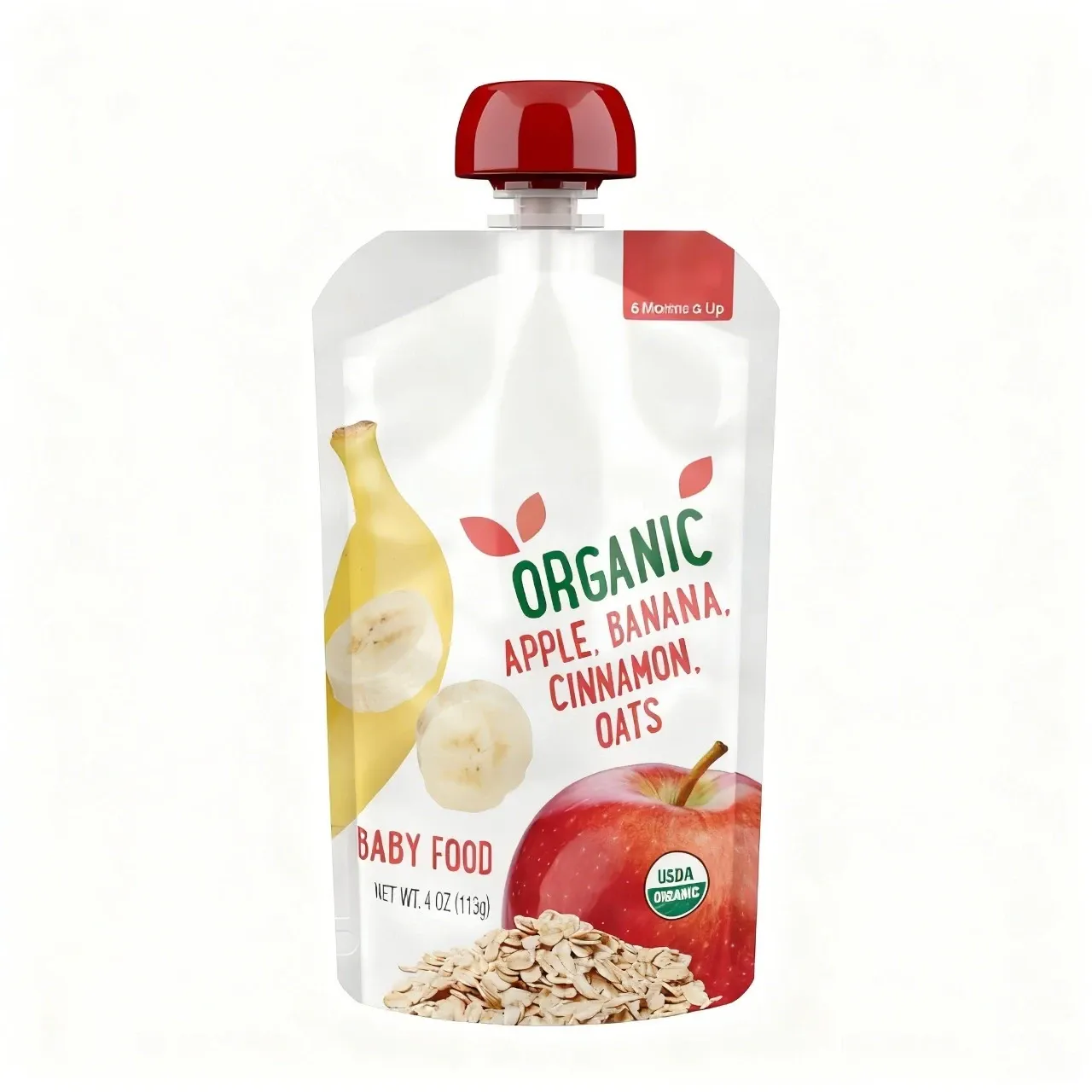
Choosing the Right Diameter for Flow Control
Spout diameter hugely affects usability and clogging risk. Typical ranges and use cases:
- Small (6–9 mm) — Thin liquids (water, sports drinks, clear juices); good for controlled pours and anti-spill.
- Medium (10–16 mm) — Most beverage concentrates, yogurt drinks, many purees, and medium-viscosity sauces. Balanced flow vs control.
- Large (18 mm and up) — High-viscosity products with particulates (chunky sauces, smoothies with pulp, baby food with pieces). Large diameters reduce clogging and user frustration.
Rule of thumb: match maximum particle size to at least 1.5× spout opening and test worst-case temperature/age-related viscosity.
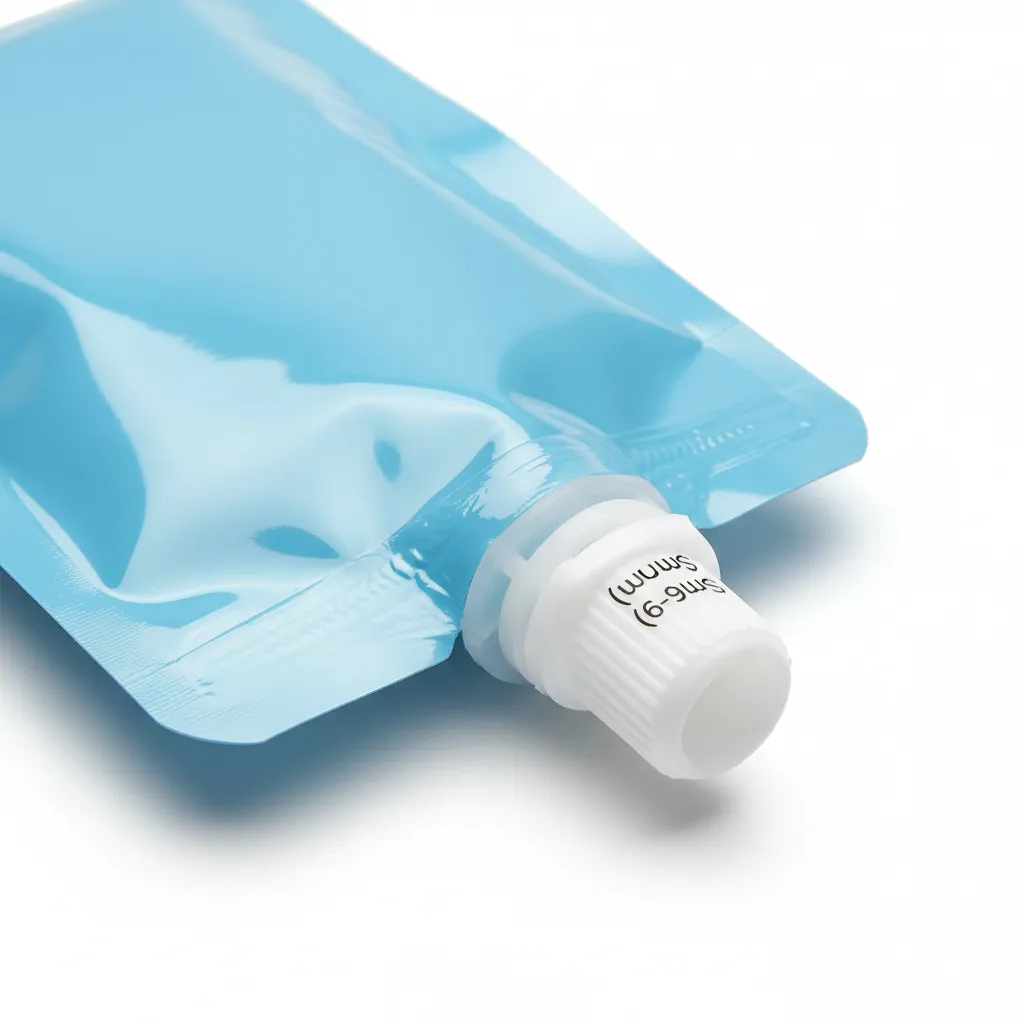
Spout Material & Cap Choices
Material selection affects heat resistance, sealing, and food safety:
- PE (Polyethylene)
- Flexible, good sealability, and cost-effective.
- Suitable for most ambient and chilled foods.
- PP (Polypropylene)
- Higher heat resistance — choose for hot-fill, retort, or applications requiring sterilization.
- Slightly stiffer; better torque retention on caps.
- Specialty materials/features
- Child-resistant designs, tamper-evident caps, dose-metering inserts, or anti-drip valves.
- Consider coated or compatibilized spout bodies when bonding to exotic laminates.
Always require food-contact grade resins and supplier Declarations of Compliance (DoC).
Application Matrix (Quick Reference)
| Product Type | Recommended spout type | Diameter | Material |
|---|---|---|---|
| Fruit juice / RTD beverage | Top spout (center) | 6–10 mm | PE |
| Protein shake/smoothie | Top spout or wide top | 10–16 mm | PP or PE |
| Baby puree/nutrition gel | Side spout (corner) | 12–16 mm | PP (for heat processes) |
| Honey/syrup | Side spout (reinforced corner) | 10–18 mm | PE |
| Ketchup / thick sauce | Side spout (wide) | 16–22 mm | PP |
Use this matrix as a starting point; always validate via pilot fills.
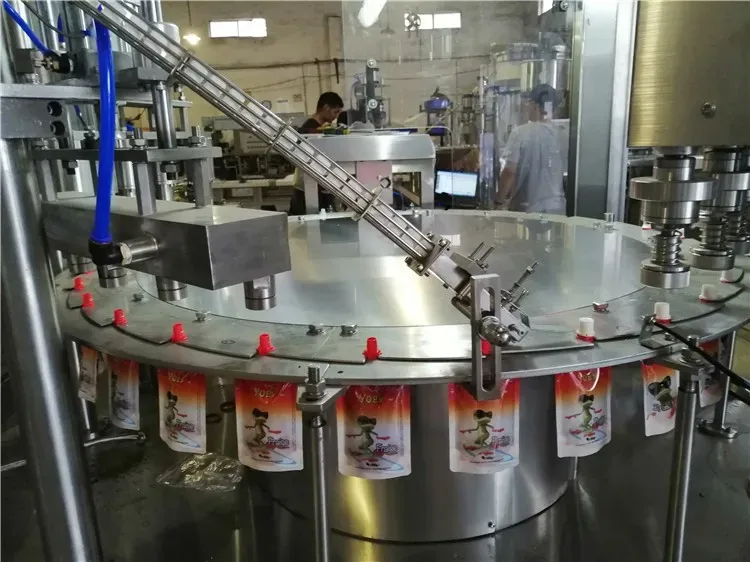
Filling Line & Production Compatibility
Spout selection must align with your filling and capping equipment:
- Filling speed vs spout geometry: Narrow spouts require slower fill times for viscous fluids; top spouts typically allow higher throughput.
- Capping torque and retention: This ensures the spout/cap interface tolerances match your capping heads to prevent leaks or cap failures.
- Spout welding: Some spouts require special forming collars or spout-applicator stations — factor in tooling lead times and changeover complexity.
- Pressure/leak testing: Implement routine burst/pressure checks and vacuum/leak tests for each production run.
Talk to your machinery vendors early; retrofitting spout applicators mid-project is costly.
Food Safety, Certifications & Migration Concerns
- Use FDA/EU-compliant materials and request CoC/CoA from spout suppliers.
- For hot-fill or retort items, validate spout material compatibility to withstand thermal cycles. PP is typically preferred for high-temperature processing.
- If using PCR content, ensure food-contact compatibility and confirm regulatory acceptance in target markets.
- Plan migration and organoleptic testing where spout materials contact the product directly for extended storage.
Common Mistakes and How to Avoid Them
- Choosing the spout by cost alone. Cheap spouts can cause leaks, recalls, or rework.
Fix: Evaluate total cost of ownership (leak rates, downtime, warranty cost). - Ignoring viscosity and particle size. Results in clogging and returns.
Fix: Lab test at worst-case temperatures and ages. - Not validating with your filler. Leads to production delays.
Fix: Run pilot trials on the actual line or a validated equivalent. - Overlooking user ergonomics. Poor dispensing frustrates consumers.
Fix: Field-test prototypes with representative users (athletes, parents, elderly).
Decision Flow: A Compact Checklist for Spec Sheets
- Define product viscosity range and particle sizes.
- Choose preferred user experience (squeeze vs pour).
- Select candidate spout type (side vs top) and diameter.
- Specify material (PE/PP) and cap features (tamper/tamper-evidence).
- Confirm compatibility with filling/capping equipment.
- Run lab and production pilots; perform leak and torque tests.
- Validate food safety (CoA/DoC), migration, and shelf-life.
Conclusion
The optimal spout type is the intersection of product rheology, user needs, filling line capability, and regulatory constraints. For B2B buyers, the smartest approach is collaborative: involve your packaging engineer, filler OEM, and spout supplier from the very beginning of the spout pouch design.
About GQ PACK

Since GQ PACK was founded in 2008, we have dedicated ourselves to flexible food packaging. Now GQ PACK is regarded as a leading custom flexible food packaging manufacturer by the industry and our global clients.
We are wholesaling spout pouches now, one of our flagship products, and offering custom spout pouch solutions to meet your product requirements. In our custom flexible food packaging solution, GQ PACK delivered:
✅Practical tips from our expert teams
✅High-speed production with our 16 production lines
✅Strict quality control in ISO9001
✅International certified products, SGS, FDA, and TUV, etc.