EN
EN  DE
DE  FR
FR  RU
RU  AR
AR  ES
ES  JA
JA 
For snack brands using automatic filling lines, packaging performance needs to be confirmed before mass production. A film that looks correct in a sample may still cause feeding, forming, sealing, or printing problems during continuous production.
For buyers, pre-production confirmation is not only about approving the packaging’s appearance. From the perspective of a snack packaging manufacturer, GQ PACK would say that it is about ensuring that the snack packaging film is compatible with the filling machine and production conditions, helping reduce packaging waste, reject rates, and unexpected downtime.
Why Snack Packaging Must Be Confirmed Before Mass Production
Packaging Performance Depends on the Filling Line
Automatic snack packaging is affected by multiple production conditions, including film dimensions, machine speed, web tension, forming, and heat sealing.
Therefore, packaging film should be evaluated together with the filling process rather than as an independent material. The correct packaging film for automatic filling machines needs to feed smoothly, form correctly, and maintain stable sealing during continuous operation.
Small Specification Errors Can Become Large Production Problems
Small differences in film width, thickness, printing registration, or coefficient of friction can become significant problems on a high-speed packaging line.
For example, unstable web movement may cause film wandering, while unsuitable sealing performance can result in weak seals or leakage. These issues can increase packaging waste, reject rates, and machine stoppages after mass production begins.
What Buyers Should Confirm About Snack Packaging Film
Confirm the Material Structure and Barrier Requirements
Before approving snack packaging film, buyers should confirm whether the material structure matches the product.
Consider:
- Snack type
- Moisture sensitivity
- Oxygen sensitivity
- Oil or fat content
- Required shelf life
- Barrier requirements
- Heat-sealing requirements
Different snacks may require different flexible snack packaging structures. The material structure should therefore be confirmed before mass production because changing it later can affect packaging performance and production cost.
Confirm Film Width, Thickness, and Roll Specifications
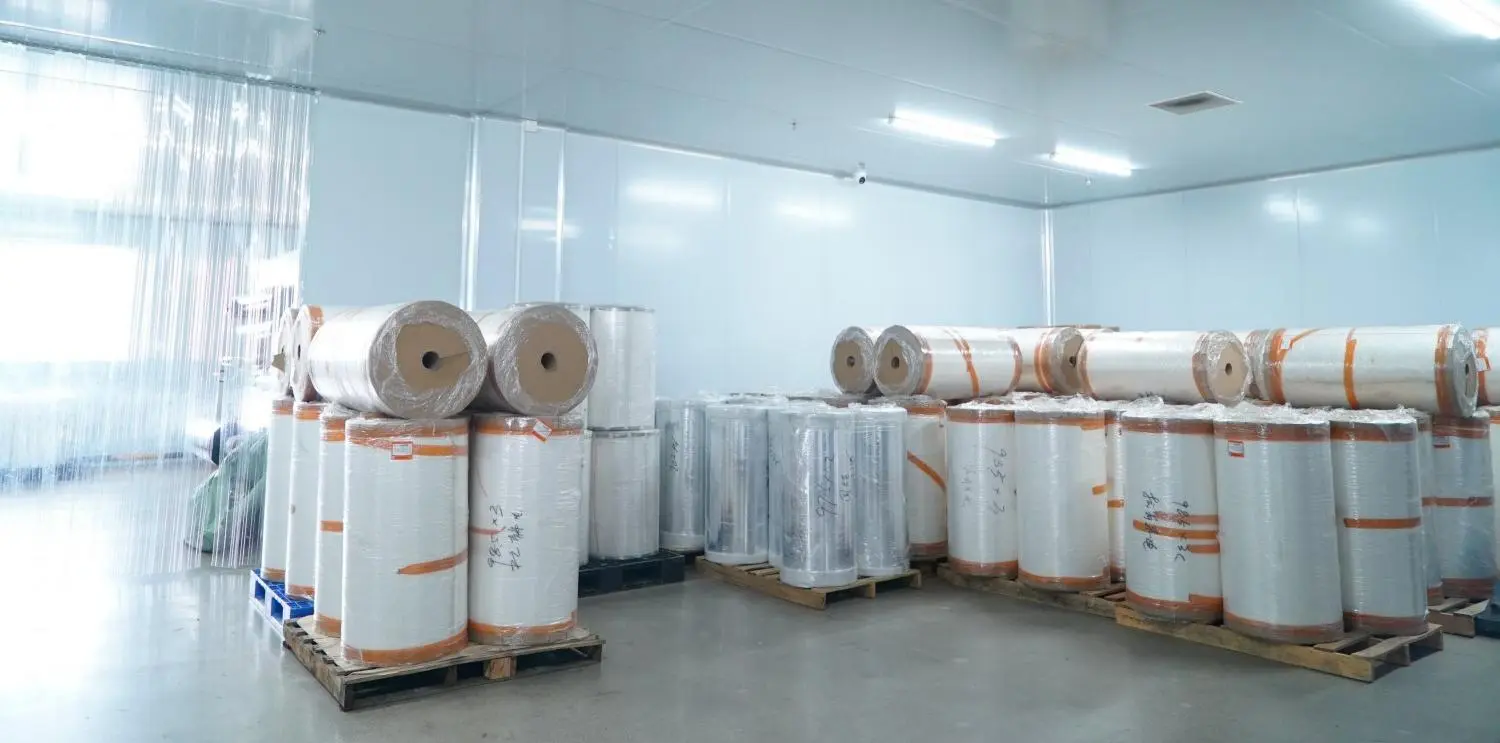
For automatic packaging film, physical specifications need to match the customer’s equipment.
Buyers should confirm:
- Film width
- Film thickness
- Roll diameter
- Core size
- Winding direction
- Roll length, where applicable
These details directly affect film feeding, forming, and machine compatibility. Incorrect specifications may result in unstable operation even when the packaging material itself meets the required quality standards.
Confirm Coefficient of Friction and Web Stability
The coefficient of friction affects how the film moves through the packaging machine. Buyers should confirm whether the film can unwind and travel smoothly at the required production speed.
Web stability is particularly important for a high-speed packaging line. Excessive friction, insufficient friction, or unstable web tension can contribute to film sticking, wandering, or feeding problems.
Confirm Printing and Final Packaging Format Before Production
Check Printing Registration and Artwork Position
Printing should be checked not only for visual quality but also for its position relative to cutting and sealing.
Confirm:
- Logo position
- Repeating artwork
- Printing registration
- Cutting position
- Sealing position
- Eye-mark requirements
A design may look correct on a flat film sample but still require adjustment when the film is formed and converted into the final package.
Confirm the Final Packaging Format
The packaging format should also be confirmed before mass production. Depending on the automatic filling system, the film may be used for 3-side seal bags, pillow bags, stand-up pouches, or other roll-film packaging formats.
The selected format affects how the film is fed, formed, sealed, and cut. Buyers should therefore make sure that the packaging format corresponds with the filling equipment and required bag dimensions.
Confirm Heat Sealing Performance
Check Sealing Temperature and Sealing Window
Buyers should confirm the required sealing temperature, pressure, dwell time, and compatibility between the film and machine.
A suitable sealing window helps the packaging maintain stable performance under continuous production conditions.
Verify Seal Strength and Seal Integrity
Heat seal strength is another key point before mass production. Buyers should check:
- Seal strength
- Seal appearance
- Leakage risk
- Powder or oil contamination around the seal
- Consistency during continuous production
For snacks containing powder, oil, or fine particles, contamination around the sealing area can affect seal integrity. These conditions should be considered during production-line testing.
Conduct a Production-Line Trial Before Mass Production
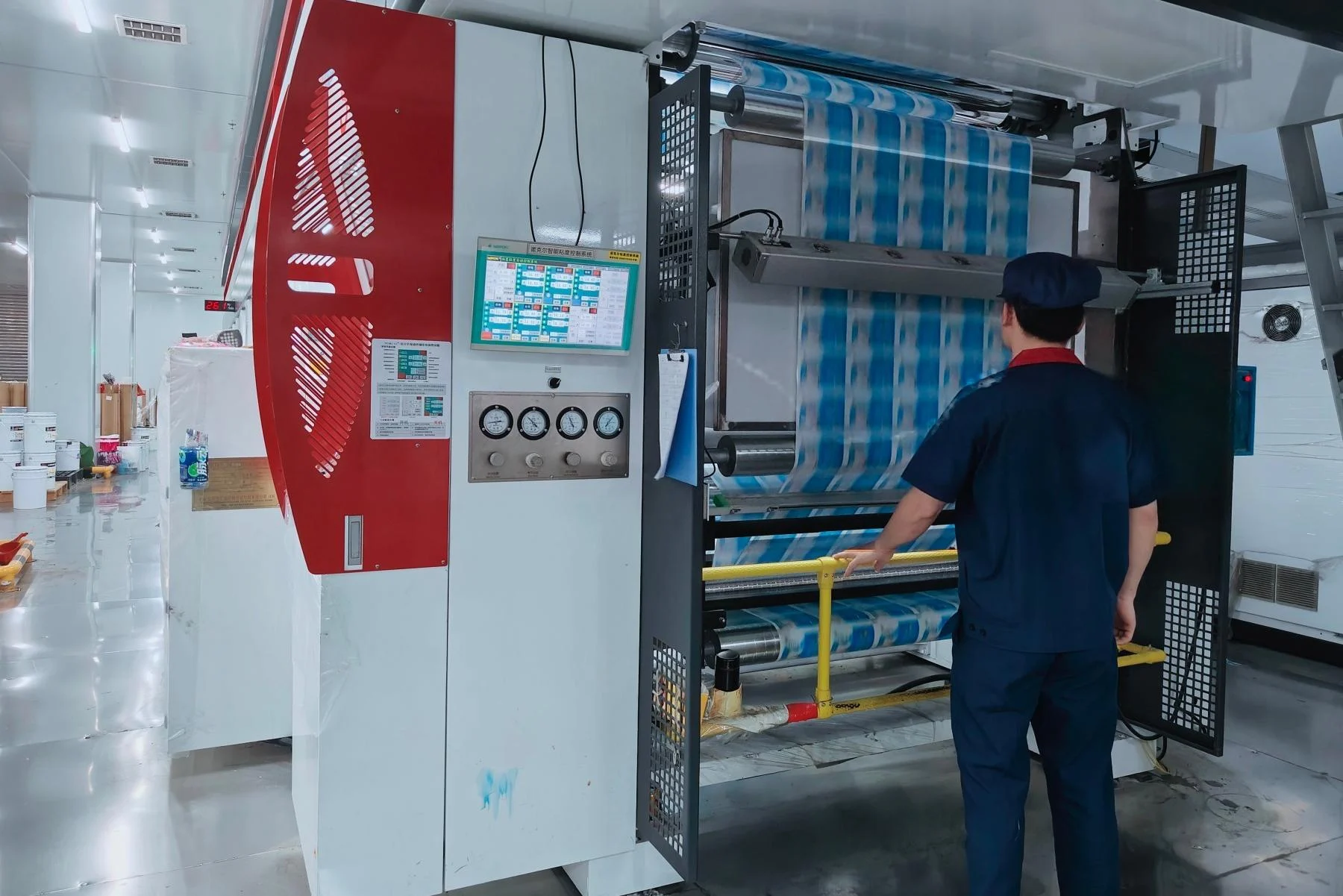
A production-line trial is one of the most important steps before releasing a large order. Visual inspection alone cannot fully confirm how automatic packaging film will perform during continuous operation.
What Buyers Should Observe During the Trial
The trial should cover the complete packaging process:
- Film feeding
- Unwinding
- Web tracking
- Forming
- Filling
- Sealing
- Cutting
- Finished bag appearance
- Reject rate
What Should Be Recorded Before Final Approval
Buyers should record the main production conditions and results, including:
- Machine speed
- Sealing parameters
- Film performance
- Packaging defects
- Reject rate
- Machine alarms or stoppages
This provides a practical pre-production checklist that buyers can use when confirming packaging performance with a packaging film supplier
Buyer Checklist for Approving Snack Packaging
| Confirmation Point | What to Check | Why It Matters |
|---|---|---|
| Material structure | Barrier and sealing layers | Product protection |
| Film dimensions | Width, thickness, roll specifications | Machine compatibility |
| Friction | COF and web movement | Stable feeding |
| Printing | Registration and artwork position | Appearance and cutting accuracy |
| Sealing | Temperature, pressure, seal strength | Leak prevention |
| Machine trial | Feeding, forming, filling, sealing | Production stability |
| Finished bags | Appearance and dimensions | Final consistency |
| Waste/rejects | Defects and reject rate | Production cost |
How a Snack Packaging Manufacturer Can Reduce Pre-Production Risk
Match Packaging Film to the Customer’s Machine
An experienced snack packaging manufacturer should collect key information before recommending packaging film, including the machine model, filling speed, bag dimensions, product characteristics, and existing packaging specifications.
This allows the flexible packaging manufacturer to consider both material performance and machine requirements when developing the packaging solution.
Validate Custom Packaging Before Full Production
For custom snack packaging, the supplier can conduct sample production and machine testing before moving to full-scale production.
The process can include sample production, machine testing, parameter adjustment, and final confirmation. This helps identify potential packaging problems before a large quantity is manufactured.
Maintain Packaging Consistency During Mass Production
After approval, consistent production remains important. Quality control should cover raw materials, film thickness, printing, lamination, slitting, and final inspection.
Consistent manufacturing helps maintain stable packaging performance throughout bulk production.
Common Buyer Mistakes Before Approving Mass Production
Approving Only the Appearance of the Sample
A visually correct sample does not necessarily mean that the film will run smoothly on an automatic filling line. Machine performance should also be validated.
Confirming the Packaging but Not the Machine Parameters
Packaging requirements should be discussed together with machine speed, bag dimensions, sealing conditions, and other relevant production parameters.
Skipping a Production-Line Trial
Without a production-line trial, feeding, tracking, forming, or sealing problems may only become visible after mass production begins.
Changing Specifications After Production Begins
Late changes to material structure, dimensions, printing, or other specifications can create additional production costs and delays. Confirming the main specifications before mass production is therefore more efficient.
Conclusion
Before approving snack packaging for automatic filling lines, buyers should confirm more than the packaging design. Material structure, film dimensions, roll specifications, coefficient of friction, printing registration, packaging format, heat sealing performance, and machine compatibility all need to be considered.
Most importantly, the packaging should be tested under actual or representative production conditions before mass production.
For brands working with a flexible food packaging manufacturer, early technical communication and production-line validation can help reduce packaging waste, reject rates, downtime, and the risk of costly specification changes.