EN
EN  DE
DE  FR
FR  RU
RU  AR
AR  ES
ES  JA
JA 
Spout pouches are one of the most versatile formats in the modern flexible food packaging industry. Their resealability, controlled dispensing, and light weight make them attractive to food brand owners across infant foods, beverages, dairy, sauces, and on-the-go nutrition.
In this guide, GQ PACK is going to explain its application in food packaging and what B2B buyers must specify when they brief converters. It also touches on consumer-use considerations and key technical checks to avoid costly mistakes.
Why Choose a Spout Pouch for Food Products?
Spout pouches combine the protection of a laminated pouch with the convenience of a pour or squeeze outlet. For food brands, the immediate benefits are:
- Reduced secondary packaging weight and shipping cost.
- Resealability that extends the in-use shelf life.
- Controlled dispense—important for sauces, baby food, and concentrates.
- Strong shelf differentiation for premium or convenience lines.
This format sits squarely inside one of the most popular flexible food packaging categories and requires the same engineering rigor as other high-performance films and laminates.
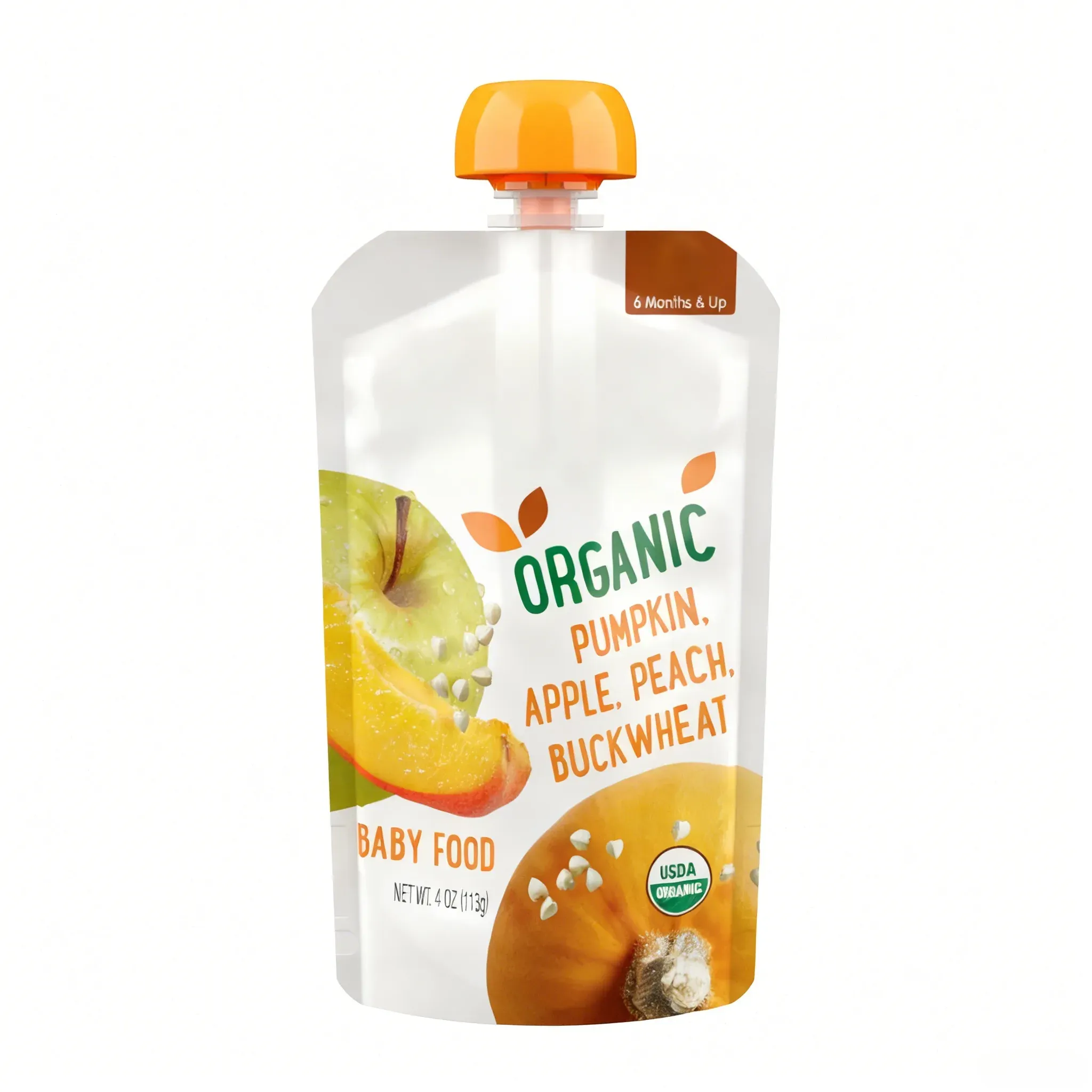
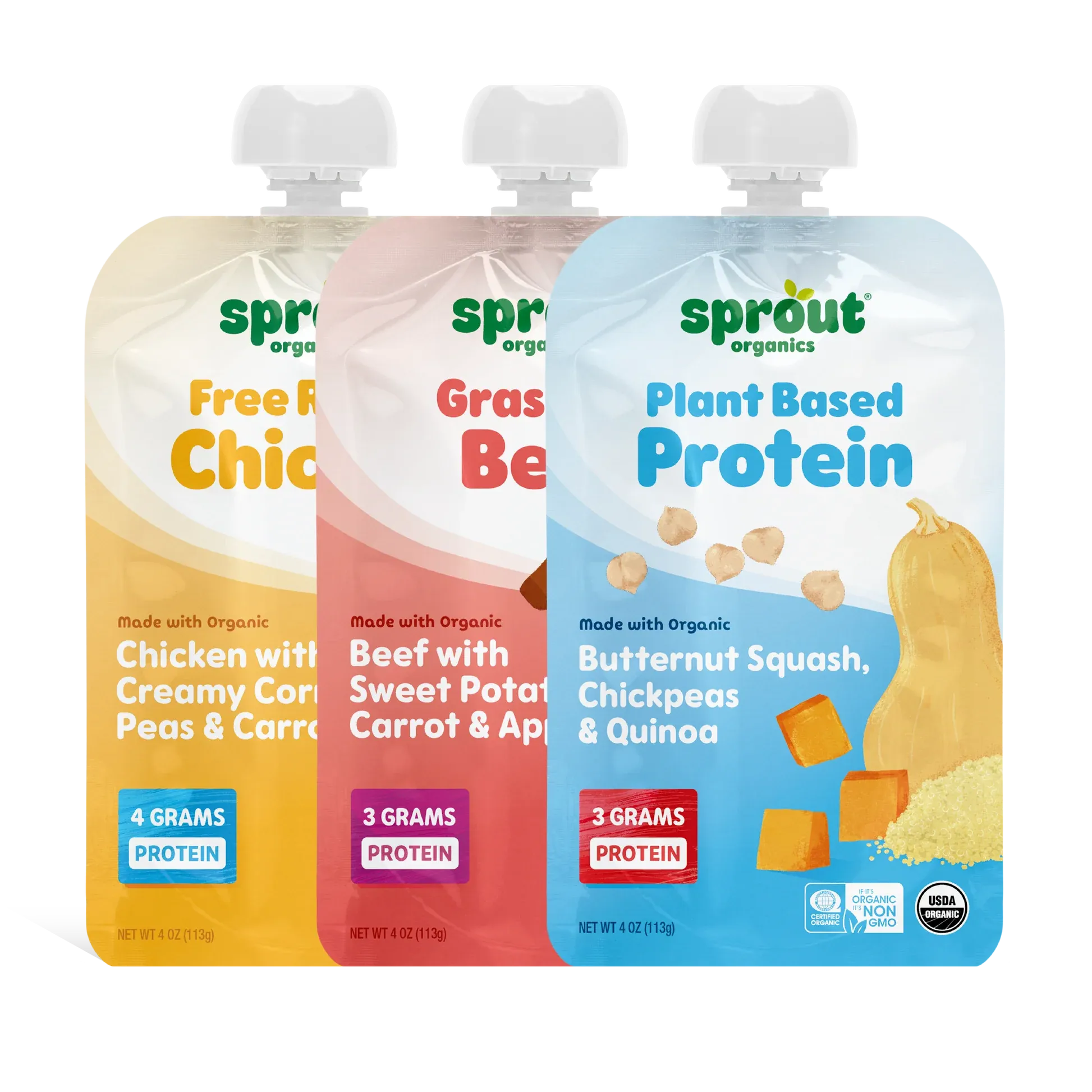
Baby & Kids Food Packaging
Typical products: baby fruit/vegetable purées, mixed purées, infant sauces, drinkable yogurts.
Why it fits: controlled portioning, anti-choke design, reseal for multiple feeds, and strong organoleptic requirements.
Technical notes: small spout diameters, tamper-evident caps, strict migration, and organoleptic testing for inks and adhesives. For infant foods, demand full lot-level Declarations of Compliance and pilot fills on intended dispensers.
Liquid & Semi-Liquid Beverages
Typical products: fruit and vegetable juices, functional drinks, sports nutrition liquids, coconut water, cold-brew coffee.
Use cases: outdoor sport, travel, convenience retail, and single-serve on-the-go.
Technical notes: low-leak spout assemblies, oxygen/light barrier for oxidative products, filling compatibility (hot-fill vs ambient fill), and headspace control. For carbonated products, you need specialized valve/spout systems—standard spout pouches are not suitable.
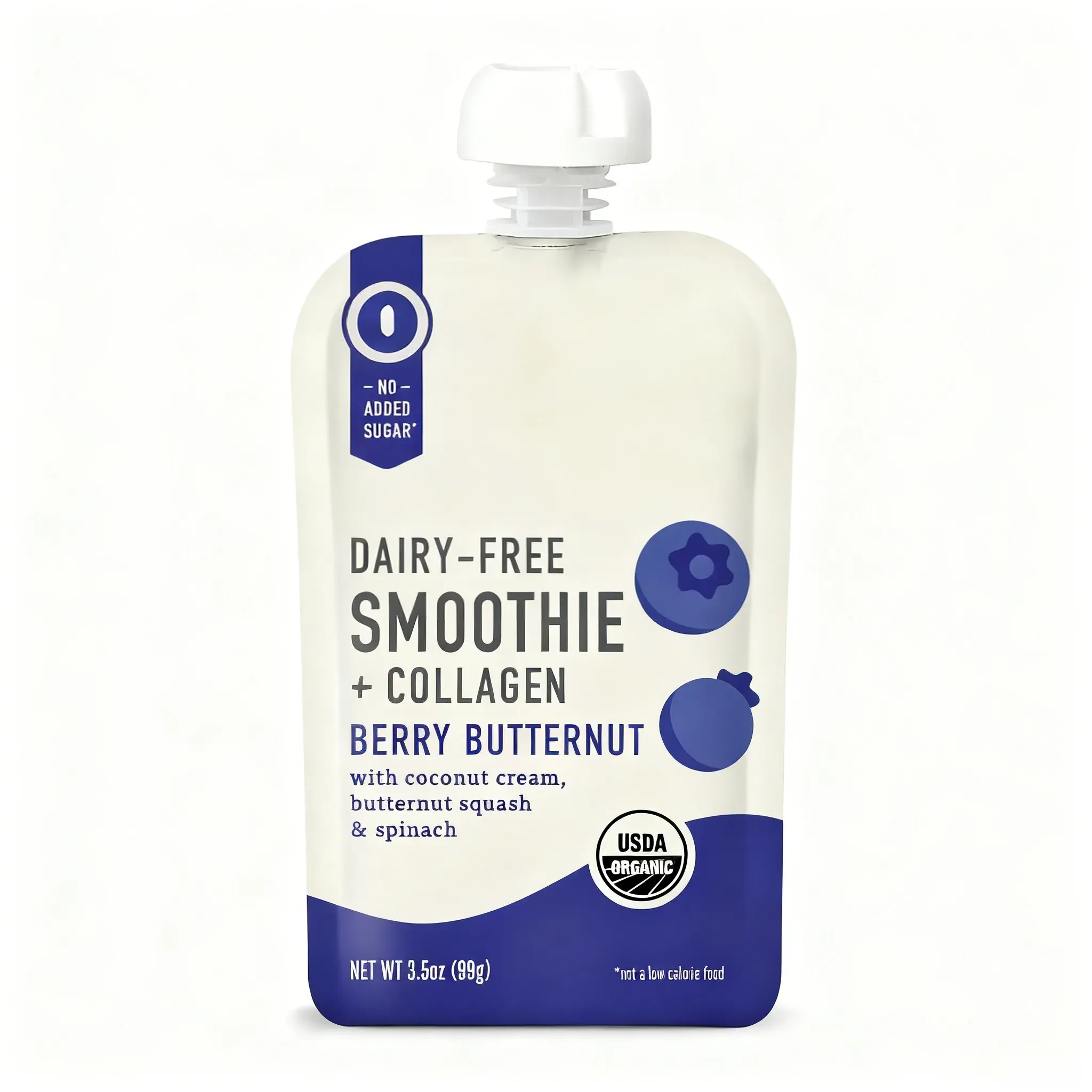
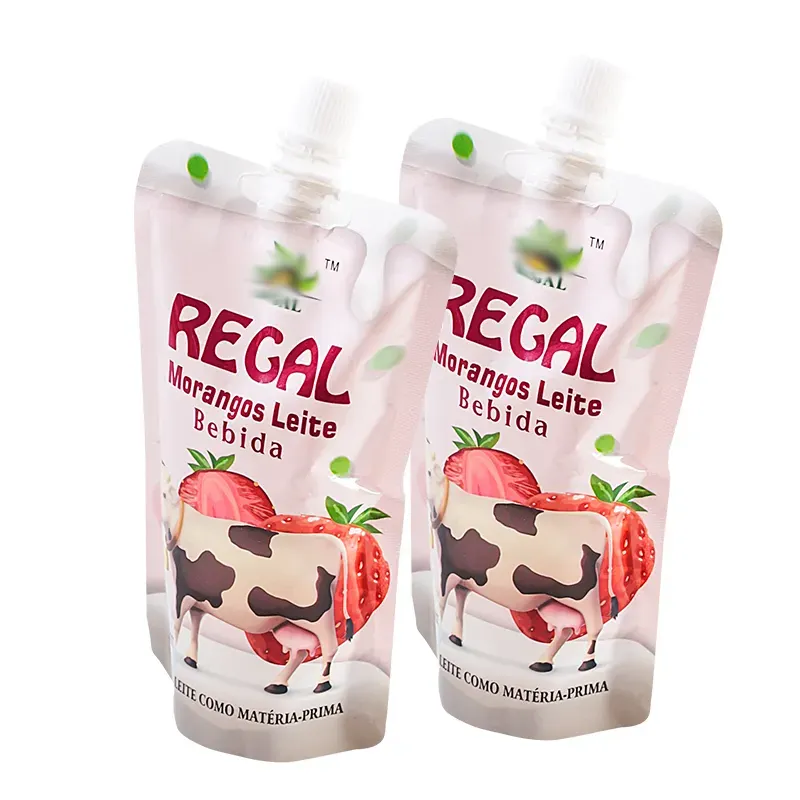
Dairy & Plant-Based Drinks
Typical products: yogurt drinks (ambient or chilled), fermented milk drinks, oat/soy milk, protein shakes.
Why consider spout pouches: reduced breakage risk vs glass, lighter logistics vs bottles, easier single-serve formats.
Technical notes: aseptic or refrigerated line qualification, inner-web material selection to prevent flavor transfer, robust sealing profile to survive chilled transport.
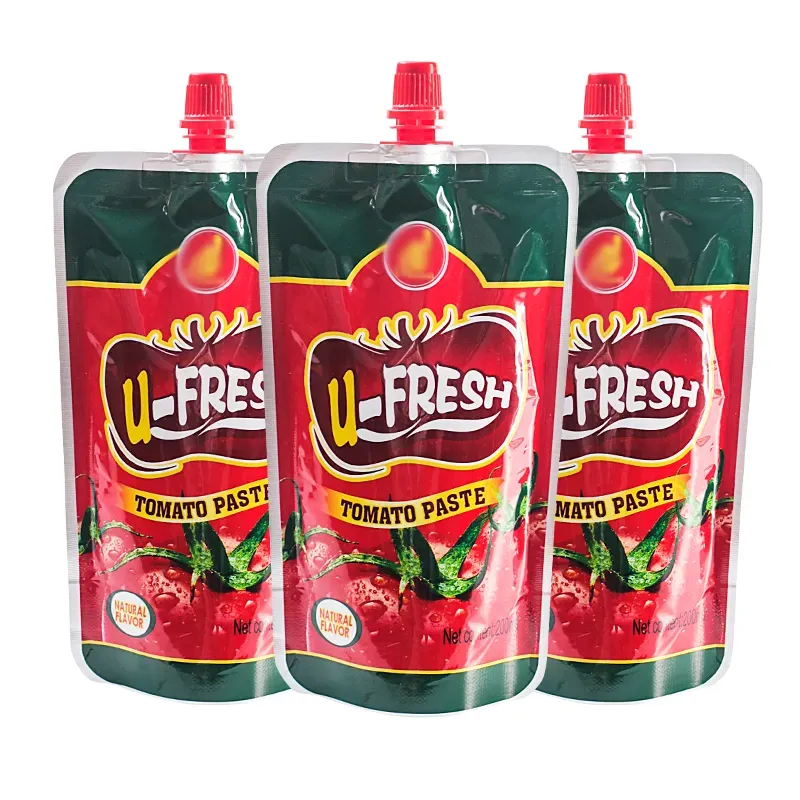
Sauces, Condiments & Cooking Ingredients
Typical products: ketchup, dressings, chili paste, honey, small-volume cooking oil, concentrated broth.
Why brands move to spout pouches: lower packaging and freight cost, better dispense control for restaurants and meal kits, and refillable retail or bulk B2B formats.
Technical notes: cap and spout geometry for viscous flows, anti-drip features, grease-resistant laminates for high-oil products.
Ready-to-Eat & Functional Nutrition Foods
Typical products: energy gels, ready-to-eat oatmeal purées, protein pastes, and medical nutrition.
Why it fits: single-portion dosing, hygienic dispensing, portability for athletes or clinical patients.
Technical notes: syringe-like spouts for gels, high-hygiene filling, validated viscosity range to prevent bridging or clogging.
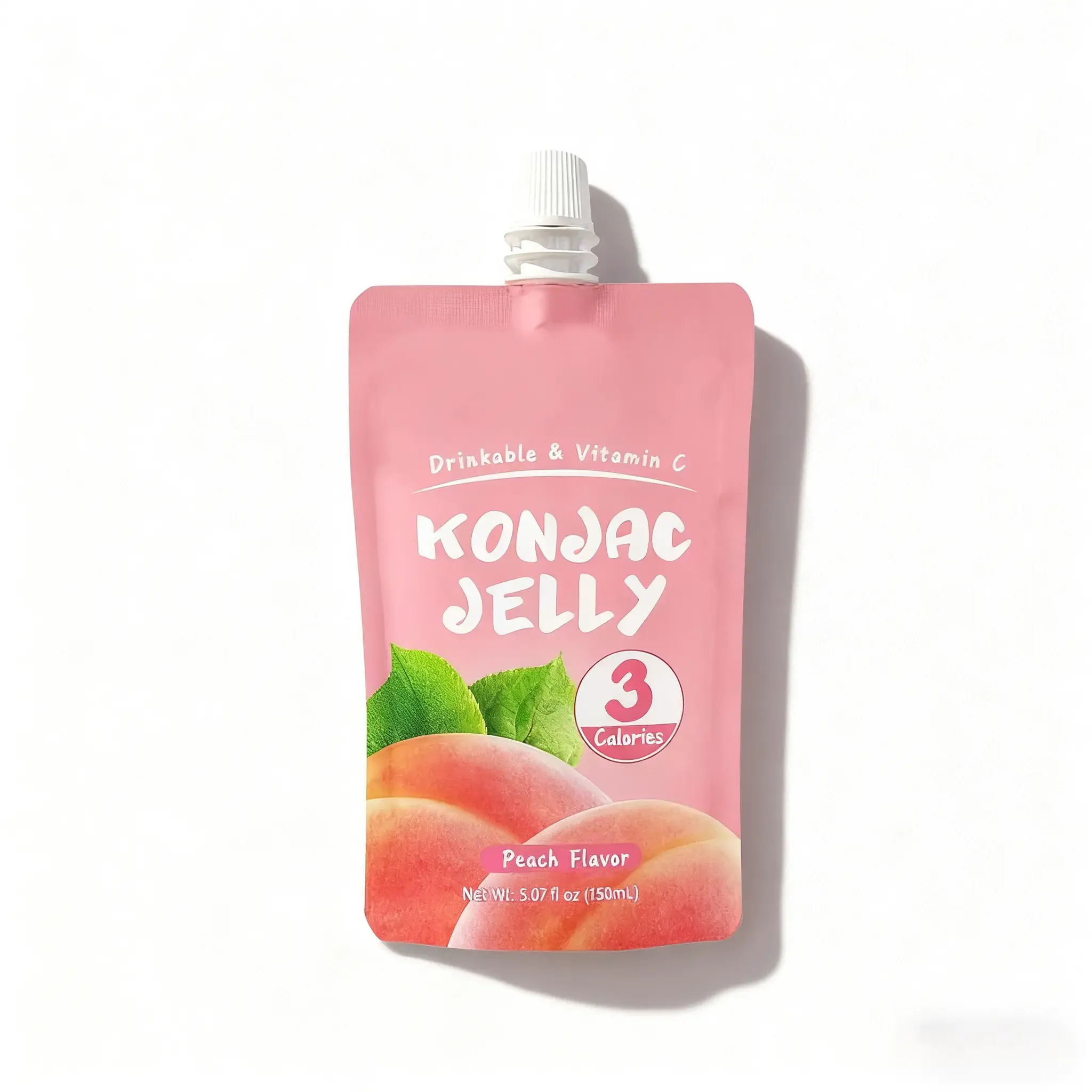
Desserts & Snacks (Youth-Oriented)
Typical products: puddings, gelatins, dessert sauces, frozen squeezables.
Why it fits: playful, interactive formats that drive impulse purchases.
Technical notes: consider consumer experience—easy-open tamper seal, reseal quality for partial consumption, and shelf stability for chilled vs ambient SKUs.
Basic Suitability Checklist — Will Your Food Work in a Spout Pouch?
Before specifying a spout format, confirm:
- Texture: liquid or semi-liquid, pumpable or squeezable. Large particulates typically require larger-diameter spouts or are unsuitable.
- Pressure behavior: non-carbonated; avoid standard spouts for products that produce gas or expand.
- Viscosity range: supplier must verify dosing stability across operating temperatures.
- Barrier needs: define MVTR/OTR targets based on shelf-life and fat content rather than vague “high barrier” claims.
- Filling process: compatibility with your filler (piston, auger, hot-fill, aseptic) is essential.
- Regulatory & organoleptic: food-contact inks, adhesives, and migration testing must match market requirements.
Material & Spout Selection — Engineering Matters
A successful spout pouch is the result of matching food chemistry to the laminate and spout system:
- Laminate choice (e.g., PET/AL/PE, PET/VMPET/PE, PET/EVOH/PE) must be driven by MVTR/OTR targets, not supplier marketing.
- Spout type (screw cap, push-pull, tamper-evident) affects consumer usability, filling line speed, and leak retention.
- Cap torque and retention: validate torque specs and leak retention under transport vibration and temperature cycling.
- Sealing profile: specify seal strength (N/15mm), burst testing, and acceptance criteria.
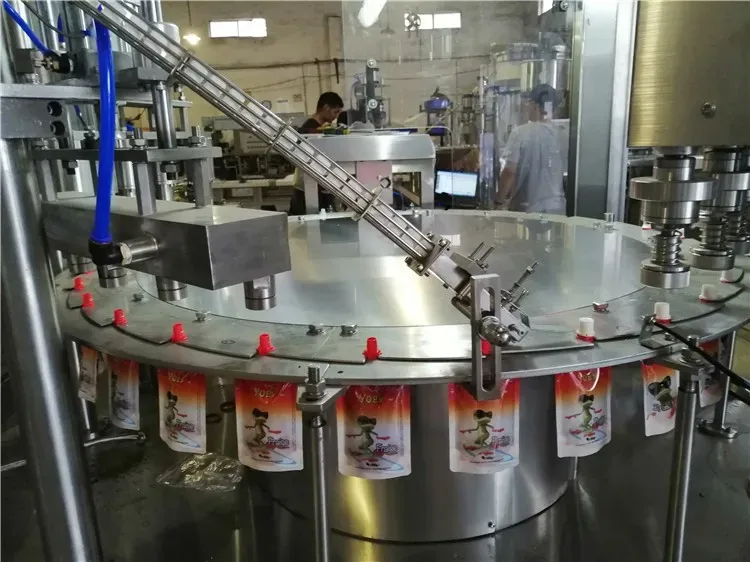
Require pilot runs and batch-linked test reports (MVTR/OTR, seal strength, headspace oxygen) tied to the exact film lot used.
Final Checklist for B2B Buyers Briefing a Food Packaging Manufacturer
When you brief a converter for a spout pouch SKU, include:
- Product spec: viscosity, particle size, pH, oil content, target shelf life.
- Filling requirements: filler type, line speed, hot-fill/aseptic needs.
- Barrier targets: explicit MVTR/OTR numbers and test conditions.
- Spout/cap spec: diameter, cap type, torque, tamper-evident needs.
- Regulatory documentation: DoC for films, inks, and adhesives; migration tests; retention sampling.
- Pilot acceptance criteria: seal strength, leak test, visual print approval, and organoleptic panel.
Conclusion
A spout pouch is a powerful format within flexible food packaging, but it’s not a universal solution. Success requires engineering the laminate, spout, and filling process to the product’s chemistry and usage. For B2B buyers, the imperative is clear: start with the food, specify measurable barrier and sealing targets, validate online with pilot runs, and demand batch-level documentation. When those pieces are in place, spout pouches unlock significant benefits in cost, convenience, and consumer satisfaction.
About GQ PACK
GQ PACK is a professional flexible packaging manufacturer specializing in food spout pouches for global brands and contract packers. With in-house lamination, spout insertion, and quality control systems, GQ PACK supports stable, long-term supply for high-volume and multi-SKU programs.
We focus on engineered packaging, offering B2B customers customized pouch structures, barrier solutions, spout and cap configurations, and print execution matched to specific food formulations and filling lines. From infant nutrition to sauces and functional foods, GQ PACK works with measurable technical targets, pilot validation, and batch-level documentation—helping buyers reduce risk while scaling reliable, compliant packaging solutions.