EN
EN  DE
DE  FR
FR  RU
RU  AR
AR  ES
ES  JA
JA 
Custom printed snack bags often start with a logo, artwork file, or reference bag. However, these materials alone are rarely enough for accurate quotation, sampling, and mass production.
A successful custom snack packaging project requires brands to provide the right information at the right stage. The manufacturer then evaluates those requirements, identifies missing details, recommends suitable solutions, and adjusts the packaging when product or production conditions change. Work with GQ PACK, a professional custom snack packaging manufacturer, to make a successful custom snack packaging project.
Start With Product Information Before Discussing Custom Snack Bags
Tell the Manufacturer What the Snack Product Requires
Before discussing bag design, brands should explain the product itself, including:
- Snack type
- Product weight or fill volume
- Product characteristics
- Moisture or oil sensitivity
- Expected shelf life
- Storage and transportation conditions
- Target market requirements, when relevant
Different snacks can require different barrier levels, material structures, and sealing performance. Providing this information allows a snack packaging manufacturer to evaluate the packaging based on actual product requirements rather than visual preferences alone.
Let the Manufacturer Translate Product Requirements Into Packaging Requirements
Brands do not always need to specify the exact film structure themselves. Instead, they can communicate what the packaging needs to achieve.
The manufacturer can then evaluate barrier performance, material structure, thickness, mechanical strength, and heat-sealing requirements.
The manufacturer’s value is to turn product requirements into practical packaging specifications.
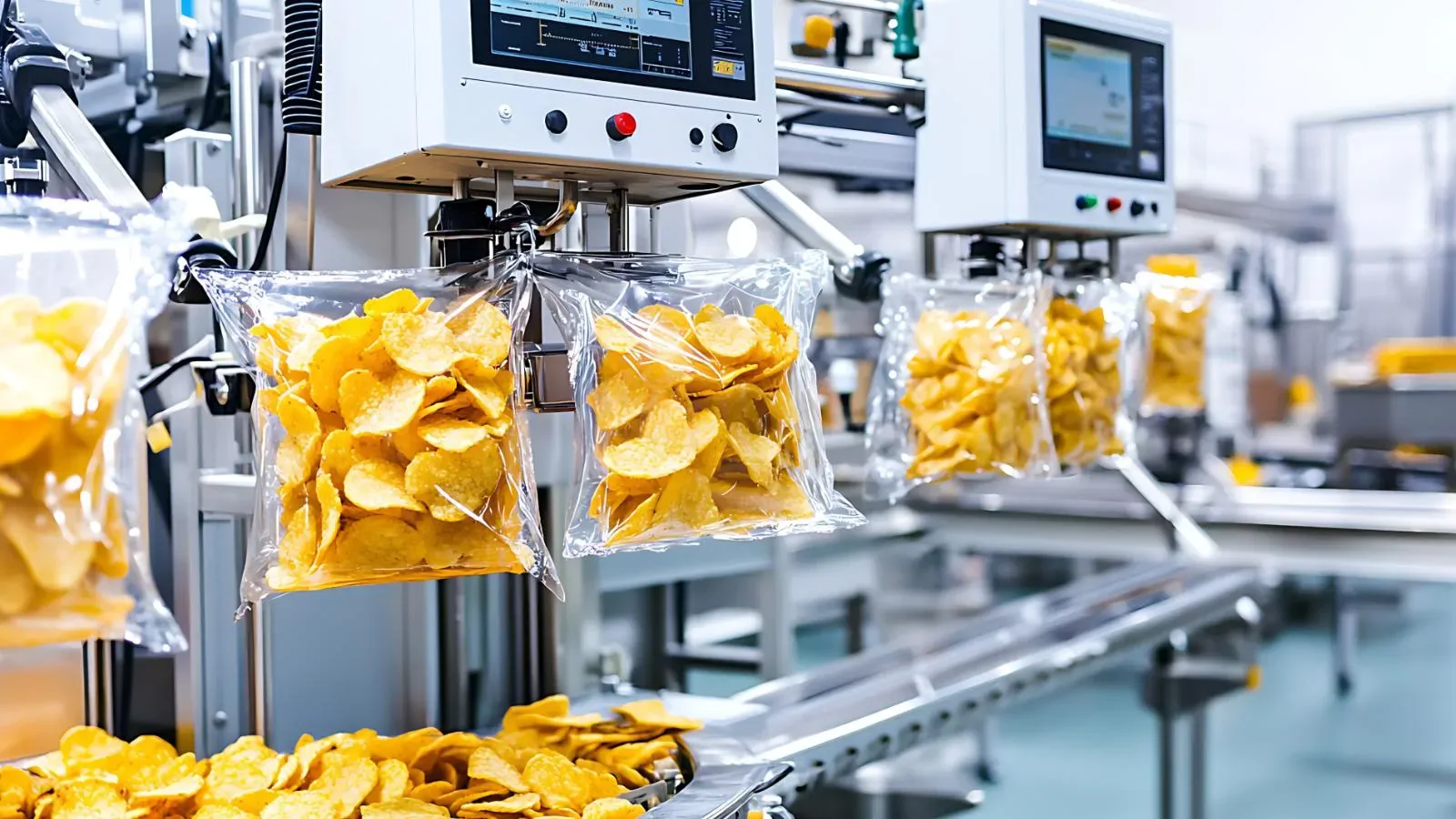
Provide Information About How the Bag Will Be Filled and Used
Tell the Manufacturer About the Filling Process
Brands should also explain how the finished bags will be used, including:
- Manual or automatic filling
- Filling machine, if applicable
- Filling speed
- Sealing method
- Existing bag specifications
- Production-line requirements
A bag that works well for manual filling may require different dimensions or material characteristics for high-speed automatic packaging.
For this reason, filling conditions should be discussed before the final packaging structure is confirmed.
Communicate Machine or Production Problems Early
If the existing packaging has problems such as difficult feeding, film tracking, poor sealing, or high reject rates, these issues should be communicated to the manufacturer.
An experienced manufacturer can evaluate whether the problem is related to bag dimensions, material structure, thickness, sealing performance, or other packaging specifications.
The goal is not simply to reproduce the existing bag, but to improve its suitability for the actual production process.
Provide a Clear Packaging Format and Size Requirement
Confirm the Bag Format
Brands should indicate their preferred format, such as:
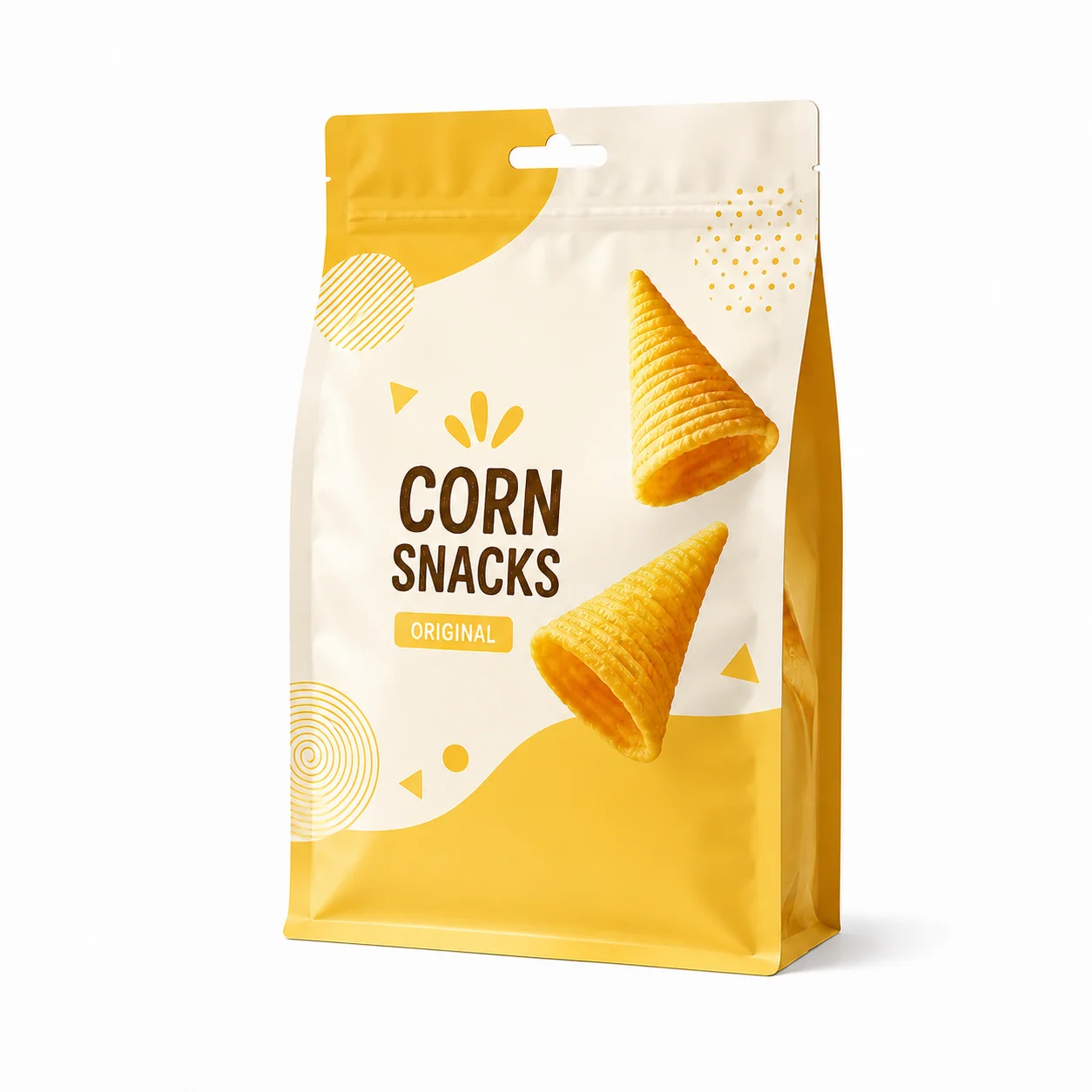
- Stand-up pouch
- Flat-bottom pouch
- 3-side seal bag
- Pillow bag
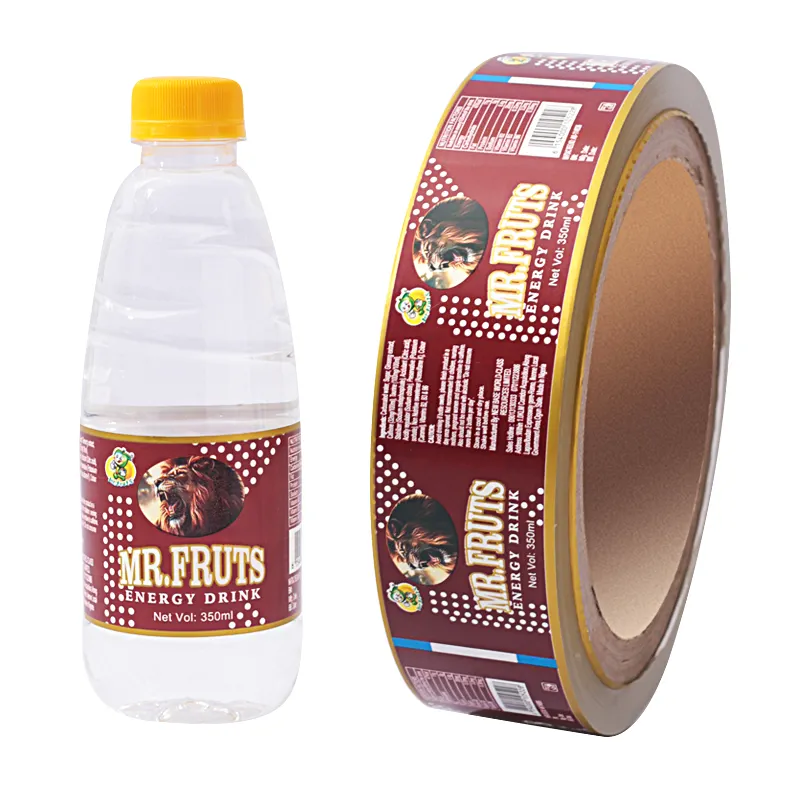
- Roll film
If the format is not fixed, the manufacturer can recommend alternatives based on the product, filling method, capacity, and required presentation.
Provide Required Dimensions or a Usable Reference
Brands can provide the required width, height, gusset, opening, zipper position, and capacity.
When exact dimensions are unavailable, a physical sample, competitor bag, or reference image can still help communicate the intended direction. However, the manufacturer must convert that reference into actual production dimensions.
This is where a custom snack packaging manufacturer can add value by turning an approximate packaging concept into a manufacturable specification.
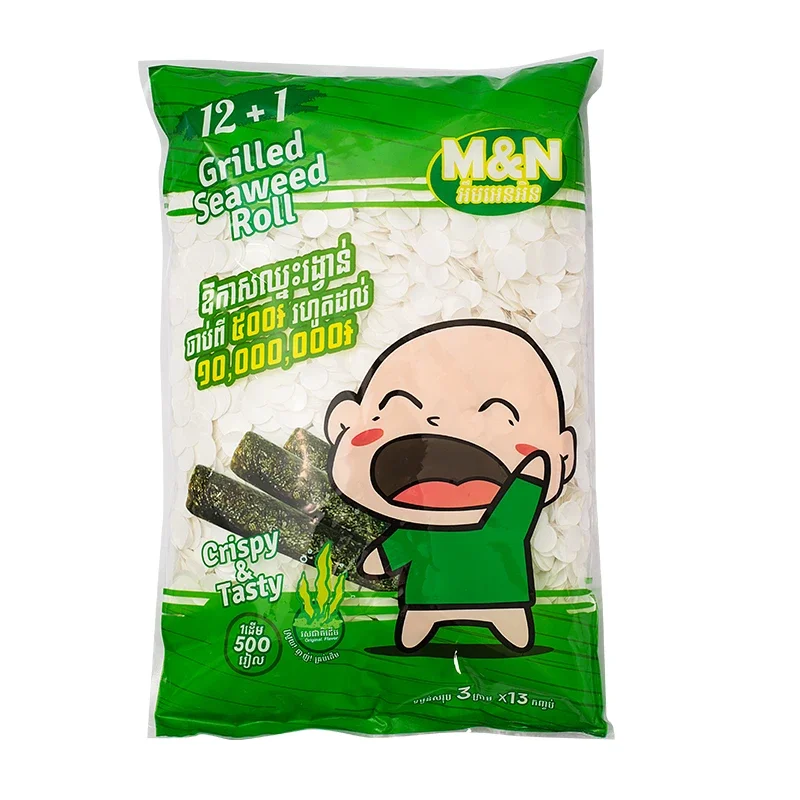
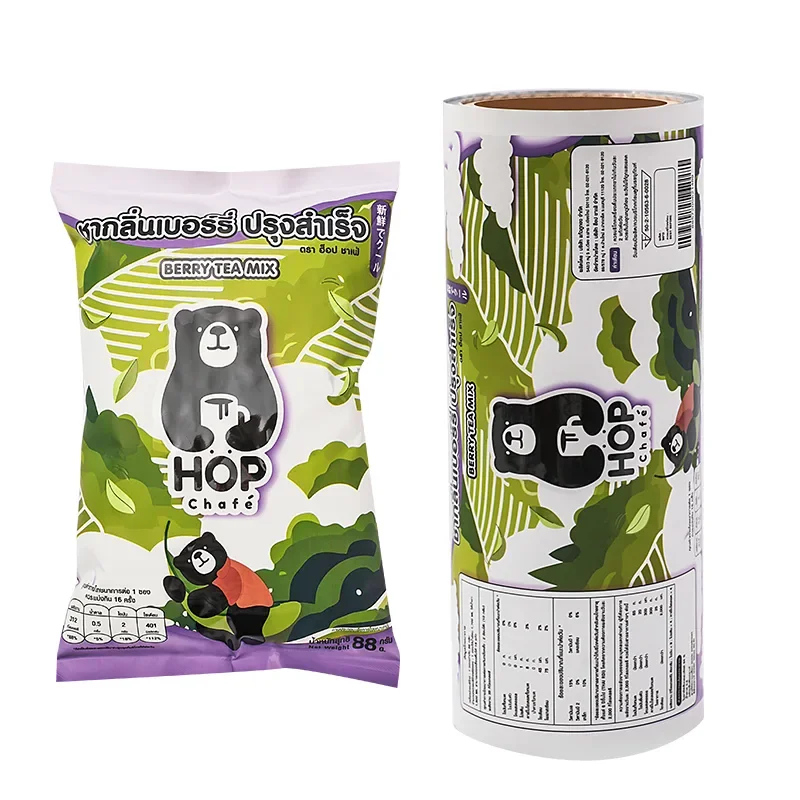
Coordinate Artwork With the Actual Bag Structure
Send Complete Artwork Information
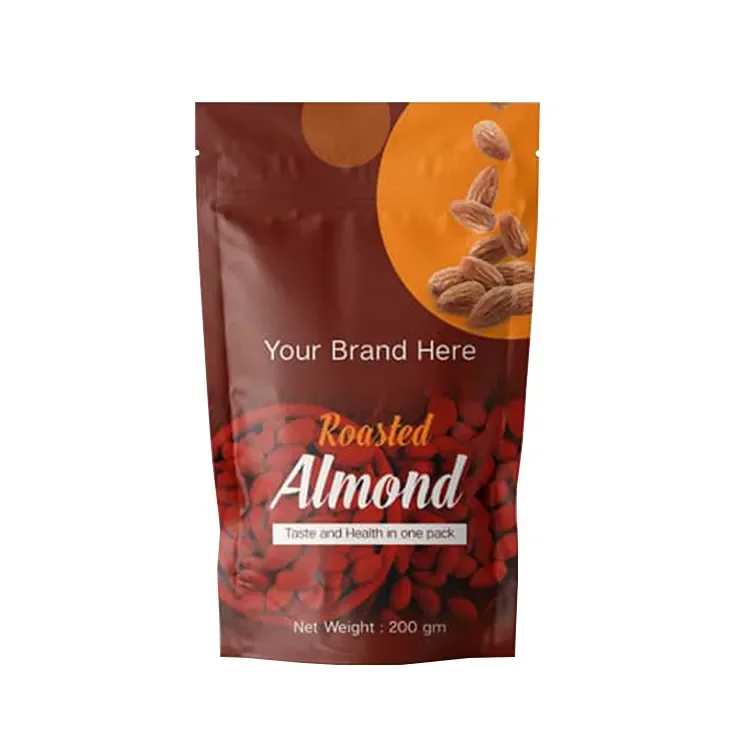
Brands should provide the available artwork, including:
- Logo
- Product images
- Text
- Barcode
- Nutrition information
- Brand colors
- Front and back artwork
- Required printing effects
Tell the Manufacturer Which Design Elements Cannot Be Changed
Some elements may be fixed, such as the logo, brand colors, product name, or required legal information.
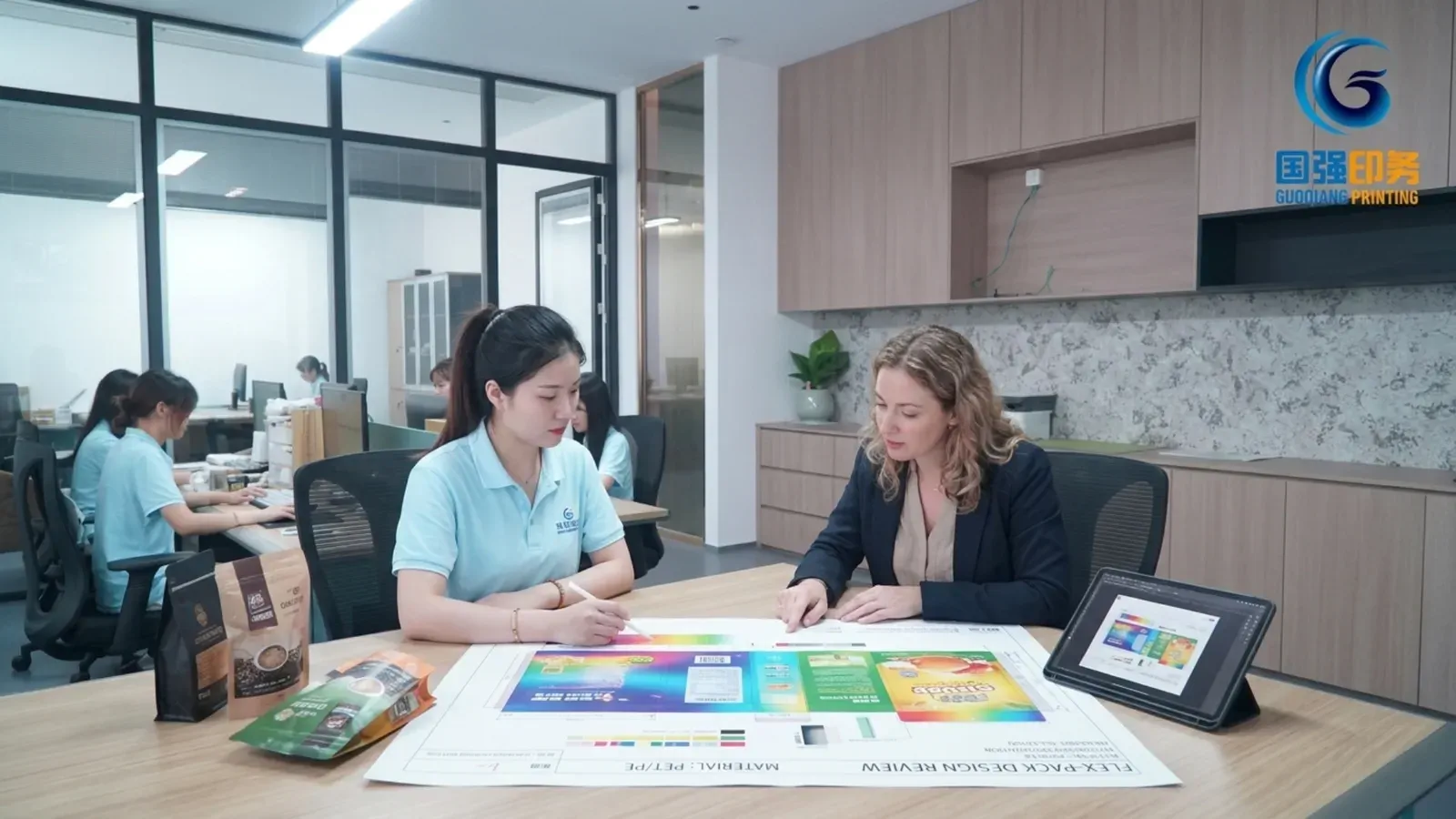
Other elements may need to be adjusted according to the actual bag structure. Seal areas, gussets, zipper positions, tear notches, and cutting positions can affect where printed elements finally appear.
The manufacturer should therefore review the artwork together with the physical bag structure instead of treating the design file as a standalone specification.
Make Material Decisions Together With the Manufacturer
Brands Should Define Performance and Cost Targets
Brands should communicate their expectations for:
- Barrier performance
- Strength
- Shelf life
- Appearance
- Surface finish
- Heat sealing
- Target cost
This gives the manufacturer a clear basis for evaluating packaging options.
Manufacturers Balance Performance, Cost, and Production Feasibility
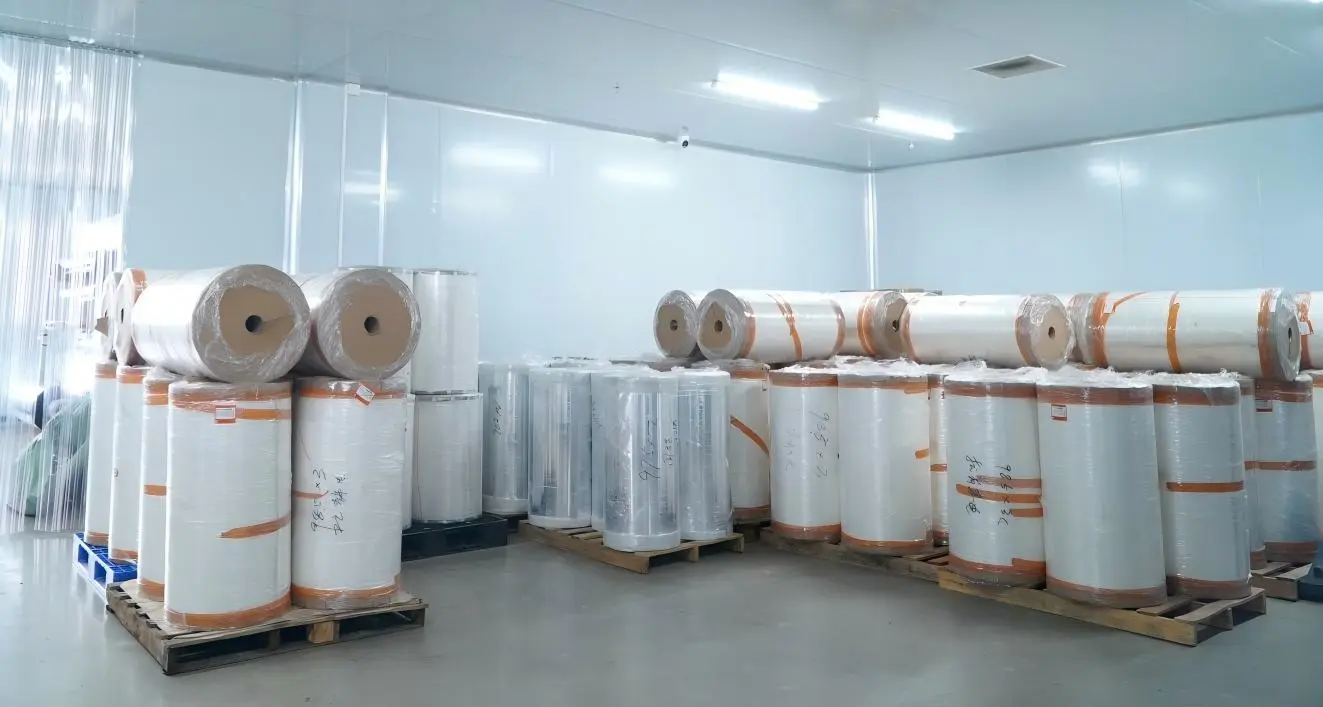
A flexible packaging manufacturer can compare different material structures, thicknesses, barrier levels, and features according to the brand’s actual requirements.
If the target cost is too high, the solution does not necessarily have to be replaced with a lower-grade material. The manufacturer can evaluate whether the structure, thickness, finish, or optional features can be optimized while maintaining the essential packaging performance.
This approach makes custom flexible packaging more practical for different product and budget requirements.
Use Sampling as a Two-Way Validation Stage
Brands Should Evaluate More Than Appearance
During sampling, brands should confirm:
- Dimensions
- Material
- Printing and color
- Surface finish
- Zipper and tear notch
- Sealing
- Opening and filling usability
- Overall appearance
A sample should be evaluated based on how the finished bag will actually be used, not only whether it looks correct.
Manufacturers Should Use Samples to Identify Production Risks
Specific feedback helps the manufacturer identify the source of a problem.
For example:
- Appearance issue → printing adjustment
- Bag too soft → material or thickness adjustment
- Difficult filling → dimension or structure adjustment
- Poor sealing → material or sealing compatibility adjustment
Sampling therefore provides an opportunity to solve problems before mass production.
Tell the Manufacturer When Requirements Are Flexible
Separate Fixed Requirements From Adjustable Requirements
Brands should clearly distinguish between requirements that cannot change and areas where alternatives are acceptable.
Fixed requirements may include:
- Brand identity
- Product capacity
- Essential product information
- Required bag format
- Target market requirements
Adjustable requirements may include:
- Material structure
- Thickness
- Certain features
- Surface finish
- Some dimensions
- Production method
Give the Manufacturer Room to Adjust the Solution
A packaging specification may change after sampling. The bag may be too soft, the cost may be too high, filling may be inefficient, or sealing performance may be insufficient.
An experienced manufacturer should be able to reassess the relevant specifications and propose an alternative rather than treating the original request as permanently fixed.
What the Manufacturer Should Do With the Information Brands Provide
Identify Missing Information
The manufacturer should clarify unclear requirements before quotation or sampling to reduce unnecessary revisions.
Recommend Suitable Packaging Options
Based on the information provided, the manufacturer can evaluate materials, structures, bag formats, features, and production options.
Adjust the Solution When Requirements Change
When a requirement changes, the manufacturer should assess its impact across:
Material → Structure → Artwork → Production → Cost → Lead Time
A small change in bag size, for example, may affect artwork positioning, material consumption, production setup, and final cost.
Keep the Final Specification Consistent With Mass Production
After the sample is approved, the confirmed material, dimensions, artwork, features, and quality requirements should become the reference for bulk production.
This creates a clear connection between sampling and mass production.
A Practical Information Flow for Custom Printed Snack Bags
Step 1 — Brand Provides Product Information
Product type, weight, characteristics, shelf life, and market requirements.
Step 2 — Brand Provides Packaging Requirements
Format, dimensions, filling method, features, and target cost.
Step 3 — Brand Provides Artwork and Design Requirements
Artwork, colors, brand elements, and fixed design requirements.
Step 4 — Manufacturer Evaluates and Proposes the Solution
Material, structure, dimensions, production feasibility, and possible alternatives.
Step 5 — Both Sides Review the Sample
Check appearance, functionality, filling, sealing, and other requirements.
Step 6 — Adjust Before Final Approval
Resolve identified issues and revise the relevant specifications.
Step 7 — Approved Sample Becomes the Bulk Reference
Use the final specification and approved sample to maintain consistency during mass production.
Conclusion
Brands do not need to provide every technical answer themselves. They need to provide the right information about the product, filling process, packaging requirements, design, cost expectations, and priorities.
The value of an experienced snack packaging supplier is to transform this information into a manufacturable packaging solution, identify potential problems, and adjust the solution when requirements or production conditions change.
Successful custom printed snack bag production therefore depends not on having a perfect specification from the beginning, but on clear information, continuous communication, and the manufacturer’s ability to adapt.