ES
ES  EN
EN  DE
DE  FR
FR  RU
RU  AR
AR  JA
JA 
Pick up a bag of potato chips, tear it open, and hear that familiar “crack.” Then you find a perfectly crisp, golden chip inside. Few people realize that this crispness is the result of packaging engineers and material scientists working together to protect the product for months.
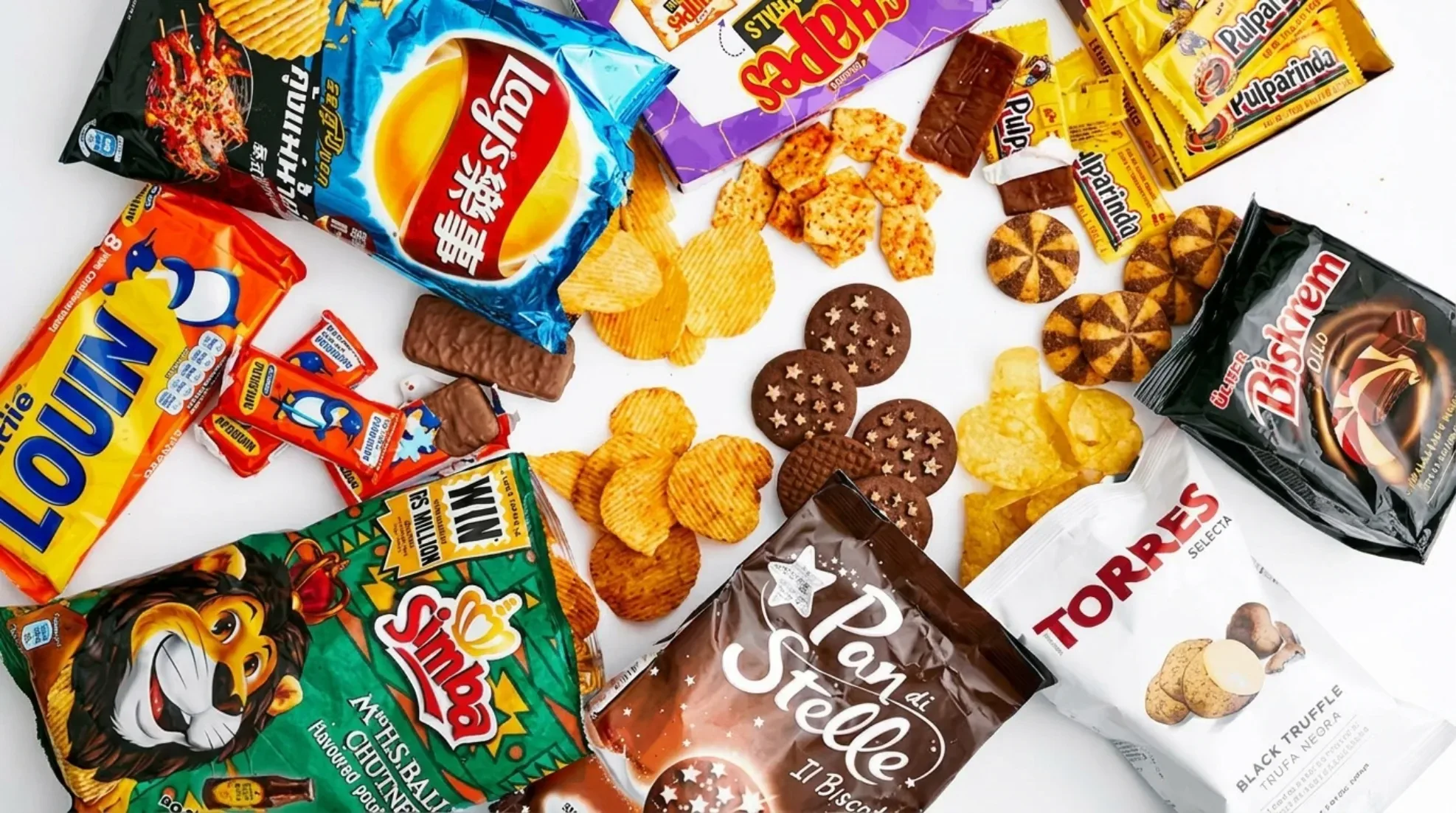
Snack packaging is one of the largest and most competitive segments in the flexible packaging industry. Different snacks face different challenges: potato chips are sensitive to moisture, nuts are vulnerable to oxygen, chocolate is sensitive to light, and expanded snacks can be damaged by impact.
For snack brands, choosing the right fabricante de envases para aperitivos and packaging structure is therefore not simply about appearance. The packaging must match the product’s protection requirements, shelf life, and production method.
The Four Main Enemies of Snack Packaging
During a shelf life of 9–12 months, snack products may need protection against four major factors:
Humedad
The crisp texture of potato chips, cookies, and nuts comes from their low moisture content, typically below 3%. If the packaging does not provide sufficient moisture resistance, water vapor from the surrounding environment can enter the package.
This can make potato chips soft and cause nuts to lose their crisp texture.
Therefore, moisture barrier packaging is particularly important for crispy snacks.
Oxígeno
Nuts and dried meat products contain unsaturated fatty acids that are highly susceptible to oxidation. Oxidation can produce unpleasant rancid flavors.
A lower oxygen transmission rate (OTR) can help reduce oxygen entering the package and slow down oxidation, supporting longer shelf life.
Luz
Chocolate and other high-fat snacks can also be affected by light. Ultraviolet exposure can accelerate lipid oxidation and contribute to changes in color.
Light-sensitive pigments, such as natural carotenoids, may also fade.
For these products, high-barrier snack packaging with appropriate light protection can help maintain product quality.
Mechanical Impact
Expanded snacks are often large in volume and fragile in structure. Compression and impact during transportation can cause the products to break.
The packaging therefore needs sufficient mechanical strength and protection against transportation damage.
Material Structures: Customized for Different Snacks
To be honest, we cannot tell you that a specific material fits all the requirements and situations. Different material combinations can be selected according to the characteristics and shelf-life requirements of each snack.
Common Snack Packaging Structures
| Estructura material | Suitable Snacks | Principales ventajas |
|---|---|---|
| BOPP/CPP | Potato chips, expanded snacks | Lower cost, high transparency, good product visibility, and good heat sealing |
| PET/AL/PE | Nuts, dried meat, chocolate | Excellent oxygen and light barrier; suitable for longer shelf-life requirements |
| PET/VMPET/PE | Mid-range cookies, candy | Provides moderate barrier performance at a lower cost than aluminum foil, with a metallic appearance |
| KPET/PE | High-fat snacks | KPET with PVDC coating provides good oxygen and oil resistance |
| NY/PE | Bone-in meat snacks | Nylon provides good puncture resistance and helps prevent bones from damaging the package |
These structures can also be adjusted according to the specific product, target shelf life, and packaging requirements
Key Snack Packaging Materials
BOPP: A Common Outer Layer
BOPP (polipropileno de orientación biaxial) is a common outer layer in snack packaging. It provides high transparency, good stiffness, and strong printing performance.
However, its oxygen barrier performance is relatively poor. It is therefore commonly used for snack applications with relatively shorter shelf-life requirements.
VMPET: Barrier and Metallic Appearance
VMPET (Vacuum Metallized Polyester) is produced by depositing a thin aluminum layer onto PET through vacuum metallization. The metallized layer can provide improved oxygen and light barrier properties while creating a metallic appearance.
Esto hace que PET/VMPET/PE packaging a common option when brands need a balance between barrier performance, appearance, and packaging cost.
CPP: The Heat-Sealing Layer
CPP (polipropileno fundido) is commonly used as an inner heat-sealing layer. Unlike BOPP, CPP is not stretched, giving it greater flexibility and good heat-sealing performance.
This makes CPP suitable for applications such as nitrogen-flushed packaging for expanded snacks.

Nitrogen-Flushed Packaging: The “Air Armor” for Potato Chips
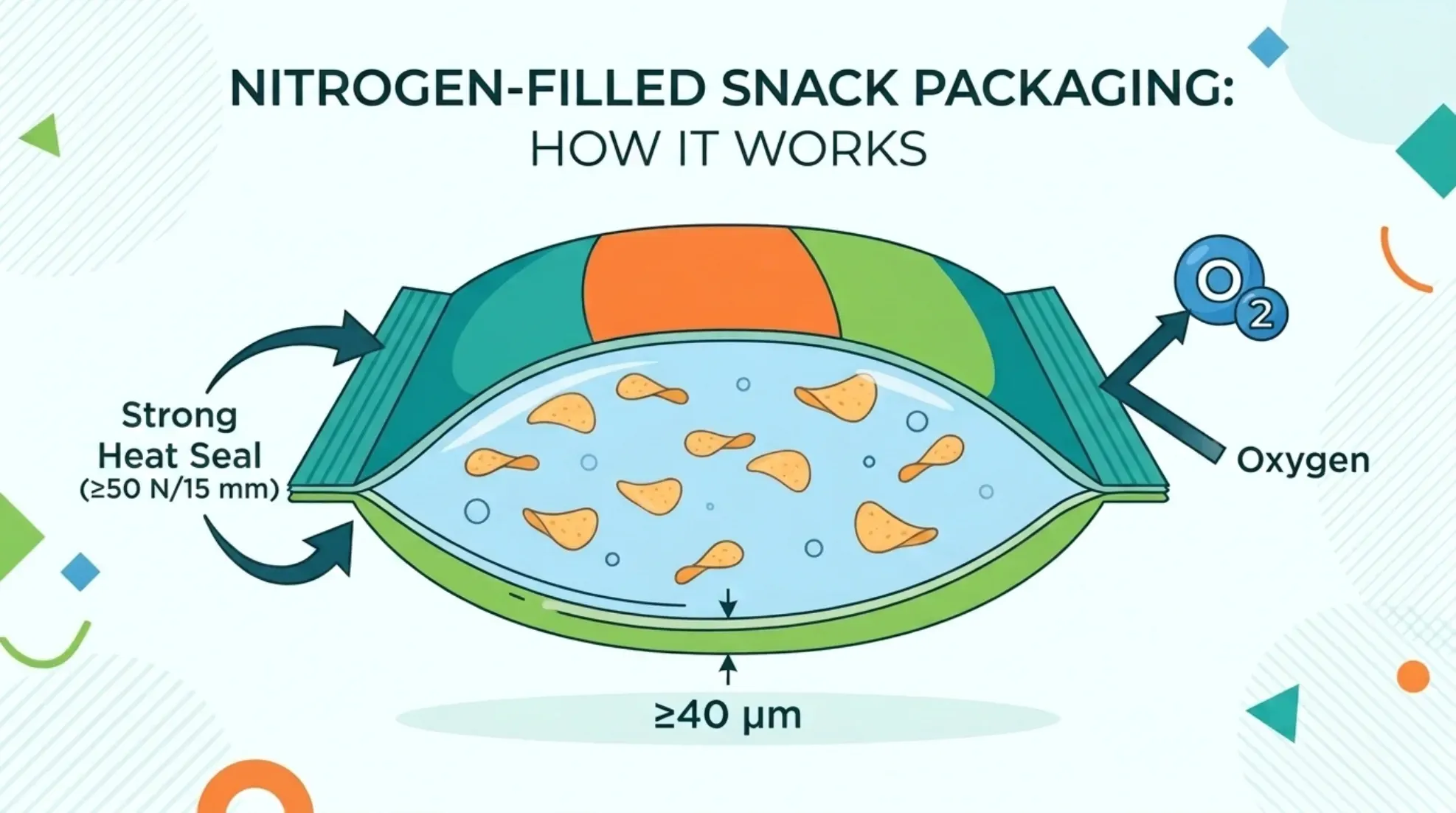
When you open a potato chip bag, it may look as if the package is filled with “half a bag of air.” In fact, that space is often filled with food-grade nitrogen (N₂).
Why Use Nitrogen?
Nitrogen is an inert gas that can replace oxygen inside the package.
It helps to:
- Reduce oxygen inside the package and slow lipid oxidation
- Maintain product flavor and quality
- Create positive pressure inside the bag
- Provide cushioning during transportation
- Reduce the risk of chips breaking
- Keep the package inflated and visually attractive on the shelf
For this reason, nitrogen-flushed snack packaging is widely used for products such as potato chips and other crispy snacks.
How Does Snack Packaging Work With Nitrogen Filling?
Nitrogen-flushed packaging places high requirements on package airtightness. Small pinholes or sealing defects can allow nitrogen to escape and oxygen to enter.
Important production considerations include:
Heat-seal strength: The original production requirement is ≥50 N/15 mm, providing a strong seal for nitrogen-flushed packaging.
Material thickness: Expanded snack packaging commonly uses a total thickness of ≥40 μm to reduce the risk of damage from sharp product edges.
Puncture and impact resistance: Packaging should withstand transportation conditions without breaking.
This means nitrogen filling and packaging material performance need to work together rather than being considered as separate processes.
Effective snack packaging needs to balance product protection with shelf presentation. Once the packaging structure and protective performance are properly addressed, the next consideration is how the package communicates the brand and attracts consumers at the point of sale. This is where printing quality and visual appeal become important.
Printing and Shelf Appeal: The First-Glance Effect
On snack shelves, consumers have limited time to notice individual products. The original concept emphasizes that packaging needs strong visual impact to support purchasing decisions.
High-Saturation Printing
Snack packaging often uses bright, high-contrast colors, such as red for spicy snacks, yellow for potato chips, and green for seaweed products.
This requires:
- High-concentration spot-color inks for strong color saturation
- Even and sufficient white underprint, especially with VMPET or aluminum foil structures
- Matte coating where a more refined surface effect is required
For customized snack packaging, accurate color reproduction is particularly important for maintaining brand consistency.
Metallic Effects
VMPET and aluminum foil naturally provide metallic effects.
A través de hollow-out printing designs, the metallic layer can remain visible in selected areas, creating visual effects that ordinary plastic films cannot easily achieve.
This technique is commonly used for premium nut and chocolate packaging.
Functional Design: Making Snack Packaging More Convenient
Moderno envases personalizados para aperitivos goes beyond simply containing the product. Convenience and reusability can also become part of the packaging design.
Cremallera resellable
Nuts, dried fruit, and similar snacks are often not consumed in one sitting. A resealable zipper pouch allows consumers to repeatedly open and close the package.
Zipper sealing strength is important. The original production reference specifies a peel strength of ≥15 N/15 mm.
If the zipper is too loose, sealing performance may be affected. If it is too tight, the package can become difficult to open.
Easy Tear Notch
An easy tear notch is usually placed near the sealed area so consumers can open the package without scissors.
The notch depth needs to be controlled carefully. If it is too deep, it may affect sealing strength; if it is too shallow, the package may be difficult to tear.
A typical reference is approximately 60–70% of the film thickness.
Esquinas redondeadas
Sharp corners can increase the possibility of packages puncturing each other during transportation.
Rounded corner snack packaging can reduce this risk while also providing a softer hand feel.
Snack Packaging Production: From Film Roll to the “Crack”
The final snack package is the result of multiple production processes. Several manufacturing details can directly influence packaging performance.
Printing Tension Control
BOPP and PET films are relatively thin, commonly around 12–25 μm.
Uneven printing tension can cause registration errors and blurred patterns. High-speed gravure printing machines, which can reach approximately 300 meters per minute, therefore require precise tension control.
Solvent Residue and Odor
Snack packaging is highly sensitive to odor. When consumers open a potato chip bag, they should smell the food rather than unwanted odors from inks or adhesives.
In addition to controlling solvent residue, some premium snack brands require sensory testing to evaluate whether the packaging produces undesirable odors.
Film Roll Flatness
Snack packaging machines, particularly vertical form-fill-seal (VFFS) machines, can operate at high speeds of approximately 100–200 bags per minute.
If the film roll is uneven or has inconsistent tension, the film may deviate during production or cause sealing misalignment, increasing waste.
Conclusión
That bag of potato chips you casually pick up has gone through material selection, multilayer lamination, high-speed printing, nitrogen flushing, sealing, impact testing, and other production processes.
Every film layer, sealing temperature, and ink formulation contributes to the final result.
When the package is opened and you hear that “crack,” the sound does not come only from the potato chip. It also represents a packaging system that has worked to protect the product from moisture, oxygen, light, and mechanical damage for months.
Para un fabricante de envases para aperitivos, the competition is therefore not limited to printing quality. It also depends on the ability to understand material performance, packaging structure, product requirements, and practical production conditions.
For snack brands looking for envases personalizados para aperitivos, the right combination of material structure, functional design, printing, and production control can help maintain product quality while supporting shelf presentation and market competitiveness.