FR
FR  EN
EN  DE
DE  RU
RU  AR
AR  ES
ES  JA
JA 
Pour les marques indépendantes, l'emballage est bien plus qu'une simple couche protectrice. Les matériaux composites d'emballage en plastique influencent directement la fraîcheur du produit, sa durée de conservation, la sécurité du transport, l'expérience du client et même la perception de la marque. Le bon matériau peut aider une marque à réduire ses coûts, à améliorer l'aspect de l'emballage et à s'adapter à différents scénarios de vente au détail et de commerce électronique.
Les matériaux d'emballage composites en plastique sont généralement fabriqués en laminant plusieurs couches de plastique ou de matériaux barrières, ce qui permet à l'emballage de combiner plusieurs fonctions à la fois, telles que la résistance à l'humidité, l'étanchéité, la protection contre l'oxygène, la résistance à la perforation et la qualité de l'impression.
Pour de nombreuses marques en expansion, le choix des matériaux d'emballage peut sembler technique et compliqué. En réalité, le processus devient beaucoup plus simple lorsque vous vous concentrez sur trois facteurs essentiels :
- Propriétés du produit
- Positionnement de la marque
- Exigences de conformité
Une fois ces éléments clarifiés, il devient beaucoup plus facile d'identifier le matériau d'emballage composite le mieux adapté à vos produits.
L'importance des matériaux d'emballage composites
Du point de vue d'un fabricant d'emballages alimentaires flexibles sur mesureL'emballage plastique monocouche ne peut souvent pas répondre aux exigences des produits modernes, en particulier pour les produits alimentaires, les cosmétiques, les compléments alimentaires et les produits de vente au détail du commerce électronique. Les matériaux composites combinent les forces de différents matériaux en une seule structure.
Un matériau d'emballage composite bien conçu peut fournir.. :
- Meilleure préservation de la fraîcheur
- Amélioration des barrières à l'humidité et à l'oxygène
- Amélioration des performances d'étanchéité
- Résistance accrue à la perforation
- Meilleure impression et présentation visuelle
- Durée de conservation plus longue
- Diminution des taux d'avarie de transport
Pour les marques indépendantes en concurrence sur des marchés encombrés, la qualité de l'emballage peut directement influencer la confiance des clients et les achats répétés.
Étape 1 : Le type de produit détermine la base matérielle
Le produit lui-même doit toujours déterminer la structure de base du matériau.
Des produits différents nécessitent des niveaux de protection différents, et le choix d'un mauvais matériau peut entraîner des pertes, des fuites ou une mauvaise expérience pour le client.
Emballage alimentaire : Priorité à la protection barrière et à la sécurité alimentaire
En tant que fabricant d'emballages alimentaires flexibles sur mesure, nous recommandons d'adopter un matériau composite alimentaire à haute barrière pour les snacks, le café, le thé, les noix, les fruits secs, les aliments surgelés et d'autres produits alimentaires.
Les caractéristiques recommandées sont les suivantes :
- Résistance à l'oxygène
- Protection contre l'humidité
- Blocage de la lumière
- Forte performance d'étanchéité
- Certification de qualité alimentaire sans BPA
Les produits tels que les noix, le thé et le café sont particulièrement sensibles à l'oxygène et à l'humidité, ce qui rend les structures composites à haute barrière extrêmement importantes pour prolonger la durée de conservation et préserver la saveur.
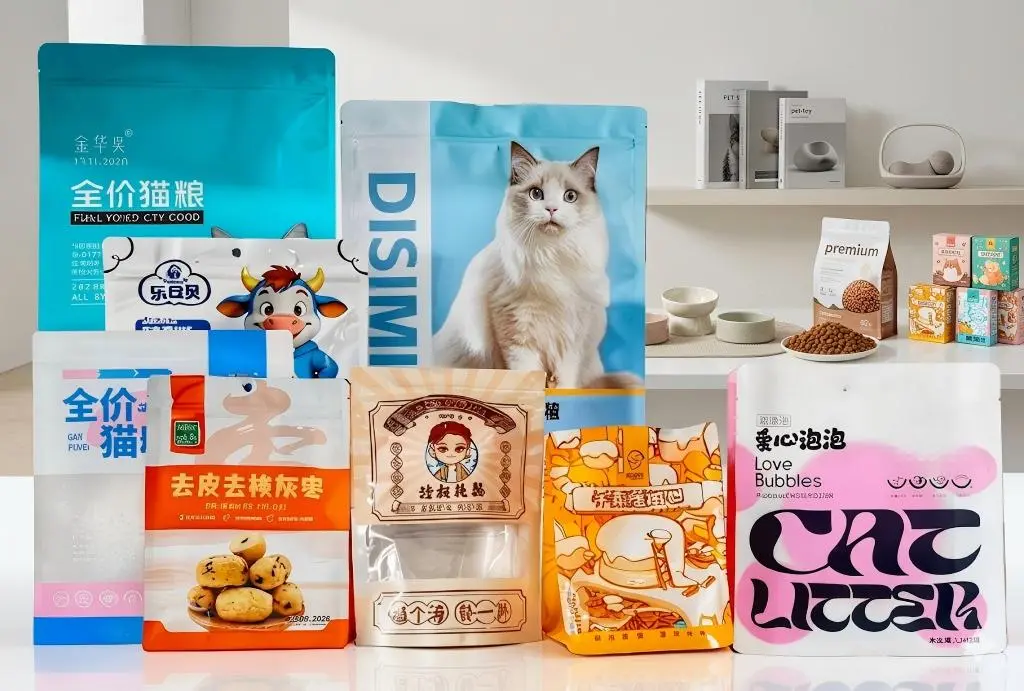
Emballage des cosmétiques et des soins personnels : Focus sur l'étanchéité et l'apparence
Les cosmétiques, les produits de soin de la peau et les articles de soins personnels doivent être emballés de manière à combiner les deux :
- Excellente performance d'étanchéité
- Prévention des fuites
- Impression de surface attrayante
- Texture visuelle de qualité supérieure
Pour les sachets d'échantillons, les emballages de masques ou les sachets de recharge, l'aspect est souvent aussi important que la fonctionnalité.

Biens de consommation courante : Mettre l'accent sur la rentabilité
Pour les produits ménagers, les articles de détail à bas prix ou les emballages promotionnels, les marques donnent souvent la priorité :
- Coût inférieur des matériaux
- Une production de masse efficace
- Performance de protection de base
- Transport léger
Dans ces cas, les matériaux composites pratiques à base de PE sont souvent suffisants.
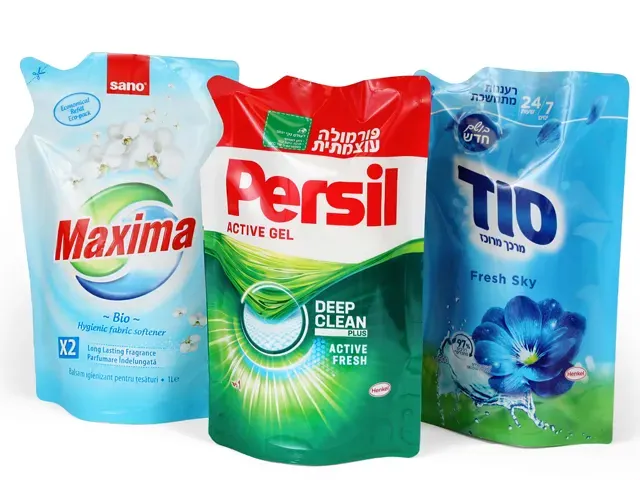
Étape 2 : Adapter les matériaux d'emballage au positionnement de la marque
Les matériaux d'emballage doivent également refléter la façon dont votre marque veut être perçue. Vous trouverez ci-dessous trois aspects pris en compte par un professionnel. fabricant d'emballages alimentaires flexibles sur mesure.
Marques haut de gamme : Choisissez des matériaux composites à base de PET de haute qualité
Les marques haut de gamme ou de niche donnent généralement la priorité :
- Qualité d'impression supérieure
- Une meilleure transparence
- Une forte attractivité en rayon
- Une texture d'emballage plus raffinée
Les matériaux composites à base de PET sont largement utilisés dans les emballages haut de gamme parce qu'ils offrent un aspect brillant et des performances d'impression éclatantes.
Ces matériaux sont couramment utilisés pour :
- Emballages pour snacks gourmands
- Sachets d'échantillons de beauté
- Sachets de café de qualité supérieure
- Emballage pour le thé de la boutique
- Pochettes de recharge de luxe
Marques axées sur la valeur : Choisir des matériaux rentables à base de PE
Les marques grand public ont généralement besoin d'un emballage équilibré :
- Coût abordable
- Efficacité de la production
- Une étanchéité fiable
- Durabilité des transports
Les structures composites à base de PE sont très pratiques pour la production en grande quantité tout en maintenant des performances d'emballage acceptables.
Marques respectueuses de l'environnement : Envisager des structures mono-matériau recyclables
La durabilité devient de plus en plus importante sur les marchés mondiaux de l'emballage.
Les marques soucieuses de l'environnement s'orientent progressivement vers.. :
- Emballage mono-matériau recyclable
- Structures matérielles simplifiées
- Réduction des couches d'aluminium
- Emballage à faible impact environnemental
Les structures mono-matériau en PE ou PET sont plus faciles à recycler que les laminés multicouches complexes.
Comprendre les deux principaux systèmes de matériaux composites
En emballage alimentaire flexible sur mesure ou d'autres emballages souples, les solutions d'emballage souple les plus courantes sont généralement divisées en composites à base de PET et en composites à base de PE.
Matériaux composites à base de PET
Le PET (polyéthylène téréphtalate) est largement utilisé en raison de son excellente transparence, de ses performances d'impression et de sa rigidité.
Structure PET/PE
La combinaison PET/PE est l'une des structures d'emballage flexible les plus courantes.
Avantages
- Grande transparence
- Excellente qualité d'impression
- Un fort attrait visuel
- Bonne performance d'étanchéité
- Convient aux pochettes et aux sachets à fond plat
Meilleures applications
- Sacs d'échantillons cosmétiques
- Emballages pour snacks haut de gamme
- Pochettes autoportantes pour la vente au détail
- Produits de beauté et de soins
Cette structure est idéale pour les marques qui souhaitent une présentation de qualité en rayon.
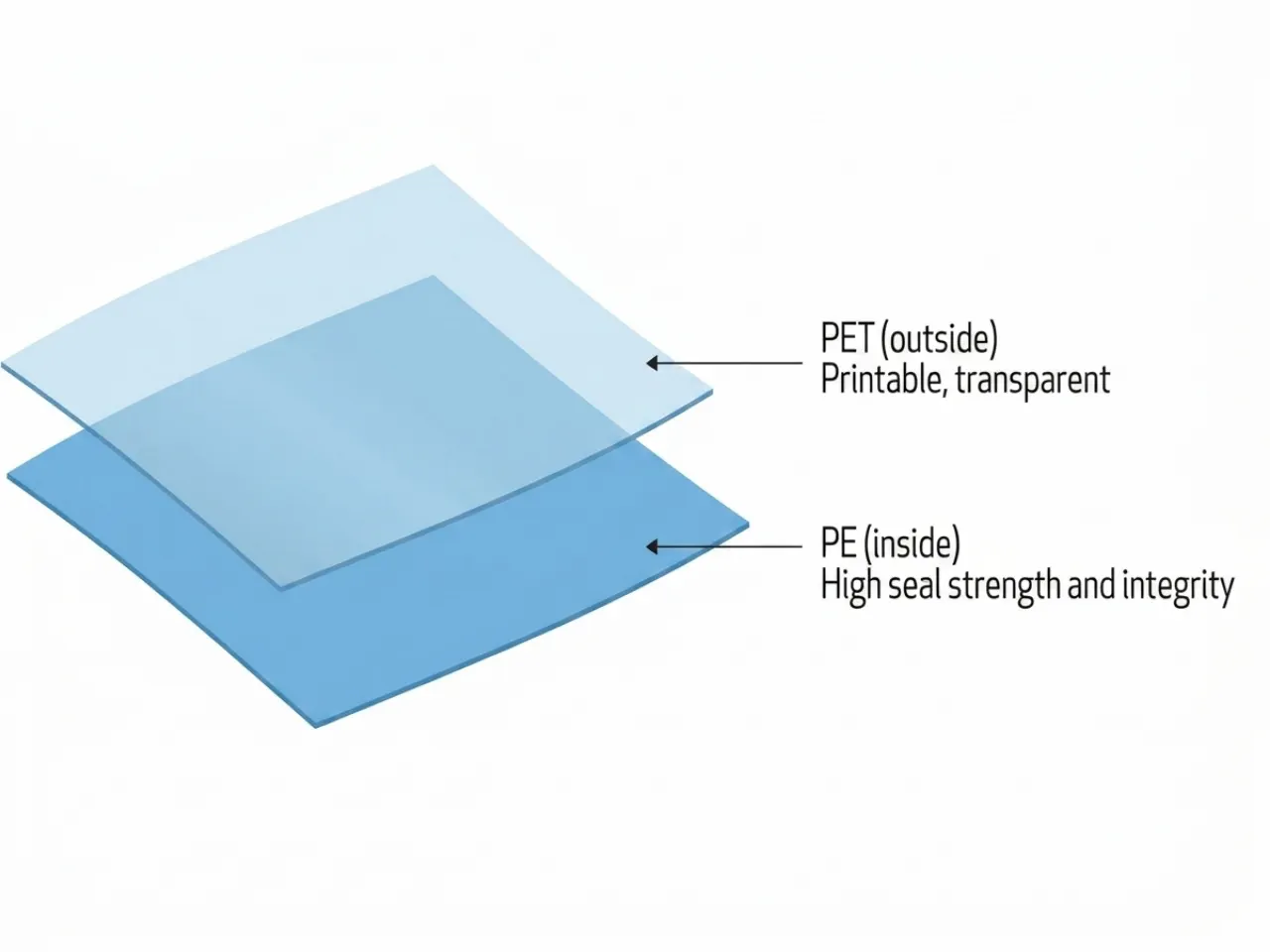
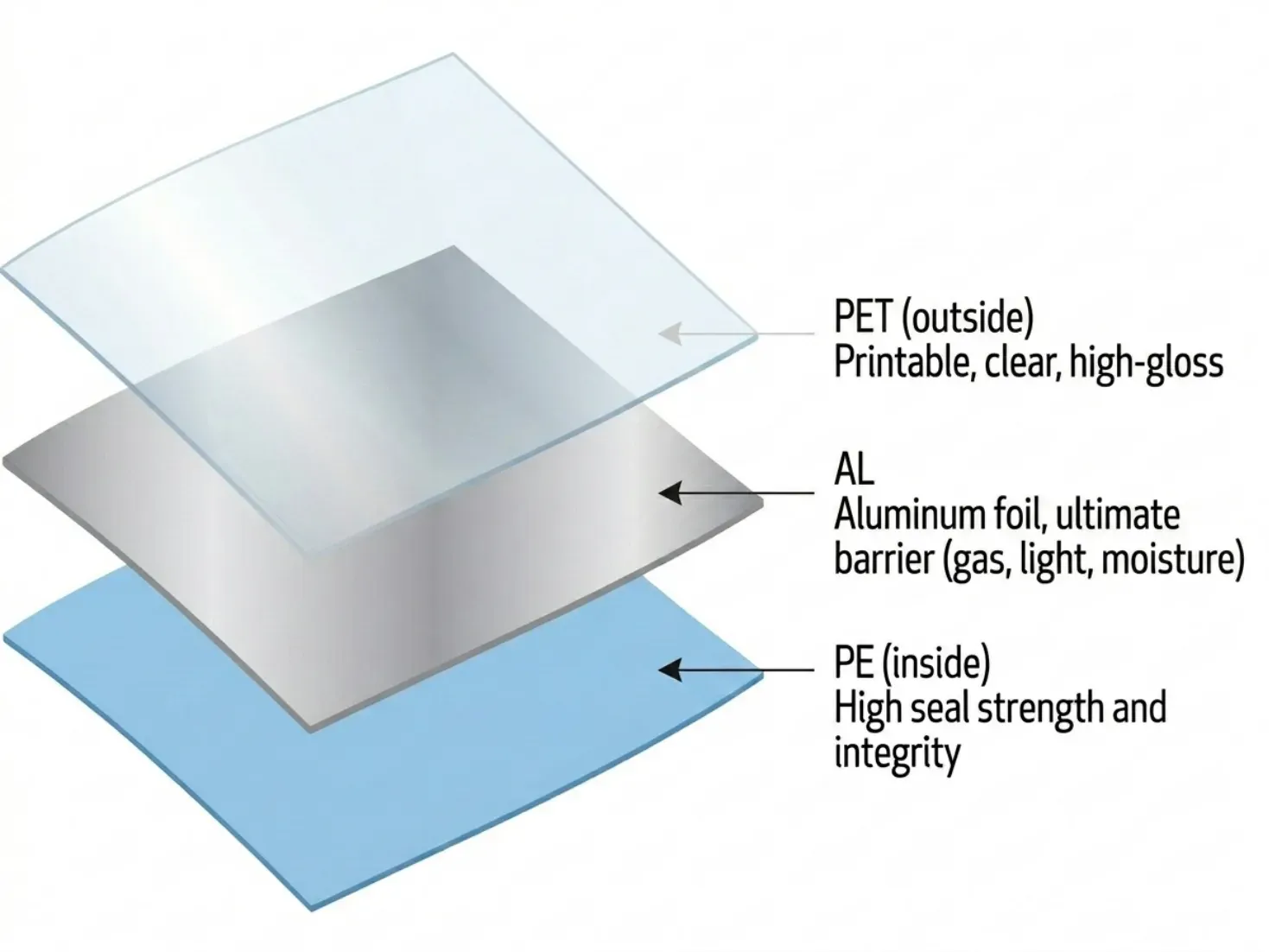
Structure PET/AL/PE
Cette structure ajoute une feuille d'aluminium entre le PET et le PE.
Avantages
- Barrière de protection extrêmement élevée
- Excellente résistance à l'humidité
- Blocage important de l'oxygène
- Meilleure protection contre la lumière
- Durée de conservation des produits plus longue
Meilleures applications
- Noix et fruits secs
- Emballage du thé
- Sacs à café
- Produits alimentaires sensibles
- Emballage de stockage à long terme
Pour les produits nécessitant une préservation de la fraîcheur, il s'agit de l'une des structures d'emballage les plus efficaces.
Considération importante
Les structures à base de PET ont généralement une plus faible résistance à la chaleur. Elles ne sont pas idéales pour :
- Remplissage à haute température
- Stérilisation par ébullition
- Environnements de stockage à température extrême
Les marques qui utilisent des procédés de remplissage à chaud doivent soigneusement vérifier la compatibilité des matériaux avant la production.
Matériaux composites à base de PE
Les matériaux en PE (polyéthylène) sont connus pour leur flexibilité, leur étanchéité et leur rentabilité.
Ils sont particulièrement adaptés aux projets d'emballage commercial à grande échelle.
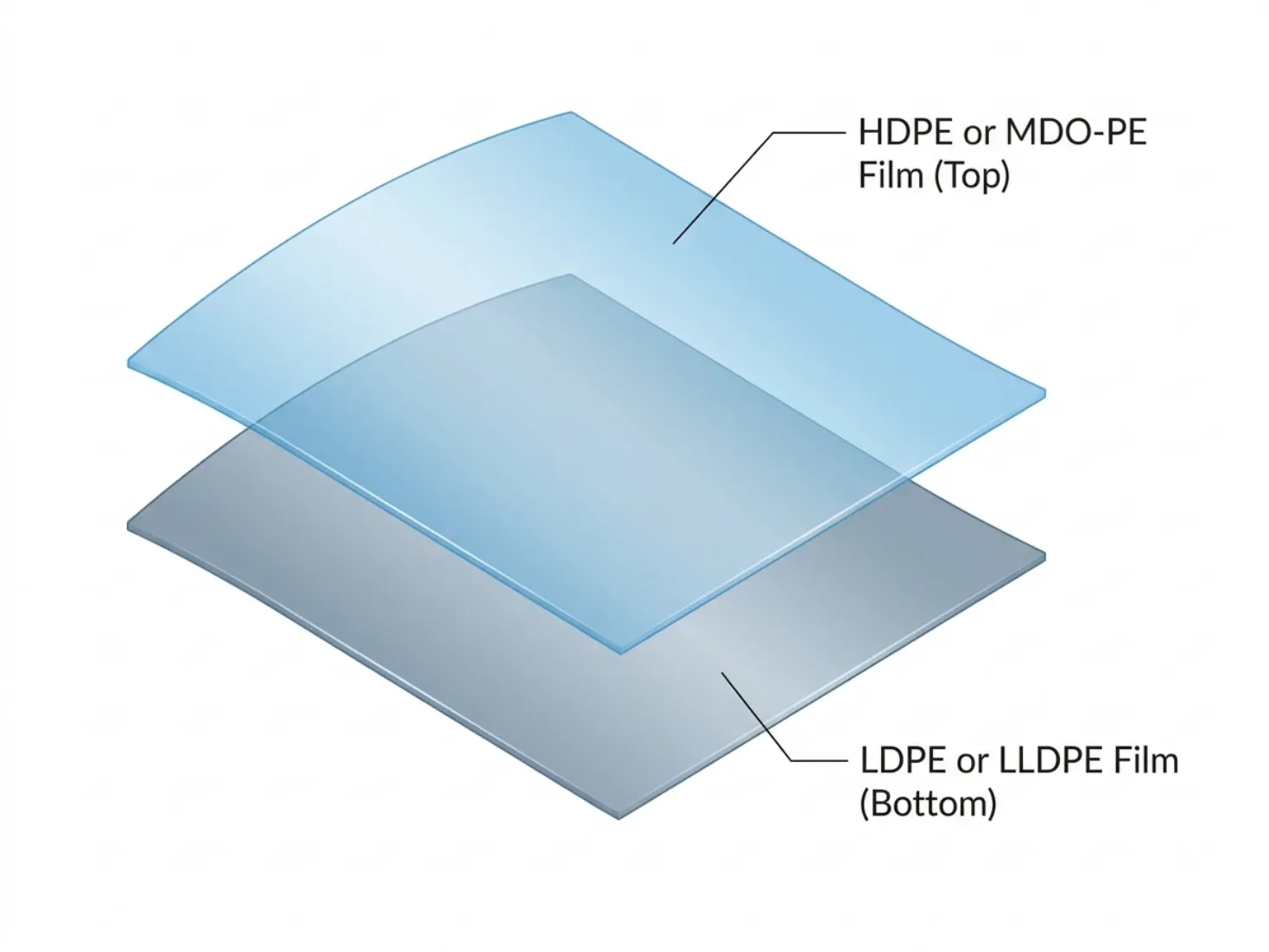
Structure PE/LDPE
Avantages
- Forte flexibilité
- Excellente étanchéité à la chaleur
- Une production rentable
- Bonne résistance à la perforation
Meilleures applications
- Sachets de produits de lavage et d'entretien
- Sacs à goûter économiques
- Emballage de recharge
- Produits de consommation courante
Cette structure est idéale pour les marques qui privilégient l'accessibilité financière et l'aspect pratique.
Structure PE/PP
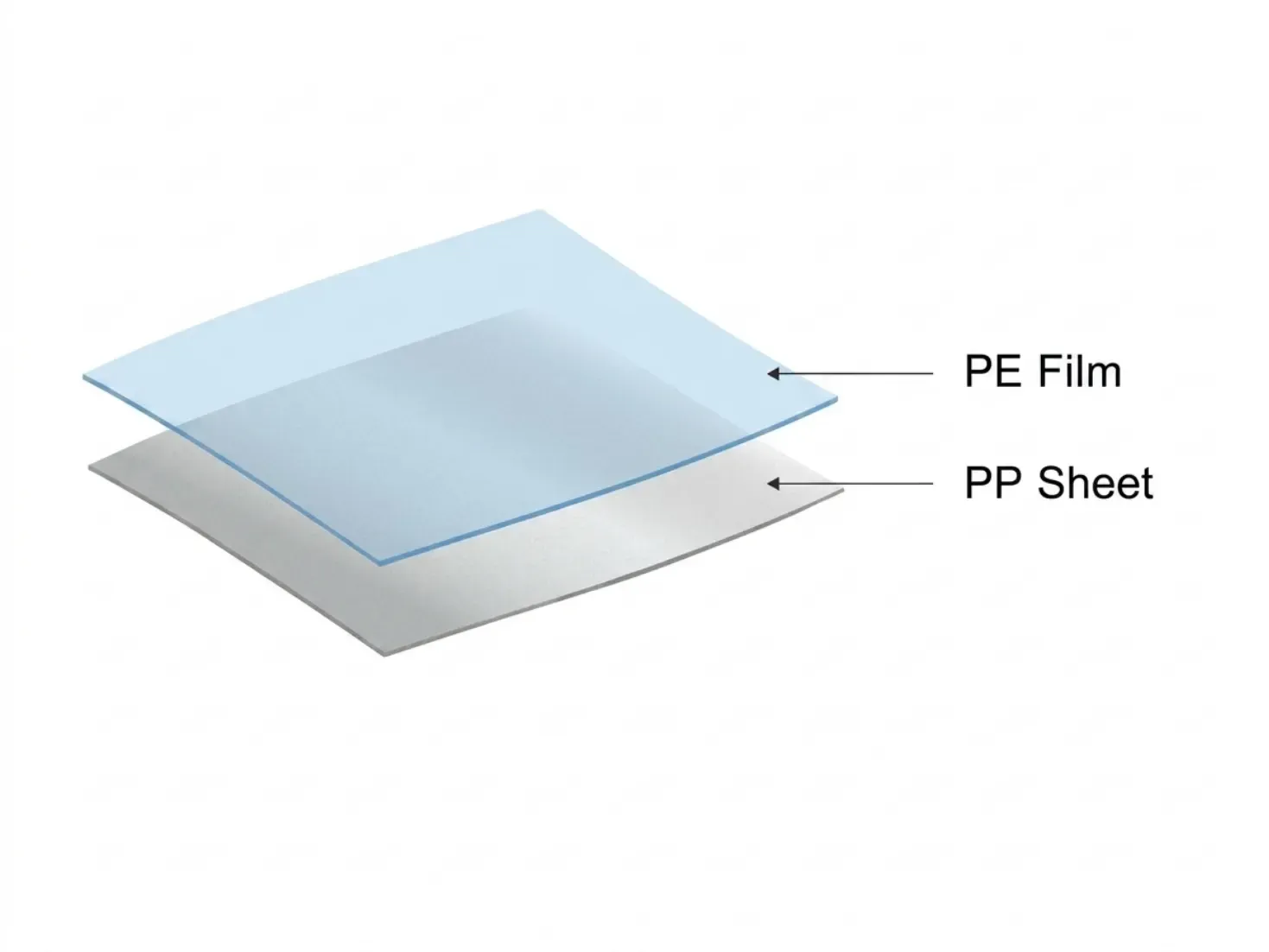
Les structures PE/PP offrent une rigidité et une rétention de forme légèrement supérieures.
Avantages
- Amélioration du soutien structurel
- Meilleure stabilité du paquet
- Bonnes propriétés d'étanchéité
Meilleures applications
- Emballage en sachet semi-rigide
- Emballage nécessitant une légère rétention de forme
- Emballage léger pour la vente au détail
Limitation
Par rapport aux matériaux à base de PET, les structures à base de PE sont généralement moins transparentes et moins attrayantes sur le plan visuel.
Toutefois, les marques peuvent améliorer l'apparence de leurs produits :
- Finitions mates
- Revêtements doux au toucher
- Effets d'impression personnalisés
Conseils supplémentaires pour les marques indépendantes
Marques en petites séries : Utiliser des films standard avec une impression personnalisée
Pour les start-ups ou les petites séries, les matériaux entièrement personnalisés peuvent augmenter de manière significative les coûts et les délais.
La solution la plus pratique est la suivante :
- Utilisation de structures de films composites standard
- Ajout de motifs d'impression personnalisés
- Choix des formats de poche les plus courants
Cette approche permet de réduire :
- Quantités minimales de commande
- Coûts de production
- Temps de développement
tout en préservant l'identité de la marque.
Marques de commerce électronique transfrontalier : Simplifier les structures matérielles
Pour les marques qui vendent à l'échelle internationale, les structures multicouches complexes peuvent poser des problèmes de recyclage et de conformité sur les différents marchés.
Dans la mesure du possible, choisissez :
- Structures simples basées sur le PET
- Emballage en PE mono-matériau
- Matériaux facilement recyclables
Cela peut améliorer la compatibilité avec les réglementations environnementales étrangères.
Toujours vérifier les certifications de conformité
Quelle que soit la structure matérielle choisie, la conformité ne doit jamais être négligée.
Pour les emballages alimentaires, en particulier, les marques doivent confirmer :
- Rapports d'essais de qualité alimentaire
- Certification sans BPA
- Conformité FDA ou LFGB
- Résultats des tests de migration
- Normes régionales de sécurité des emballages
Une documentation fiable sur la conformité protège à la fois vos clients et la réputation de votre marque.
Réflexions finales
Le choix du bon matériau composite d'emballage plastique n'est pas seulement une question de protection de l'emballage - c'est aussi une question de stratégie de marque, d'expérience client et de croissance à long terme de l'entreprise.
En général :
- Les matériaux composites à base de PET sont meilleurs pour un aspect premium et une image de marque haut de gamme.
- Les matériaux composites à base de PE offrent un meilleur rapport coût-efficacité et une plus grande flexibilité
- Les structures composites de feuilles d'aluminium offrent une protection renforcée pour la conservation des aliments
- Les structures mono-matériaux deviennent de plus en plus importantes pour les emballages durables
La solution d'emballage idéale doit être équilibrée :
- Protection des produits
- Image de marque
- Contrôle des coûts
- Efficacité de la production
- Conformité réglementaire
Pour les marques indépendantes, des décisions intelligentes en matière d'emballage peuvent renforcer la compétitivité du marché et aider les produits à se démarquer à la fois en ligne et dans les rayons des magasins.
Si vous êtes à la recherche de matériaux composites d'emballage plastique pour vos produits, n'hésitez pas à nous contacter. GQ PACK a des dizaines d'années d'expérience dans le domaine de l'emballage plastique. emballage alimentaire flexible sur mesure l'expérience. Nous pouvons vous aider à sélectionner la structure d'emballage appropriée en fonction de votre catégorie de produits, de vos objectifs de marque et des exigences du marché, en créant des solutions d'emballage qui ajoutent réellement de la valeur à votre marque.