EN
EN  DE
DE  FR
FR  RU
RU  AR
AR  ES
ES  JA
JA 
For independent brands, packaging is far more than just a protective layer. Plastic packaging composite materials directly influence product freshness, shelf life, transportation safety, customer experience, and even brand perception. The right material can help a brand reduce costs, improve packaging appearance, and adapt to different retail and e-commerce scenarios.
Plastic composite packaging materials are usually made by laminating multiple layers of plastics or barrier materials together, allowing the packaging to combine several functions at once, such as moisture resistance, sealing performance, oxygen protection, puncture resistance, and printing quality.
For many growing brands, choosing packaging materials may seem technical and complicated. In reality, the process becomes much simpler when you focus on three core factors:
- Product properties
- Brand positioning
- Compliance requirements
Once these are clear, it becomes much easier to identify the most suitable composite packaging material for your products.
Why Composite Packaging Materials Matter
From the perspective of a custom flexible food packaging manufacturer, single-layer plastic packaging often cannot meet the requirements of modern products, especially for food, cosmetics, supplements, and e-commerce retail products. Composite materials combine the strengths of different materials into one structure.
A well-designed composite packaging material can provide:
- Better freshness preservation
- Improved moisture and oxygen barriers
- Enhanced sealing performance
- Stronger puncture resistance
- Better printing and visual presentation
- Longer shelf life
- Lower transportation damage rates
For independent brands competing in crowded markets, packaging quality can directly influence customer trust and repeat purchases.
Step 1: Let Product Type Determine the Material Foundation
The product itself should always determine the basic material structure.
Different products require different protection levels, and selecting the wrong material may lead to spoilage, leakage, or poor customer experience.
Food Packaging: Prioritize Barrier Protection and Food Safety
As a manufacturer of custom flexible food packaging, we recommend adopting high-barrier food-grade composite material for snacks, coffee, tea, nuts, dried fruits, frozen foods, and other food products.
Recommended features include:
- Oxygen resistance
- Moisture protection
- Light blocking
- Strong sealing performance
- BPA-free food-grade certification
Products such as nuts, tea, and coffee are especially sensitive to oxygen and moisture, making high-barrier composite structures extremely important for extending shelf life and preserving flavor.
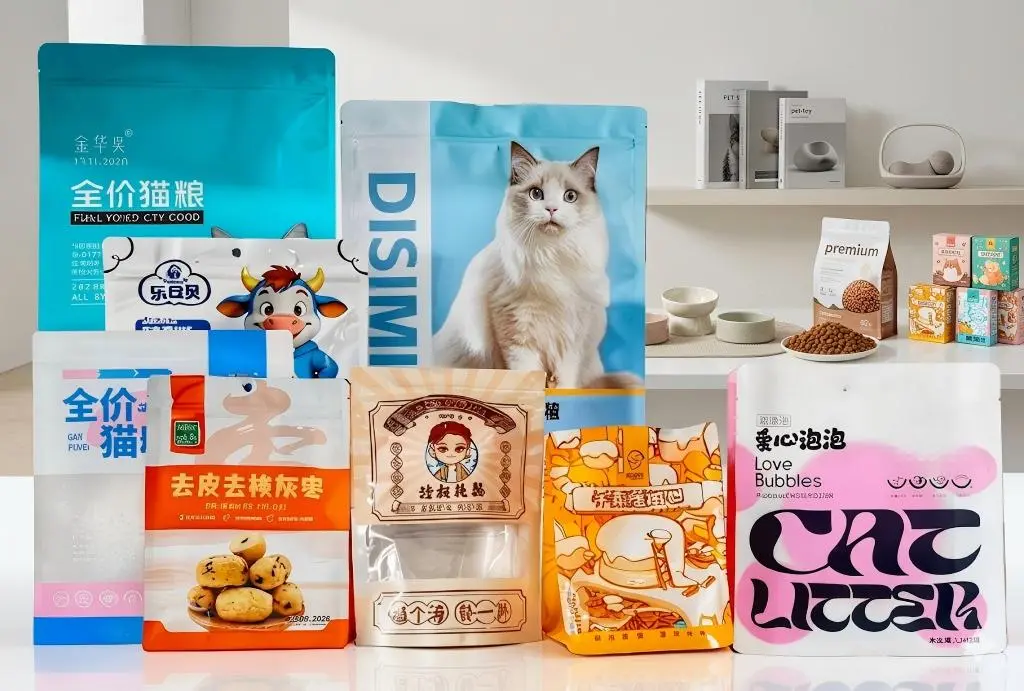
Cosmetics and Personal Care Packaging: Focus on Sealing and Appearance
Cosmetics, skincare products, and personal care items require packaging that combines:
- Excellent sealing performance
- Leak prevention
- Attractive surface printing
- Premium visual texture
For sample sachets, mask packaging, or refill pouches, appearance is often just as important as functionality.

Daily Consumer Goods: Emphasize Cost Efficiency
For household products, low-cost retail items, or promotional packaging, brands often prioritize:
- Lower material cost
- Efficient mass production
- Basic protection performance
- Lightweight transportation
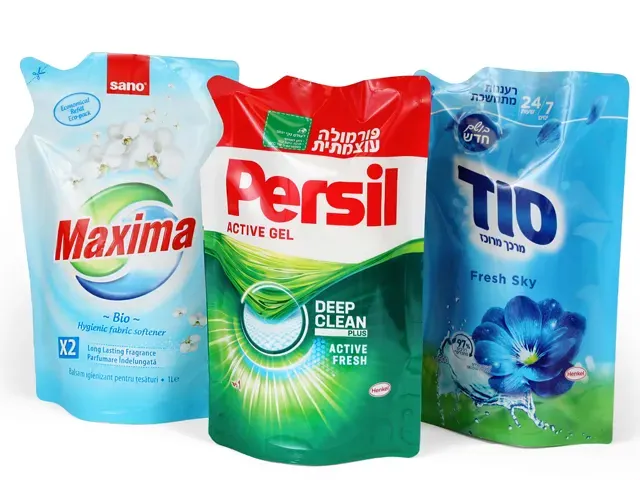
In these cases, practical PE-based composite materials are often sufficient.
Step 2: Match Packaging Materials With Brand Positioning
Packaging materials should also reflect how your brand wants to be perceived. Below are concerns of three considerate aspects from a professional custom flexible food packaging manufacturer.
Premium Brands: Choose High-Quality PET-Based Composite Materials
High-end or niche brands usually prioritize:
- Superior print quality
- Better transparency
- Strong shelf appeal
- More refined packaging texture
PET-based composite materials are widely used in premium packaging because they provide a glossy appearance and vibrant printing performance.
These materials are commonly used for:
- Gourmet snack packaging
- Beauty sample sachets
- Premium coffee bags
- Boutique tea packaging
- Luxury refill pouches
Value-Oriented Brands: Choose Cost-Effective PE-Based Materials
Mass-market brands usually need packaging that balances:
- Affordable cost
- Production efficiency
- Reliable sealing
- Transportation durability
PE-based composite structures are highly practical for high-volume production while maintaining acceptable packaging performance.
Eco-Friendly Brands: Consider Recyclable Mono-Material Structures
Sustainability is becoming increasingly important in global packaging markets.
Environmentally conscious brands are gradually shifting toward:
- Recyclable mono-material packaging
- Simplified material structures
- Reduced aluminum layers
- Lower environmental impact packaging
Mono-material PE or PET structures are easier to recycle compared to complex multi-layer laminates.
Understanding the Two Main Composite Material Systems
In custom flexible food packaging or other flexible packaging, the most common flexible packaging solutions are generally divided into PET-based composites and PE-based composites.
PET-Based Composite Materials
PET (Polyethylene Terephthalate) is widely used because of its excellent transparency, printing performance, and stiffness.
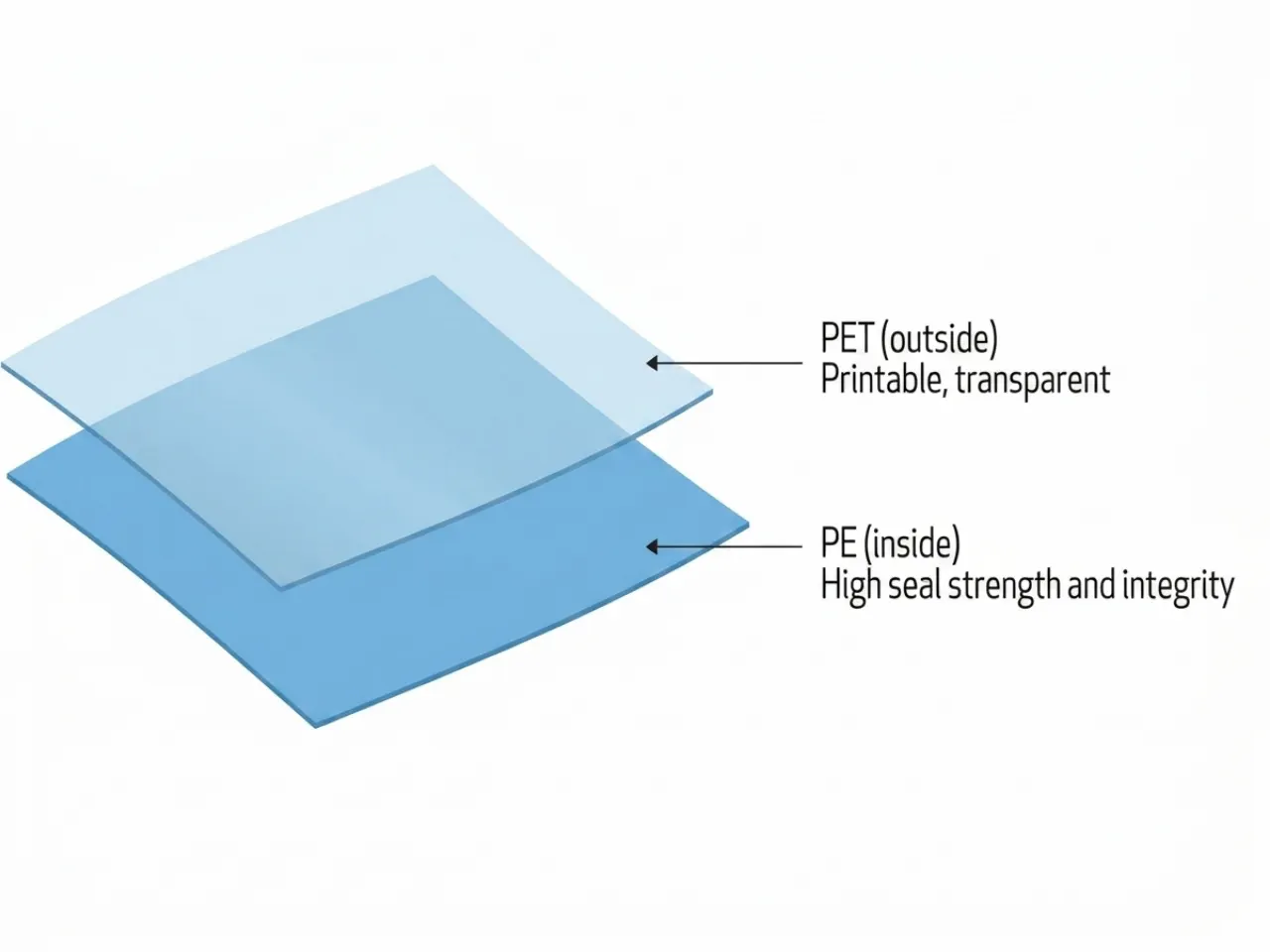
PET/PE Structure
The PET/PE combination is one of the most common flexible packaging structures.
Advantages
- High transparency
- Excellent printing quality
- Strong visual appeal
- Good sealing performance
- Suitable for stand-up pouches and sachets
Best Applications
- Cosmetic sample bags
- Premium snack packaging
- Retail self-standing pouches
- Beauty and skincare products
This structure is ideal for brands that want premium shelf presentation.
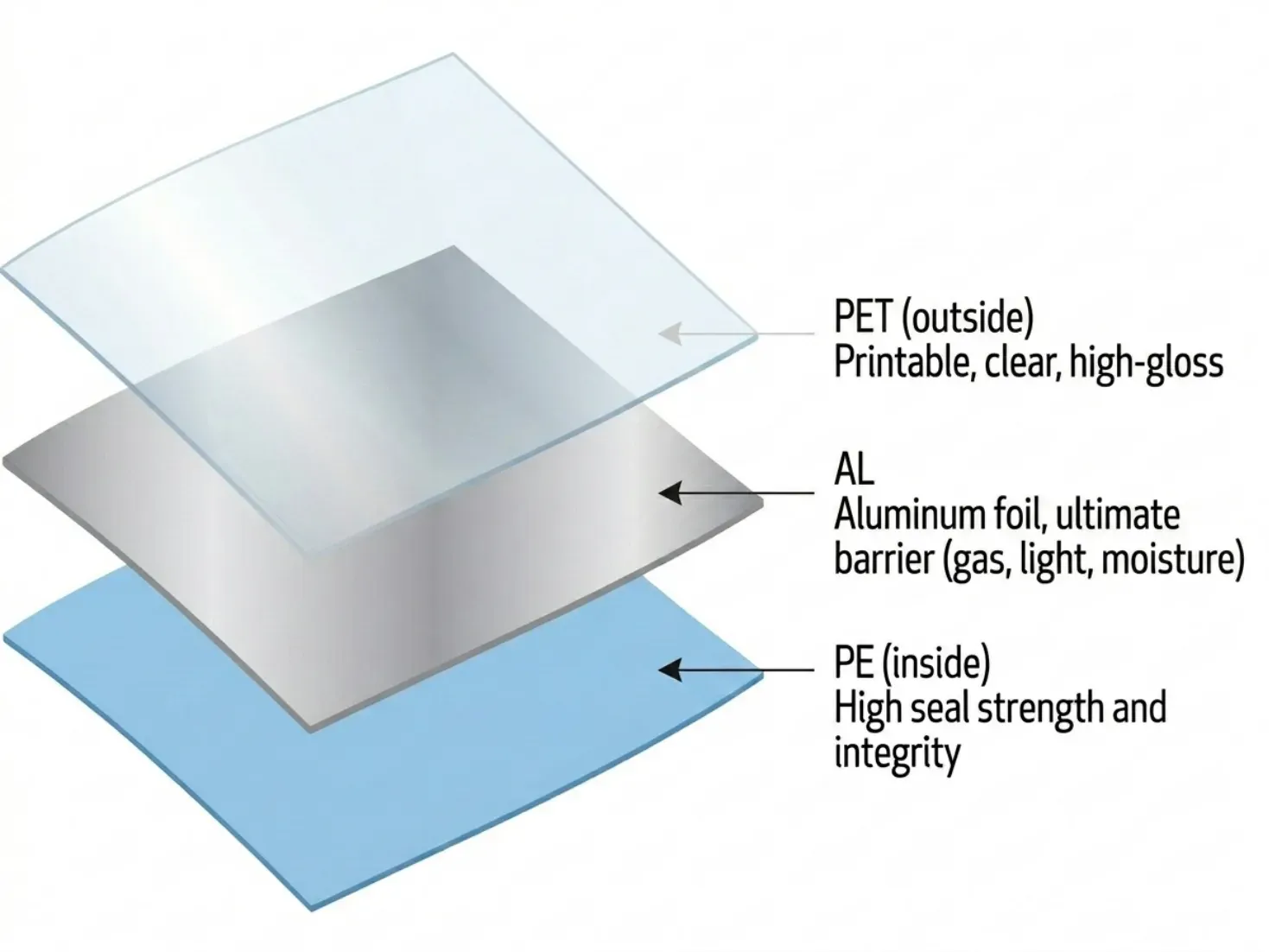
PET/AL/PE Structure
This structure adds an aluminum foil layer between PET and PE.
Advantages
- Extremely high barrier protection
- Excellent moisture resistance
- Strong oxygen blocking
- Better light protection
- Longer product shelf life
Best Applications
- Nuts and dried fruits
- Tea packaging
- Coffee bags
- Sensitive food products
- Long-term storage packaging
For products requiring freshness preservation, this is one of the most effective packaging structures.
Important Consideration
PET-based structures generally have lower heat resistance. They are not ideal for:
- High-temperature filling
- Boiling sterilization
- Extreme heat storage environments
Brands using hot-fill processes should carefully verify material compatibility before production.
PE-Based Composite Materials
PE (Polyethylene) materials are known for flexibility, sealing performance, and cost efficiency.
They are especially suitable for large-scale commercial packaging projects.
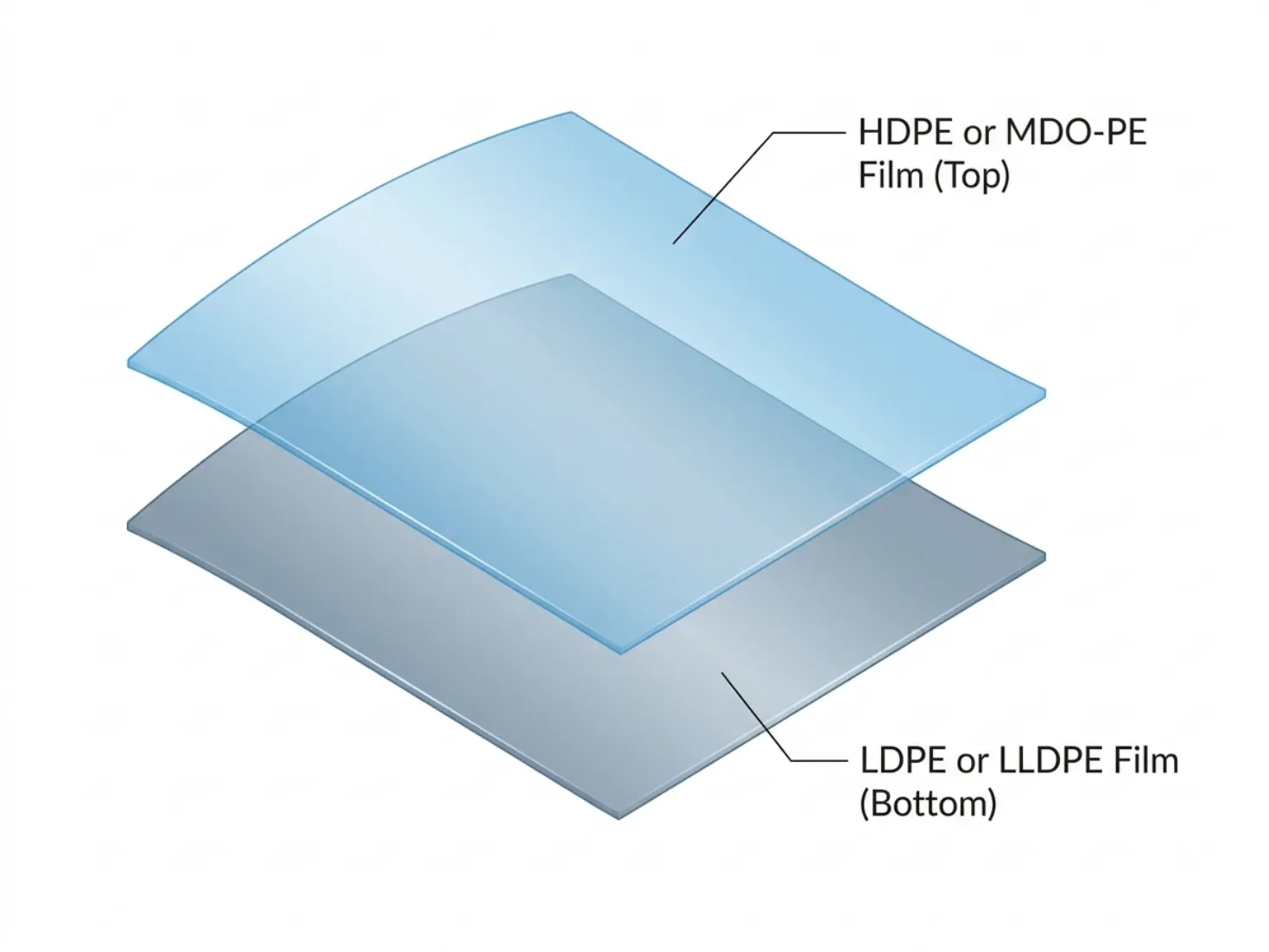
PE/LDPE Structure
Advantages
- Strong flexibility
- Excellent heat sealing
- Cost-effective production
- Good puncture resistance
Best Applications
- Wash and care product sachets
- Budget snack bags
- Refill packaging
- Daily consumer products
This structure is ideal for brands prioritizing affordability and practicality.
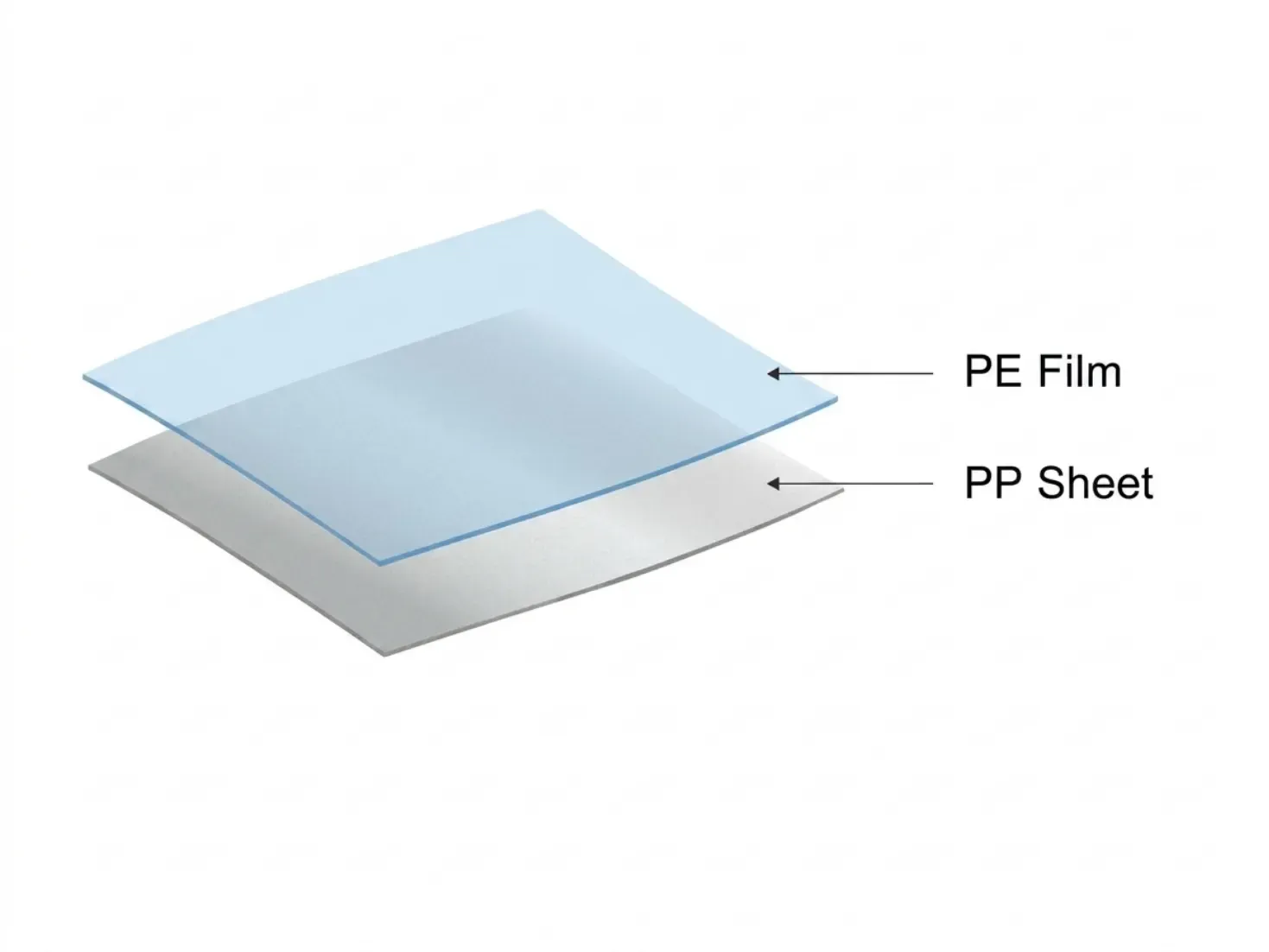
PE/PP Structure
PE/PP structures provide slightly better rigidity and shape retention.
Advantages
- Improved structural support
- Better package stability
- Good sealing properties
Best Applications
- Semi-rigid pouch packaging
- Packaging requiring slight form retention
- Lightweight retail packaging
Limitation
Compared to PET-based materials, PE-based structures usually offer lower transparency and less premium visual appeal.
However, brands can improve appearance through:
- Matte finishes
- Soft-touch coatings
- Custom printing effects
Additional Tips for Independent Brands
Small-Batch Brands: Use Standard Films With Custom Printing
For startups or small production runs, fully customized materials can significantly increase costs and lead times.
A more practical solution is:
- Using standard composite film structures
- Adding customized printing designs
- Choosing common pouch formats
This approach helps reduce:
- Minimum order quantities
- Production costs
- Development time
while still maintaining brand identity.
Cross-Border E-Commerce Brands: Simplify Material Structures
For brands selling internationally, complex multi-layer structures may create recycling and compliance challenges in different markets.
Whenever possible, choose:
- Simple PET-based structures
- Mono-material PE packaging
- Easily recyclable materials
This can improve compatibility with overseas environmental regulations.
Always Verify Compliance Certifications
No matter which material structure you choose, compliance should never be overlooked.
For food packaging, especially, brands should confirm:
- Food-grade testing reports
- BPA-free certification
- FDA or LFGB compliance
- Migration testing results
- Regional packaging safety standards
Reliable compliance documentation protects both your customers and your brand reputation.
Final Thoughts
Choosing the right plastic packaging composite material is not only about packaging protection — it is also about brand strategy, customer experience, and long-term business growth.
In general:
- PET-based composite materials are better for a premium appearance and high-end branding
- PE-based composite materials offer better cost efficiency and flexibility
- Aluminum foil composite structures provide stronger barrier protection for food preservation
- Mono-material structures are becoming increasingly important for sustainable packaging
The ideal packaging solution should balance:
- Product protection
- Brand image
- Cost control
- Production efficiency
- Regulatory compliance
For independent brands, smart packaging decisions can strengthen market competitiveness and help products stand out both online and on retail shelves.
If you are looking for suitable plastic packaging composite materials for your products, feel free to contact us. GQ PACK has decades of custom flexible food packaging experience. We can help you select the right packaging structure based on your product category, branding goals, and market requirements, creating packaging solutions that truly add value to your brand.