ES
ES  EN
EN  DE
DE  FR
FR  RU
RU  AR
AR  JA
JA 
Ya sea para envasar zumos de fruta, bebidas lácteas, salsas, bebidas nutricionales o condimentos líquidos, la elección del material de barrera adecuado influye directamente en la vida útil, la calidad del producto, la seguridad alimentaria y la satisfacción del cliente.
La exposición al oxígeno, la humedad, la luz y los contaminantes externos puede provocar la pérdida de sabor, la degradación de los nutrientes, la decoloración y el deterioro de los productos. Elegir la estructura de barrera adecuada ayuda a los fabricantes a proteger los productos durante su almacenamiento y distribución, al tiempo que se logra un equilibrio entre rendimiento, sostenibilidad y coste.
Como fabricante de envases flexibles personalizados para alimentos, explicaremos cuáles son los materiales de barrera más habituales que se utilizan en el envasado de alimentos líquidos y cómo elegir la estructura adecuada para cada aplicación.
¿Qué son los materiales de barrera en el envasado de alimentos líquidos?
Los materiales de barrera son capas de envasado especializadas diseñadas para impedir la transferencia de gases, humedad, luz, aromas y contaminantes entre el producto envasado y el entorno circundante.
En los envases flexibles para líquidos, las capas de barrera suelen combinarse con materiales estructurales y de sellado para crear laminados multicapa.
Los objetivos principales son:
- Proteger la calidad de los alimentos
- Prolongar la vida útil
- Conserva el sabor y el aroma
- Conservar el valor nutricional
- Garantizar la seguridad alimentaria durante el almacenamiento y el transporte
En el caso de los alimentos líquidos, la protección de barrera es especialmente importante, ya que muchas fórmulas contienen ingredientes muy sensibles a la exposición al oxígeno y a la luz.
Propiedades clave de la barrera
Para evaluar el rendimiento de los envases se suelen utilizar varias mediciones técnicas:
Índice de transmisión de oxígeno (OTR)
Mide la cantidad de oxígeno que atraviesa el material de embalaje.
Cuanto más bajos sean los valores de OTR, mejor será la protección frente al oxígeno.
Índice de transmisión de vapor de agua (WVTR)
Mide la resistencia a la penetración de la humedad.
Es fundamental para productos que requieren estabilidad frente a la humedad.
Rendimiento de la barrera luminosa
Protección contra los rayos UV y la luz visible, que pueden degradar los ingredientes sensibles.
Rendimiento de la barrera aromática
Evita que se pierdan los aromas y, al mismo tiempo, impide que penetren los olores externos.
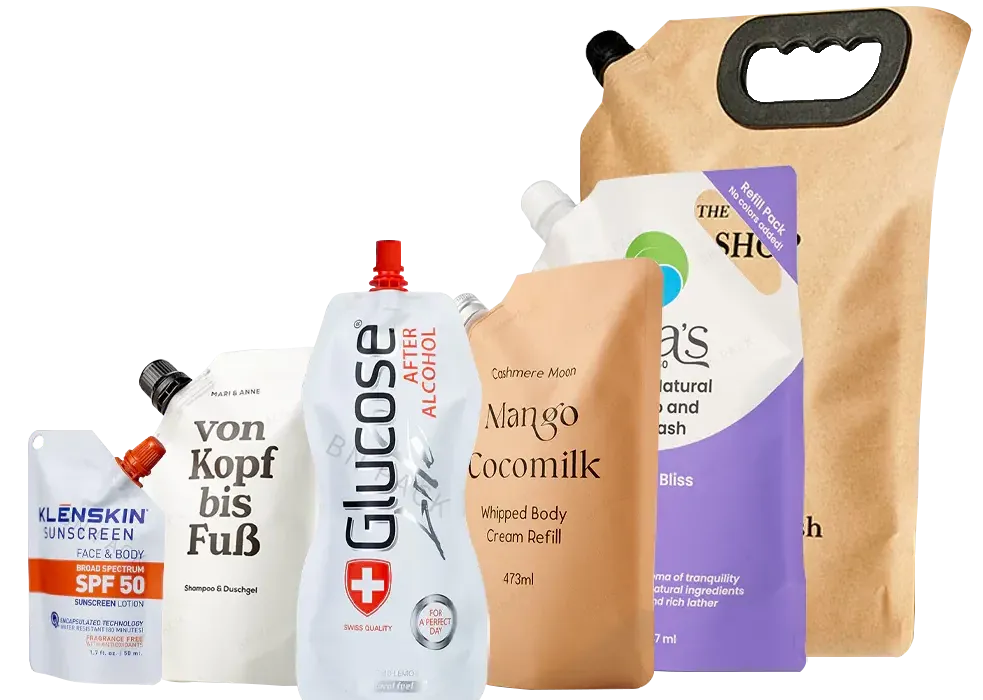
Las principales amenazas para la vida útil de los alimentos líquidos
Antes de elegir los materiales, los compradores deben saber contra qué se están protegiendo.
Exposición al oxígeno
El oxígeno suele ser la mayor amenaza para la estabilidad de los alimentos líquidos.
Entre las consecuencias más comunes se encuentran:
- Deterioro del sabor
- Degradación de las vitaminas
- Cambios de color
- Frescura reducida
- Vida útil reducida
Entre los productos especialmente vulnerables se encuentran:
- Zumos de fruta
- Bebidas lácteas
- Bebidas de origen vegetal
- Bebidas funcionales
- Suplementos nutricionales
Transferencia de humedad
Un exceso de humedad puede alterar la consistencia y la estabilidad del producto.
Esto es especialmente importante para:
- Concentrados
- Sirope
- Formulaciones especializadas
- Productos líquidos híbridos
Exposición a los rayos UV y a la luz
La luz puede provocar reacciones químicas que degradan los ingredientes sensibles.
Entre los productos que suelen verse afectados se incluyen:
- Leche
- Bebidas de yogur
- Bebidas enriquecidas con vitaminas
- Bebidas proteínicas
Pérdida de aroma y sabor
Las bebidas de alta gama suelen contener compuestos aromáticos volátiles que pueden escaparse gradualmente a través de materiales de envasado inadecuados.
Las bebidas de café, las bebidas a base de frutas y los productos nutricionales aromatizados son especialmente vulnerables.
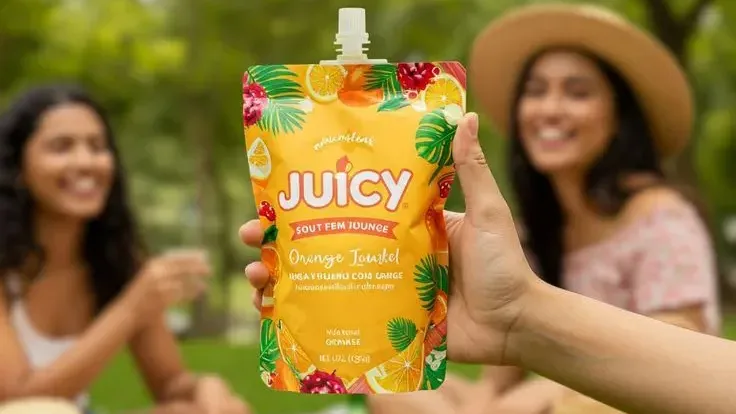
Materiales de barrera habituales utilizados en el envasado de alimentos líquidos
Los distintos materiales ofrecen distintos niveles de protección. La mayoría de los envases para alimentos líquidos utilizan varias capas para combinar las ventajas de distintos materiales.
EVOH (etileno-alcohol vinílico)
El EVOH es uno de los materiales de alta barrera más utilizados en el sector del embalaje flexible moderno.
Ventajas
- Excelente rendimiento como barrera contra el oxígeno
- Ligero
- Aspecto transparente
- Compatible con la estética del paquete premium
- Adecuado para el desarrollo de estructuras reciclables
Limitaciones
El rendimiento de la barrera contra el oxígeno del EVOH disminuye en condiciones de alta humedad, por lo que suele colocarse entre dos capas protectoras.
Aplicaciones típicas
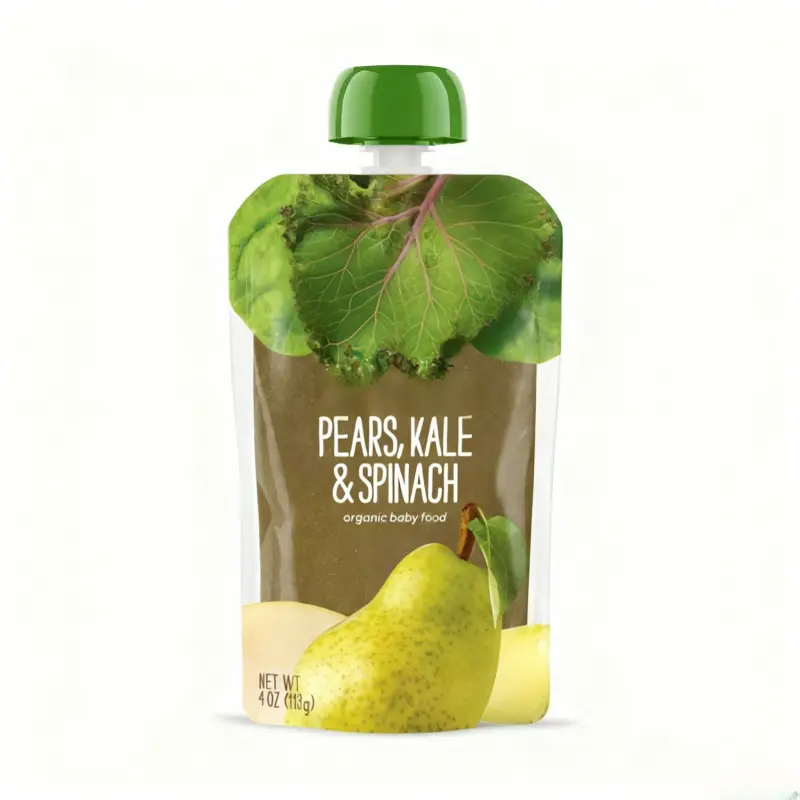
- Bolsitas de zumo
- Envases para productos lácteos
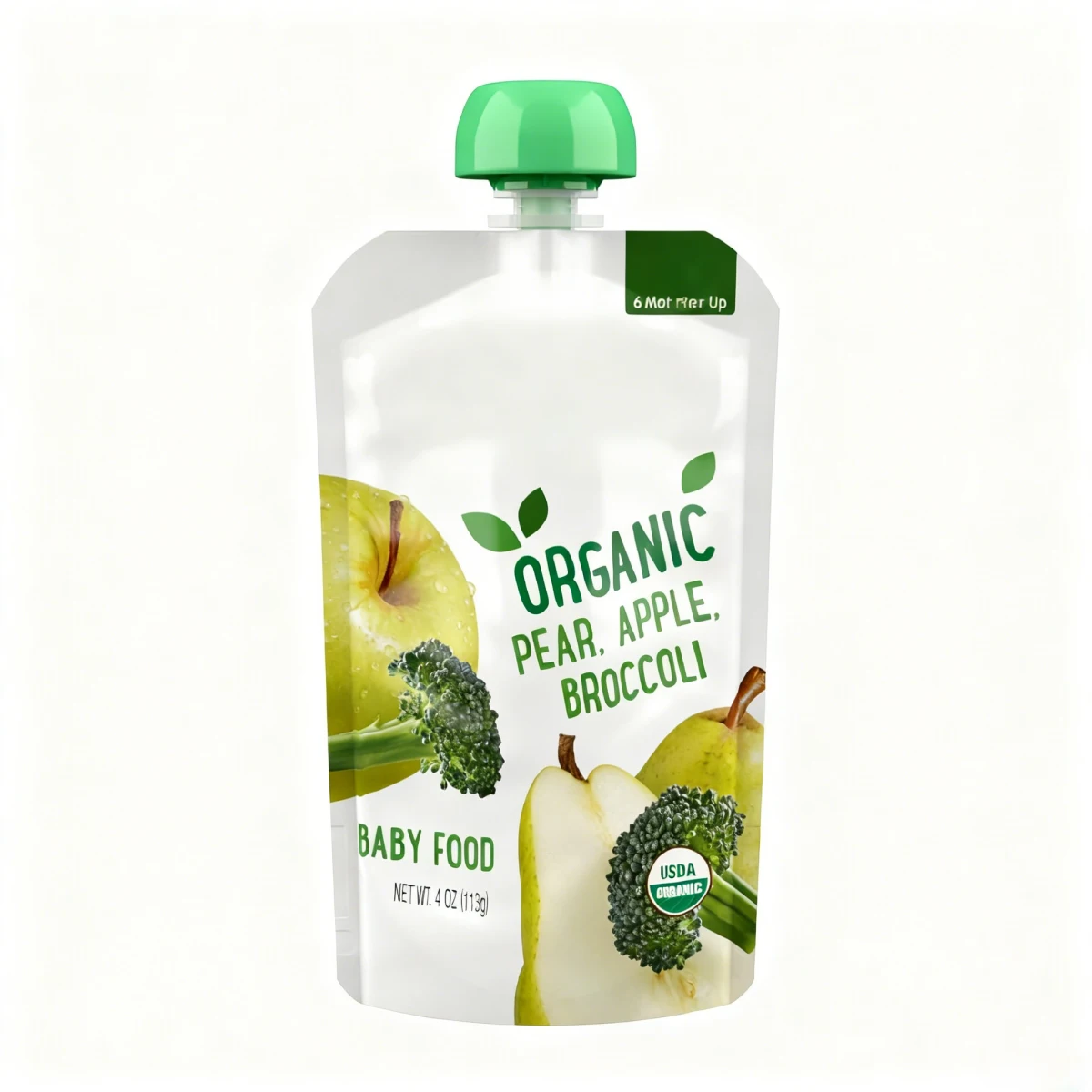
- Bolsitas de comida para bebés
- Bebidas nutritivas
- Envases retortables
En el caso de muchos productos, un experto fabricante de envases para alimentos líquidos puede optimizar el grosor del EVOH para encontrar el equilibrio entre la vida útil y el coste.
Papel de aluminio
El papel de aluminio sigue siendo la referencia en cuanto a protección de barrera máxima.
Ventajas
- Barrera al oxígeno casi total
- Excelente protección contra la humedad
- Excelente barrera contra la luz
- Mayor retención del aroma
Limitaciones
- Aumento de los costes de los materiales
- Menor capacidad de reciclaje
- Menos flexibilidad en los diseños de envases transparentes
Aplicaciones típicas
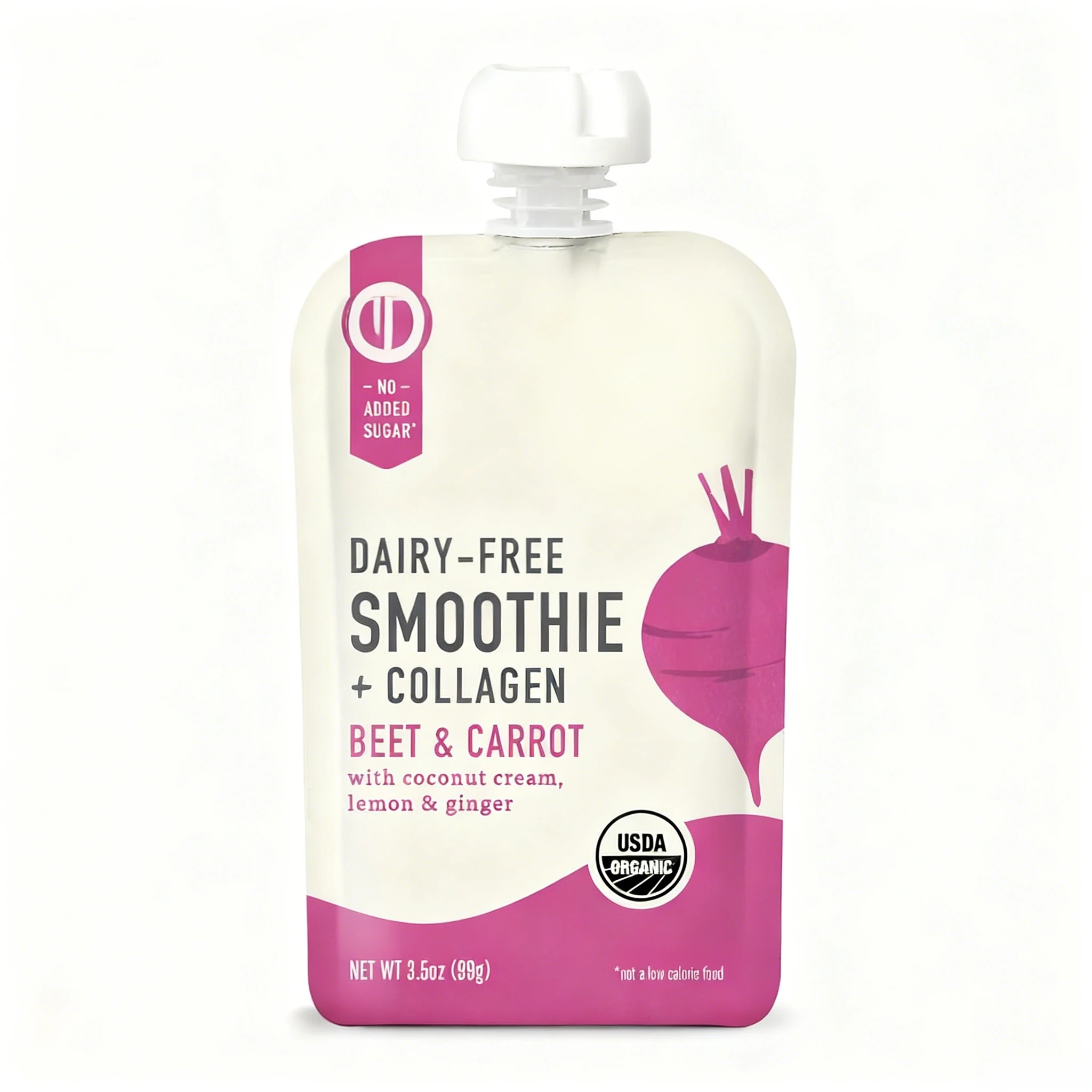
- Bebidas asépticas
- Productos de larga duración
- Embalaje para exportación
- Productos nutricionales de alta calidad
PET (tereftalato de polietileno)
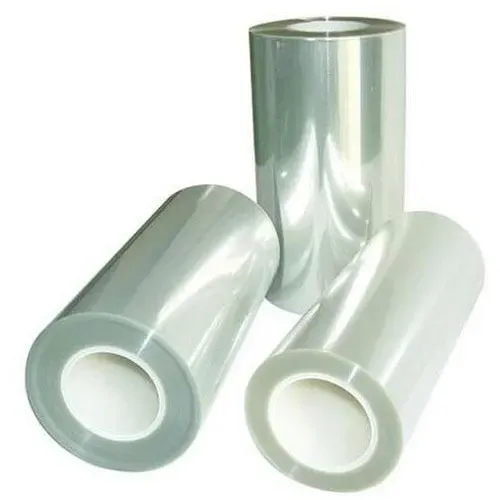
El PET se utiliza a menudo como capa exterior en estructuras multicapa.
Ventajas
- Alta resistencia mecánica
- Excelente capacidad de impresión
- Buena estabilidad dimensional
- Aspecto atractivo
Aunque el PET por sí solo no se considera un material de alta barrera, ofrece integridad estructural y permite obtener gráficos de alta calidad.
Nylon (PA)
El nailon aporta protección mecánica, más que una función de barrera principal.
Ventajas
- Excelente resistencia a la perforación
- Gran resistencia a los impactos
- Gran durabilidad
Usos habituales
- Bolsas retortables
- Envasado en caliente
- Aplicaciones que requieren un uso intensivo del transporte
Láminas metalizadas
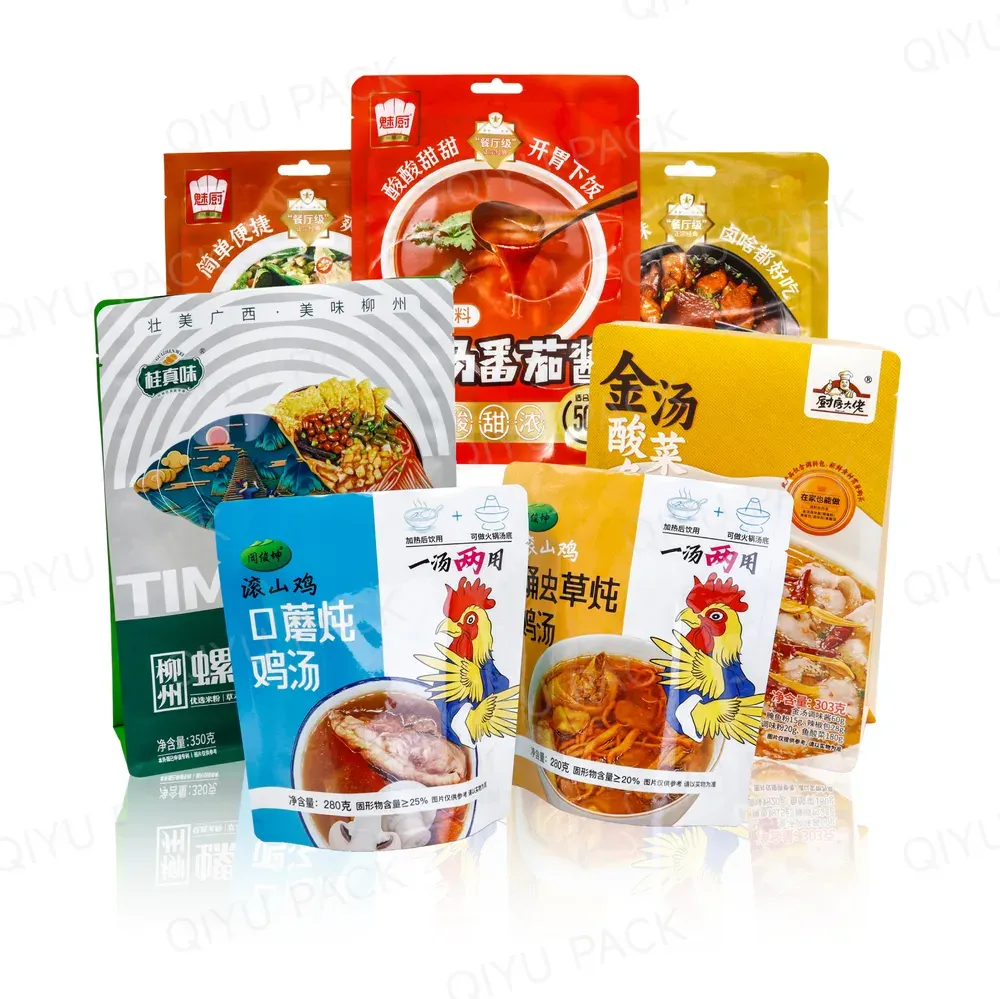
El PET metalizado y otros materiales metalizados ofrecen una solución intermedia entre los films estándar y el papel de aluminio.
Ventajas
- Mayor eficacia de la barrera
- Más económico que el papel de aluminio
- Aspecto atractivo
Aplicaciones
- Concentrados para bebidas
- Productos alimenticios de larga duración
- Proyectos de embalaje en los que el coste es un factor determinante
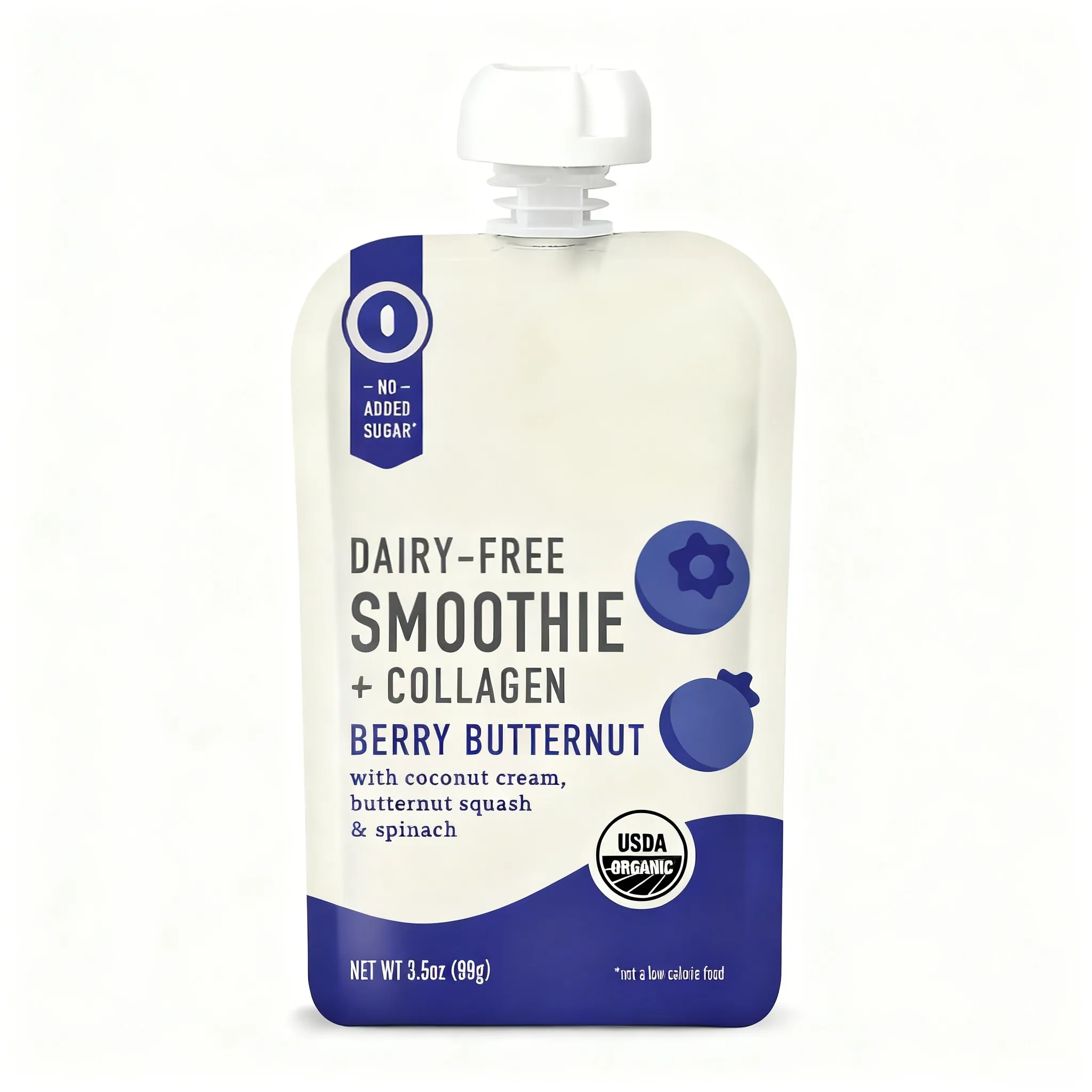
Comparación de materiales de barrera: ¿cuál ofrece mejores resultados?
| Material | Barrera contra el oxígeno | Barrera contra la humedad | Barrera de luz | Nivel de costes |
|---|---|---|---|---|
| Papel de aluminio | Excelente | Excelente | Excelente | Alta |
| EVOH | Excelente | Moderado | Pobre | Medio |
| PET metalizado | Bien | Bien | Bien | Medio |
| Nylon (PA) | Moderado | Moderado | Pobre | Medio |
| PET estándar | Feria | Feria | Pobre | Bajo |
El «mejor» material depende de los requisitos concretos del producto. GQ PACK, desde la perspectiva de un fabricante de envases flexibles a medida para alimentos, sugiere que la elección de materiales de mayor calidad puede reducir el riesgo de rotura durante el transporte, lo que a su vez permite reducir los costes.
Estructuras multicapa habituales para el envasado de alimentos líquidos
El envasado moderno de líquidos rara vez se basa en un solo material.
En cambio, los fabricantes combinan capas para alcanzar unos objetivos de rendimiento específicos.
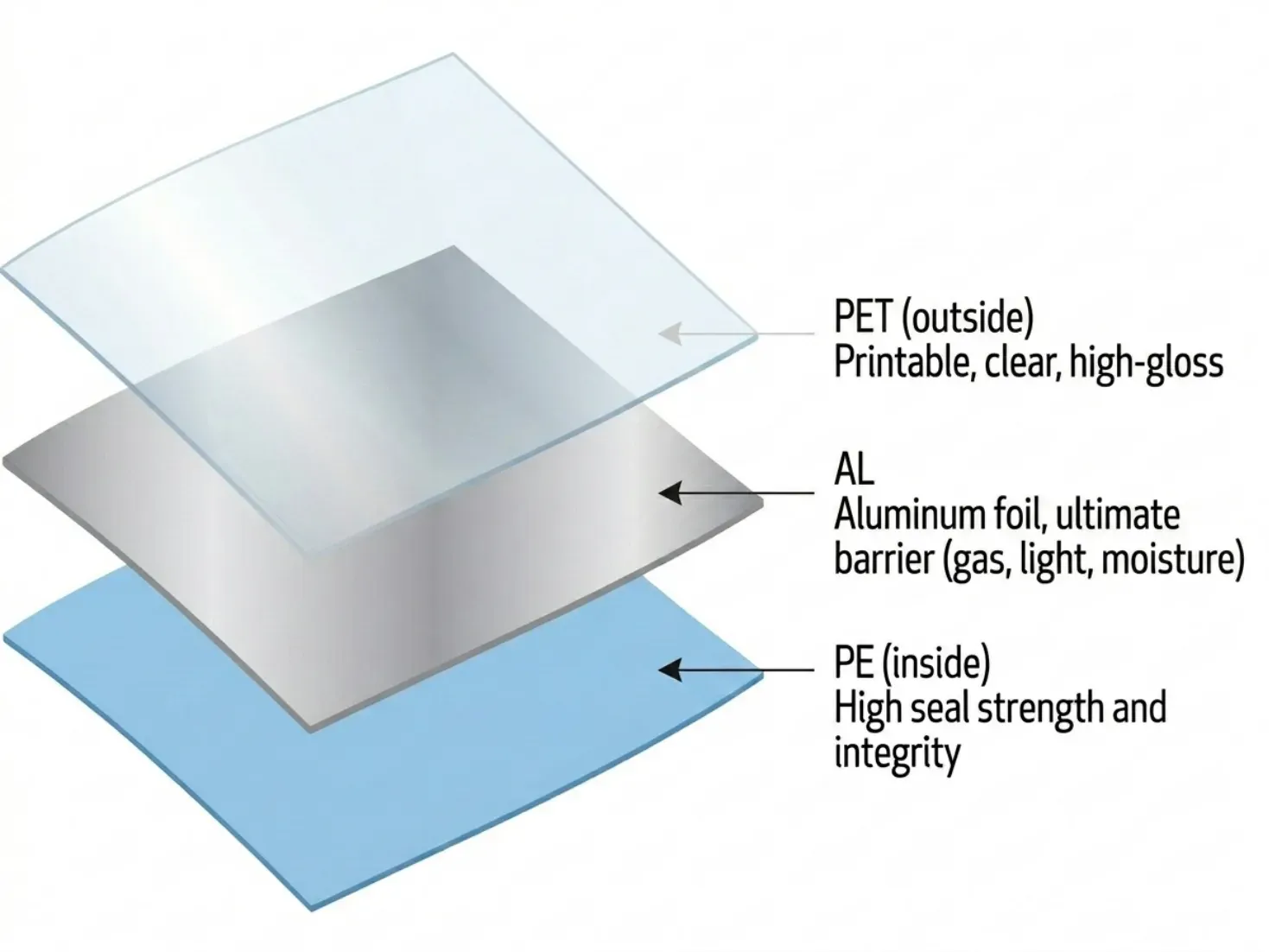
PET / AL / PE
Esta estructura combina:
- PET por su resistencia y facilidad de impresión
- Papel de aluminio para protección de barrera
- PE para sellado
Ideal para
- Bebidas de larga duración
- Productos de exportación
- Envasado aséptico
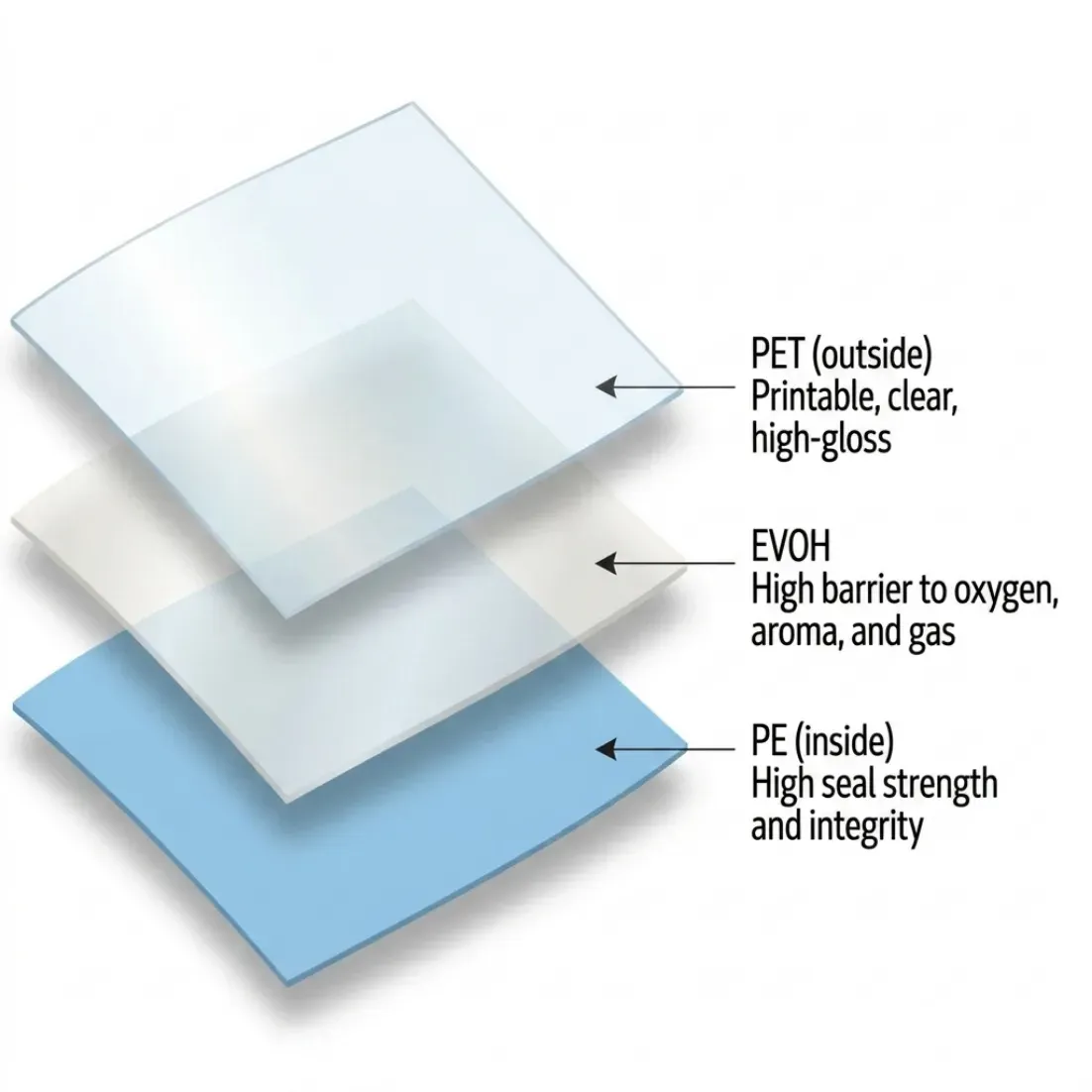
PET / EVOH / PE
Esta estructura ofrece una excelente protección contra el oxígeno sin perder transparencia.
Ideal para
- Envases de primera calidad para zumos
- Bebidas lácteas
- Bebidas nutritivas
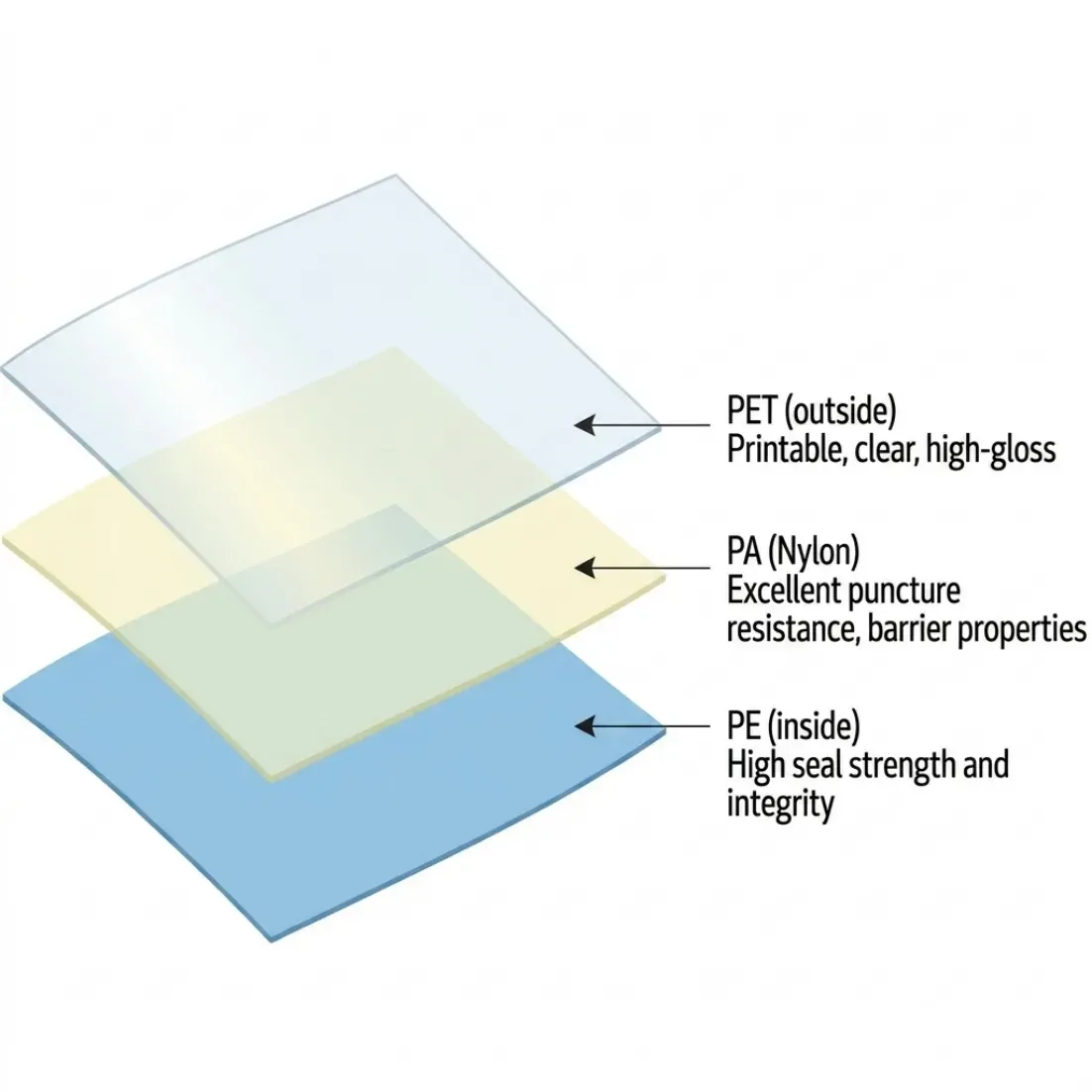
PET / PA / PE
Esta estructura destaca por su durabilidad y resistencia al calor.
Ideal para
- Aplicaciones de retorta
- Productos de llenado en caliente
- Salsas y condimentos
Cómo seleccionar materiales de barrera en función del tipo de producto
Envases para zumos de fruta
Los zumos son muy propensos a la oxidación.
Entre las estructuras recomendadas se incluyen:
- PET/EVOH/PE
- PET/AL/PE
La elección depende de los requisitos de conservación y de las preferencias en cuanto a la transparencia.
Bebidas lácteas y de yogur
Los productos lácteos son sensibles tanto al oxígeno como a la luz.
Estructuras recomendadas:
- PET/AL/PE
- Laminados de EVOH de alta barrera
Bebidas de origen vegetal
Las proteínas vegetales pueden ser propensas a sufrir alteraciones en su sabor y a la oxidación.
Estructuras recomendadas:
- Laminados a base de EVOH
- Laminados de papel de aluminio para prolongar la vida útil
Salsas y condimentos
Los productos viscosos suelen requerir un procesamiento en autoclave.
Estructuras recomendadas:
- PET/PA/PE
- Laminados de alta barrera aptos para autoclave
Bebidas nutricionales y funcionales
Los productos que contienen vitaminas, probióticos o principios activos suelen requerir un mayor rendimiento de barrera.
Estructuras recomendadas:
- Laminados de papel de aluminio
- Soluciones avanzadas basadas en EVOH
Cómo influyen los requisitos de vida útil en la selección de materiales
Vida útil inferior a 6 meses
Los productos con ciclos de distribución cortos suelen dar buenos resultados con estructuras de barrera media.
La optimización de costes se convierte en una prioridad.
Vida útil: entre 6 y 12 meses
La mayoría de los productos alimenticios que se venden al por menor entran dentro de esta categoría.
Las estructuras de EVOH de alta barrera suelen ser adecuadas.
Vida útil superior a 12 meses
Los productos de larga duración suelen requerir:
- Estructuras de papel de aluminio
- Sistemas avanzados de envasado aséptico
- Ingeniería integral de barreras
Lo que los compradores deben preguntar a su proveedor de embalajes
A la hora de evaluar a un [proveedor de envases para líquidos], los compradores deberían solicitar datos técnicos detallados en lugar de basarse únicamente en las afirmaciones de marketing.
Entre las cuestiones importantes se incluyen:
¿Qué son los valores OTR y WVTR?
El rendimiento de la barrera medido debe ajustarse a los requisitos del producto.
¿Se han realizado pruebas de vida útil?
Tanto los ensayos de laboratorio como la validación en condiciones reales son importantes.
¿Es la estructura compatible con mi proceso de llenado?
El embalaje debe coincidir con:
- Llenado aséptico
- Producción en caliente
- Procesamiento en autoclave
- Operaciones de llenado estándar
¿Cumple el embalaje con los requisitos normativos?
Comprueba el cumplimiento de:
- Normativa de la FDA
- Normas de la UE sobre productos destinados a entrar en contacto con alimentos
- Requisitos para las pruebas de migración
Conclusión
La calidad de los alimentos líquidos y el cumplimiento del plazo de conservación previsto dependen principalmente del material que se elija desde el principio. Materiales como el EVOH, el papel de aluminio, el PET y el nailon ofrecen ventajas distintas en función del producto, el método de procesamiento y los requisitos de distribución.
En lugar de optar por la opción con mayor barrera disponible, las marcas deberían centrarse en encontrar la estructura más adecuada para su aplicación específica. Trabajar con fabricantes con amplia experiencia en el envasado de líquidos, al igual que GQ PACK, puede ayudar a optimizar la selección de materiales, el rendimiento del embalaje y los costes de producción, al tiempo que garantiza una calidad fiable y el cumplimiento de la normativa.
Preguntas frecuentes sobre los materiales de barrera para el envasado de alimentos líquidos
¿Cuál es el mejor material de barrera para el envasado de alimentos líquidos?
No existe una opción ideal para todos los casos. El papel de aluminio ofrece la mayor protección de barrera en general, mientras que el EVOH proporciona una excelente protección contra el oxígeno y es transparente.
¿Es el EVOH mejor que el papel de aluminio?
No necesariamente. Depende de las necesidades de tus productos. El EVOH ofrece una excelente barrera contra el oxígeno y una gran transparencia, mientras que el papel de aluminio proporciona una protección superior contra el oxígeno, la humedad y la luz.
¿Cómo contribuyen los materiales de barrera a prolongar la vida útil?
Reducen la exposición al oxígeno, la humedad, la luz y los contaminantes que provocan la degradación de los alimentos.
¿Cuál es la mejor estructura de envase para los productos de zumo?
Las estructuras PET/EVOH/PE y PET/AL/PE se encuentran entre las más utilizadas, dependiendo de los requisitos de vida útil.
¿Pueden los envases transparentes ofrecer una alta protección de barrera?
Sí. Las estructuras a base de EVOH pueden ofrecer un excelente comportamiento como barrera al oxígeno sin perder transparencia.
¿Qué material de barrera es el más reciclable?
Las estructuras fabricadas exclusivamente con polietileno ofrecen actualmente algunas de las oportunidades de reciclaje más prometedoras.
¿Cómo puedo determinar el nivel de barrera que necesita mi producto?
Entre los factores se incluyen la formulación del producto, la vida útil prevista, las condiciones de almacenamiento, el entorno de distribución y la tecnología de envasado.
¿Qué información debo facilitar al fabricante de envases?
Facilita información sobre:
- Tipo de producto
- Objetivos de caducidad
- Proceso de llenado
- Áreas de distribución
- Formato de envase
- Objetivos de sostenibilidad
Acerca de GQ PACK
GQ PACK es un fabricante profesional de envases flexibles para alimentos Ofrecemos a marcas internacionales, importadores y distribuidores soluciones de embalaje fiables y directamente de fábrica.
Según nuestro departamento de ventas, las marcas ya no se conforman con los productos estándar de envasado de líquidos, sino que buscan cada vez más soluciones personalizadas que optimicen:
- Caducidad
- Sostenibilidad
- Coste
- Experiencia del usuario
- Diferenciación de productos
Desde este punto de vista, GQ PACK ha ayudado a miles de clientes internacionales a desarrollar estructuras de envase adaptadas a formulaciones y condiciones de distribución específicas.
Nuestra personalización del envasado de líquidos Las opciones incluyen:
- Selección de la capa de barrera
- Optimización del espesor del material
- Integración del pico
- Personalización de la impresión
- Compatibilidad con la autoclave
- Soporte para envases asépticos
Para las marcas y los distribuidores en expansión, en esta etapa, ayudamos a los clientes a mejorar la protección de sus productos, reforzar el valor de la marca y lograr un crecimiento eficiente y escalable.